
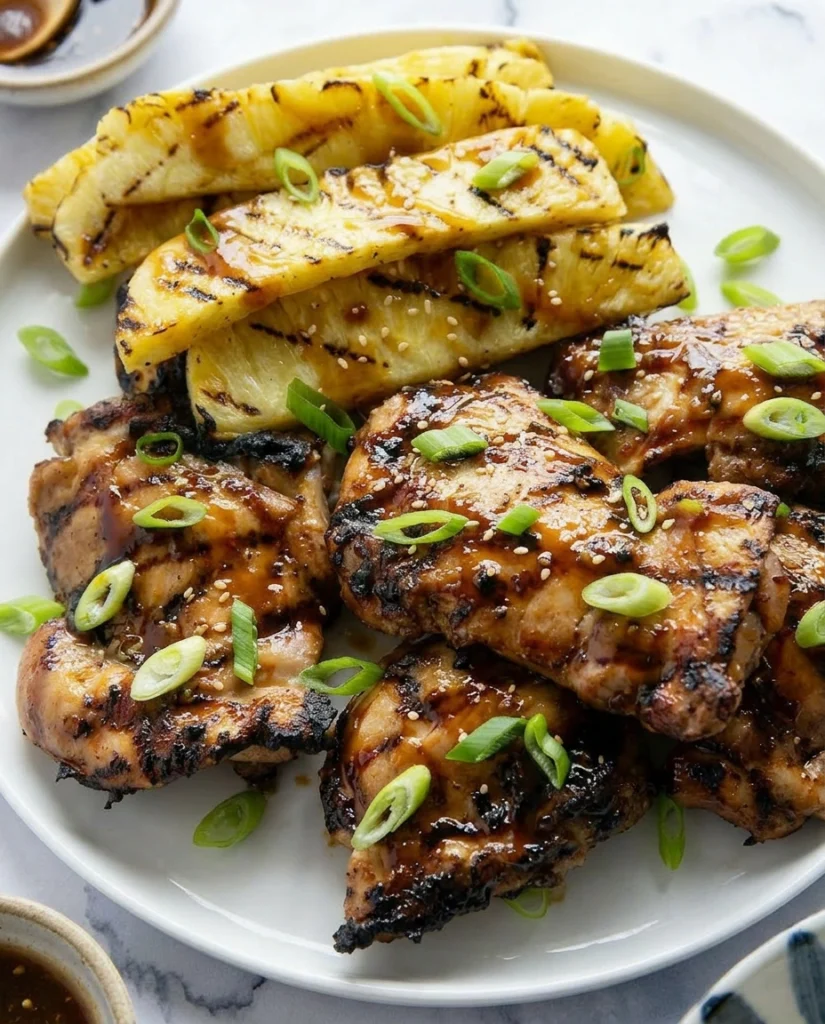
There is a grilling recipe for dinner that somehow manages to satisfy every person at the table simultaneously — the heat seekers, the sweet tooth crowd, the health-conscious eaters, and the people who simply want something that tastes extraordinary without requiring a culinary degree to produce. Grilled pineapple teriyaki chicken is that recipe, and it earns that distinction through one of the most naturally compelling flavor combinations in the entire easy grilling recipes world.
Fresh pineapple and teriyaki is not a new pairing, but it is one that most home cooks have only ever experienced through a bottled sauce and a can of pineapple rings — a version that approximates the real thing in the same way that a photograph approximates a landscape. This grilling recipe builds the pineapple teriyaki from scratch, using fresh fruit, naturally brewed soy sauce, mirin, and ginger, and the difference between that version and anything that comes from a bottle is the difference between a good weeknight dinner and a genuinely memorable one.
Why You’ll Love This Grilling Recipe
The fresh pineapple does two things in this easy grilling recipe that no other ingredient can replicate. First, it contributes a natural sweetness that is more complex and less cloying than refined sugar — a tropical, slightly tart sweetness that carries genuine fruit flavor alongside its sweetness rather than simply reading as generic sugar. Second, and less obviously, fresh pineapple contains bromelain — a naturally occurring enzyme that acts as a powerful meat tenderizer, breaking down the surface proteins of the chicken during the marinating period and producing a texture that is noticeably more tender and silky than chicken marinated in a non-enzymatic preparation.
This is also a healthy grilling recipe that earns that descriptor without compromise. Chicken thighs provide lean protein and significantly more flavor than breasts. Fresh pineapple is naturally low in calories and high in vitamin C and manganese. The homemade teriyaki glaze contains no artificial preservatives, no high-fructose corn syrup, and no additives of any kind — just real ingredients combined in a ratio that produces a sauce of genuine quality. The result is a grilling recipes dinner that tastes indulgent while being nutritionally sound.
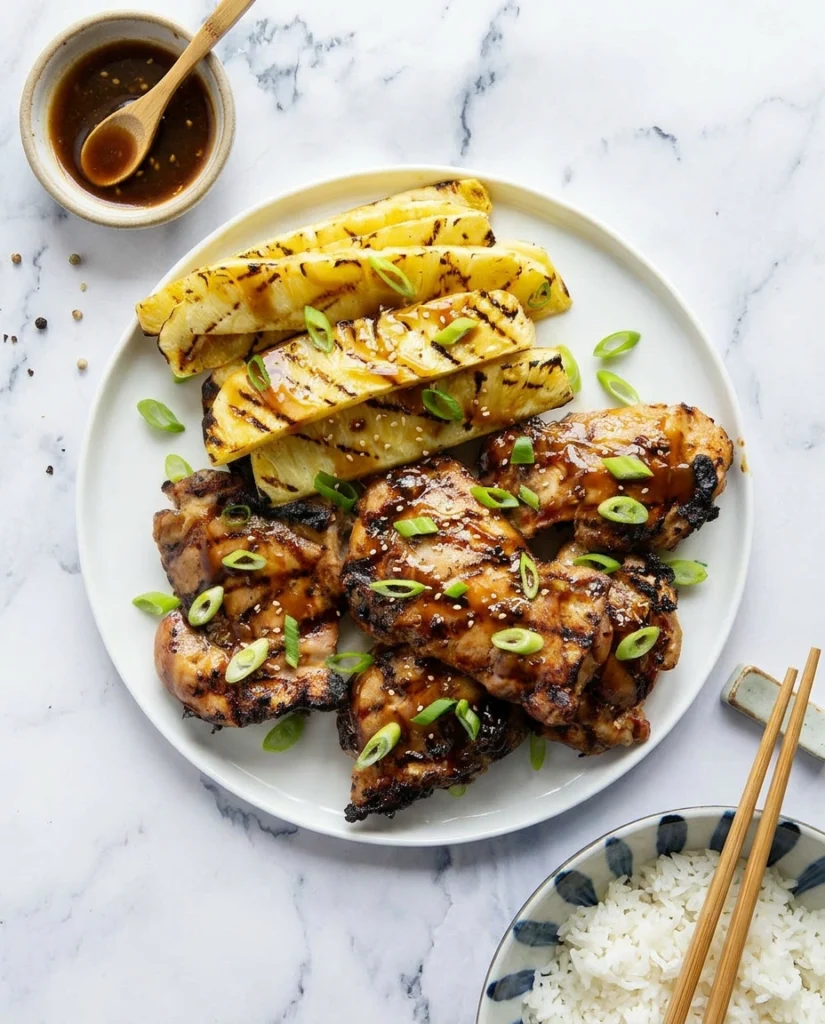
For grilling recipes for two, this preparation is particularly ideal. Two chicken thighs and a few rings of grilled pineapple alongside produce a plated result that looks like considerably more effort than it required, and the pineapple teriyaki glaze has a visual impact — that glossy, deeply caramelized, golden-lacquered surface — that makes even a simple weeknight grilling recipes for dinner feel like a special occasion.
Common Mistakes (And How to Avoid Them)
Using canned pineapple instead of fresh. Canned pineapple is processed at high heat during canning, which destroys the bromelain enzyme responsible for both the tenderizing effect and much of the fresh tropical flavor that makes this easy grilling recipe distinctive. Canned pineapple also sits in syrup, adding an artificial sweetness to the marinade that throws the entire balance of the teriyaki glaze off in a direction that is difficult to correct. Fresh pineapple is non-negotiable in this healthy grilling recipe — it is the ingredient around which everything else is built.
Marinating the chicken for too long. The bromelain enzyme in fresh pineapple is significantly more aggressive than the lactic acid in a yogurt marinade or the citric acid in a lemon marinade. While thirty minutes to two hours in a pineapple-based marinade produces beautifully tenderized chicken, leaving the chicken in contact with fresh pineapple juice for more than four hours will begin to break down the proteins in a way that produces a mushy, unpleasant texture that no amount of grill heat can correct. Set a timer and respect the window on this easy grilling recipe.
Applying the glaze before the chicken is cooked through. The pineapple teriyaki glaze contains a high concentration of natural and added sugars — from the pineapple juice, the mirin, and the honey — that will burn almost instantly if applied over direct flame before the chicken has reached a safe internal temperature. Apply the glaze only in the final three to four minutes of cooking when the chicken is already cooked through and you are using the direct heat exclusively to caramelize the surface. This sequencing is the most important technical detail in this grilling recipe.
Grilling the pineapple rings at the same time as the chicken without managing heat zones. Fresh pineapple rings need high direct heat for a short time — two to three minutes per side — to develop char and caramelization. Chicken thighs need a longer, more managed cook over indirect heat followed by direct heat. If you put both on the grill at the same time without a plan, either the pineapple will be sitting on the grill for far too long and turning mushy, or the chicken will be rushed and undercooked. Grill the pineapple during the final direct heat phase of the chicken cook — the timing aligns perfectly when managed this way.
Using thin chicken breasts instead of thighs. Thin chicken breasts in a high-sugar marinade and glaze will overcook and dry out before the teriyaki glaze has time to caramelize properly. This grilling recipes chicken preparation is built around the fat content and cooking tolerance of thighs — the fat renders during cooking, keeps the meat moist under the direct heat of the glaze caramelization phase, and produces a juiciness that makes every bite of this easy grilling recipe deeply satisfying.
Chef’s Notes
The pineapple teriyaki glaze in this grilling recipe is built in two stages that serve two distinct functions, and understanding that distinction makes the entire recipe click. The first stage is the marinade — a relatively thin, uncooked mixture of pineapple juice, soy sauce, mirin, ginger, and garlic that penetrates the chicken flesh during the marinating period and seasons it from the inside. The second stage is the glaze — a reduced, thickened version of the same base that is cooked down on the stovetop until it reaches a consistency that clings to the chicken surface and caramelizes under direct grill heat into the lacquered, glossy finish that defines this easy grilling recipe visually.
Never use the same batch of marinade that has been in contact with raw chicken as the finishing glaze without cooking it through first. Bring any reserved marinade to a full boil in a small saucepan for at least two minutes before using it as a basting or finishing sauce — this eliminates any food safety concern while also beginning the reduction process that transforms a thin marinade into a proper glaze.
The pineapple rings that accompany the chicken on the grill are not decorative. Grilled pineapple undergoes the same caramelization process as any high-sugar fruit placed over direct heat — the natural fructose develops complex, slightly smoky, caramel notes that fresh raw pineapple does not possess, and those notes echo and amplify the teriyaki glaze on the chicken in a way that makes the whole plate taste more cohesive and intentional. Do not skip the grilled pineapple in this grilling recipe.
Key Ingredients
Boneless Skinless Chicken Thighs — The protein foundation of this easy grilling recipe. Boneless thighs are specified here rather than bone-in because the shorter cook time of boneless cuts aligns better with the relatively brief window that the pineapple teriyaki glaze needs to caramelize without burning. The higher fat content of thighs compared to breasts keeps the meat moist and juicy under the aggressive direct heat of the glaze caramelization phase.
Fresh Pineapple — The defining ingredient of this healthy grilling recipe. Fresh pineapple serves three functions simultaneously — its juice forms the sweet, tropical base of the marinade and glaze; its bromelain enzyme tenderizes the chicken flesh during marinating; and its rings, grilled alongside the chicken, provide a caramelized fruit component that makes the finished plate feel complete and balanced. Choose a pineapple that is ripe but firm — golden at the base, fragrant at the crown, and yielding slightly under thumb pressure.
Naturally Brewed Soy Sauce — The umami and salt backbone of the pineapple teriyaki glaze. A good quality naturally brewed Japanese soy sauce has a deeper, more complex flavor than standard supermarket soy sauce and contributes a fermented richness that balances the tropical sweetness of the pineapple in this grilling recipe. For a gluten-free version, tamari substitutes directly in equal quantity.
Mirin — The sweet rice wine that gives teriyaki its characteristic glossy finish and its specific sweet-savory depth. Mirin is not interchangeable with sugar or honey in this easy grilling recipe — its natural sugars produce a different quality of caramelization and a different flavor profile that is integral to what makes teriyaki taste like teriyaki rather than simply like soy sauce and sweetener.
Fresh Ginger and Garlic — The aromatic foundation of the glaze that prevents the pineapple teriyaki from tasting flat or one-dimensional. Fresh ginger brings a bright, slightly citrusy heat that cuts through the sweetness of the pineapple and the mirin. Fresh garlic adds savory depth that grounds the entire flavor profile of this healthy grilling recipe.
Honey — Added to the glaze alongside the mirin to deepen the sweetness and promote a more complex caramelization than mirin alone produces. Honey also contributes a faint floral quality that complements the tropical character of the pineapple in a way that refined sugar does not.
Rice Vinegar — A small amount of acid in the glaze prevents the sweetness from becoming one-dimensional and adds a brightness that lifts the entire flavor profile of this easy grilling recipe. Rice vinegar has a milder, softer acidity than other vinegars and integrates into the glaze without introducing a sharpness that would fight against the sweet-savory balance.
Sesame Oil — Added off the heat after the glaze has reduced, toasted sesame oil contributes a nutty, smoky aromatic layer that ties the entire flavor profile of this grilling recipe together. It is the finishing note that makes the pineapple teriyaki taste complete rather than simply sweet and salty.
Red Pepper Flakes — A measured pinch added to the glaze introduces a gentle background heat that prevents the sweetness of the pineapple teriyaki from reading as cloying. It is a supporting note in this easy grilling recipe rather than a featured flavor, but its absence makes the finished chicken taste noticeably less interesting.
Scallions and Sesame Seeds — The finishing garnish that adds freshness, color contrast, and textural interest to the plated chicken. Thinly sliced scallions bring a mild onion brightness that cuts through the richness of the glaze; toasted sesame seeds add a nutty crunch that contrasts with the sticky, lacquered surface of the caramelized teriyaki.
How to Make Grilled Pineapple Teriyaki Chicken
- Juice the pineapple for the marinade. Cut the pineapple in half. From one half, cut four to six rings about three-quarters of an inch thick and set them aside for grilling. From the remaining pineapple, cut chunks and blend or juice them to produce half a cup of fresh pineapple juice. Strain through a fine mesh sieve to remove fiber, pressing to extract maximum liquid.
- Make the marinade and glaze base. In a small saucepan, combine the half cup of fresh pineapple juice, a third of a cup of soy sauce, three tablespoons of mirin, one tablespoon of honey, one tablespoon of rice vinegar, two cloves of finely grated garlic, and one teaspoon of freshly grated ginger. Whisk to combine. Reserve a third of a cup of this mixture in a separate bowl as the marinade for the chicken. This portion goes directly onto the raw chicken and will not be used as a glaze without being cooked first.
- Reduce the glaze. Place the remaining mixture in the saucepan over medium heat. Bring to a gentle simmer and cook for eight to ten minutes, stirring occasionally, until the glaze has reduced by approximately half and coats the back of a spoon. Remove from heat and stir in one teaspoon of toasted sesame oil and a pinch of red pepper flakes. Divide into two portions — one for basting on the grill, one for finishing at the table.
- Marinate the chicken. Add the boneless chicken thighs to the reserved marinade portion and toss to coat. Cover and refrigerate for thirty minutes to two hours. Do not exceed four hours given the enzymatic activity of the fresh pineapple juice. Remove from the refrigerator twenty minutes before grilling.
- Preheat the grill. Set up a two-zone grill with one side on medium-high direct heat and one side on indirect heat. Heat to approximately 400 to 425 degrees Fahrenheit on the direct side. Clean the grates thoroughly and oil them well immediately before the chicken goes on.
- Grill the chicken over indirect heat first. Remove the chicken from the marinade and pat the surface lightly dry. Place the thighs on the indirect heat side of the grill. Close the lid and cook for twelve to fifteen minutes, flipping once halfway through, until the internal temperature reaches 155 to 160 degrees Fahrenheit.
- Move to direct heat and apply the glaze. Transfer the chicken to the direct heat side of the grill. Brush the basting portion of the pineapple teriyaki glaze generously over the top surface. Grill for two minutes, flip, apply glaze to the second side, and grill for another two minutes. Repeat this glaze-and-flip process one more time until the glaze has built up into a deeply caramelized, lacquered coating on both sides and the internal temperature has reached 165 degrees Fahrenheit.
- Grill the pineapple rings. During the final direct heat phase of the chicken cook, place the reserved pineapple rings on the direct heat side of the grill alongside the chicken. Grill for two to three minutes per side until deep golden char marks have developed and the natural sugars are visibly caramelized. Brush with a small amount of the teriyaki glaze during the final thirty seconds on each side.
- Rest and serve. Transfer the chicken and grilled pineapple to a clean platter and rest for three minutes. Drizzle the reserved finishing glaze generously over the chicken. Garnish with thinly sliced scallions, toasted sesame seeds, and a few thin slices of fresh red chili if desired. Serve immediately over steamed jasmine rice with grilling recipes side dishes of your choice alongside.
Variations and Tips
For a spicy sriracha pineapple teriyaki version, whisk two tablespoons of sriracha into the glaze during the reduction stage. The heat cuts through the sweetness of the pineapple and adds a sharp, building warmth that makes this easy grilling recipe considerably more assertive without losing the tropical character that defines it. This variation is particularly well suited as a grilling recipes dinner for crowds who appreciate heat.
For a grilling recipes pork adaptation, apply this pineapple teriyaki marinade and glaze to bone-in pork chops at least one inch thick. Grilling recipes pork preparations benefit enormously from the bromelain tenderizing effect of fresh pineapple juice — pork chops marinated in this mixture for two to three hours develop a texture that is noticeably more tender and moist than conventionally marinated chops. Target an internal temperature of 145 degrees Fahrenheit and rest for five minutes before serving alongside the grilled pineapple rings.
For a grilling recipes Blackstone preparation, cook the marinated chicken thighs directly on the oiled flat top at medium-high heat for five to six minutes per side. Apply the pineapple teriyaki glaze during the final two minutes of cooking on each side, using the flat cooking surface to caramelize the glaze evenly across the entire contact surface of the chicken rather than just the grill mark points. The Blackstone produces a more uniformly lacquered result than grill grates for this particular easy grilling recipe.
For grilling recipes for two romantic dinner version, serve the glazed chicken and grilled pineapple over a bed of coconut jasmine rice — jasmine rice cooked with a can of coconut milk instead of water — with a simple cucumber and mint salad dressed with rice vinegar and sesame oil alongside. The coconut rice amplifies the tropical character of this healthy grilling recipe and turns a straightforward weeknight dinner into something that feels genuinely special.
For grilling recipes sides that pair naturally with this dish, consider grilled bok choy brushed with sesame oil and soy sauce, a simple edamame salad with ginger dressing, grilled corn with miso butter, or steamed jasmine rice finished with toasted sesame seeds and scallions. All of these grilling recipes side dishes complement the sweet-savory tropical profile of the pineapple teriyaki without competing with it.
For a grilling recipes chicken version using bone-in thighs, increase the indirect heat cooking time to twenty to twenty-five minutes before moving to direct heat for the glaze caramelization phase. Reduce the marinating time to a maximum of two hours given the enzymatic activity of the pineapple juice — bone-in thighs have more exposed surface area around the bone where the bromelain can penetrate more aggressively.
Pro tip for maximum glaze caramelization: In the final thirty seconds of direct heat cooking, close the grill lid briefly after applying the last coat of glaze. The trapped heat from above caramelizes the top surface of the glaze simultaneously with the grill heat from below, producing a more uniformly lacquered, deeply caramelized finish than open-lid cooking can achieve in the same time window.
How to Meal Prep
The pineapple teriyaki glaze is the most valuable make-ahead component of this easy grilling recipe and keeps exceptionally well in a sealed glass jar in the refrigerator for up to two weeks. It actually improves after the first day as the ginger and garlic flavors meld more completely into the reduced glaze. Warm it gently in a small saucepan before using — it returns to its full glossy, pourable consistency within two to three minutes over low heat.
For a week of healthy grilling recipe meal prep, make a large batch of the glaze base before reduction and portion it into two uses — one portion reduced into a thick glaze for chicken and pork applications, one portion kept thinner as a marinade for shrimp, fish, and tofu. The same batch of fresh pineapple juice and soy-mirin base produces two entirely different preparations depending on how far it is reduced, making it one of the most efficient prep investments in the grilling recipes for dinner weekly planning toolkit.
Marinated chicken thighs can be portioned into zip-lock bags with the marinade and frozen raw for up to three months. The chicken marinates as it thaws overnight in the refrigerator but — importantly given the bromelain enzyme — should be moved from the marinade to a clean covered container as soon as it is fully thawed to prevent over-tenderization during the thaw period. This small adjustment ensures this grilling recipes chicken preparation arrives at grill-ready status with the correct texture regardless of how long the thaw takes.
Grilled pineapple teriyaki chicken is outstanding the following day served cold or at room temperature over a grain bowl with pickled cucumbers, shredded nori, sliced avocado, and a drizzle of the remaining teriyaki glaze thinned with a little rice vinegar. It also shreds beautifully into fried rice with scrambled egg, scallions, edamame, and a splash of soy sauce — one of the most satisfying next-day repurpose preparations that any grilling recipes dinner in the easy grilling recipes category can produce.
Cultural Context
The marriage of pineapple and teriyaki in American cooking has its most direct roots in the Hawaiian plate lunch tradition — a mid-twentieth century development that brought together the Japanese-American teriyaki cooking tradition of Hawaii’s large Japanese immigrant population with the tropical fruit abundance of the islands themselves. Teriyaki chicken served alongside grilled pineapple and a scoop of rice became a defining element of Hawaiian comfort food culture, eventually spreading to the continental United States through the growing mainstream interest in Hawaiian cuisine that accelerated through the 1960s and 1970s.
The teriyaki technique itself has significantly older Japanese origins, as discussed in relation to the grilled teriyaki salmon recipe in this series. What the Hawaiian adaptation contributed was the instinct — borrowed from the broader Polynesian cooking tradition — that tropical fruit and savory grilled protein belong together in a way that the original Japanese teriyaki tradition had not fully explored. That instinct proved to be correct, and the pineapple teriyaki combination has remained one of the most enduringly popular flavor profiles in American grilling recipes for dinner culture precisely because it resolves the tension between sweet and savory so naturally and so completely.
The bromelain tenderizing effect of fresh pineapple was understood empirically by cooks throughout the tropical regions where pineapple grows — the Caribbean, South America, Southeast Asia, and the Pacific Islands — long before food scientists identified and named the enzyme responsible. The practice of marinating meat in fresh pineapple juice before grilling appears independently across multiple tropical culinary traditions, reflecting the accumulated practical wisdom of generations of cooks who noticed that pineapple-marinated meat was consistently more tender without fully understanding the biochemistry behind it. This easy grilling recipe draws from that ancient practical knowledge and applies it to a backyard grill preparation that any home cook can execute on any given evening with results that honor the long tradition behind them.
Grilled Pineapple Teriyaki Chicken
Equipment
- grill gas or charcoal
- saucepan for glaze reduction
- mixing bowl
- Tongs
- basting brush
Ingredients
- 6 boneless skinless chicken thighs
- 1/2 cup fresh pineapple juice
- 1/3 cup soy sauce
- 3 tbsp mirin
- 1 tbsp honey
- 1 tbsp rice vinegar
- 2 cloves garlic, grated
- 1 tsp fresh ginger, grated
- 1 tsp sesame oil
- 1 pinch red pepper flakes
- 4 slices fresh pineapple rings
- 2 scallions, sliced
- 1 tbsp sesame seeds
Instructions
- Cut and juice fresh pineapple to yield about 1/2 cup of juice. Slice several rings for grilling.
- In a saucepan, combine pineapple juice, soy sauce, mirin, honey, rice vinegar, garlic, and ginger. Reserve 1/3 cup for marinade.
- Simmer remaining sauce for 8–10 minutes until reduced and thickened. Stir in sesame oil and red pepper flakes.
- Marinate chicken in reserved sauce for 30 minutes to 2 hours in the refrigerator.
- Preheat grill to medium-high heat (400–425°F) and set up two heat zones.
- Place chicken on indirect heat and cook for 12–15 minutes, flipping ერთხელ, until nearly cooked through.
- Move chicken to direct heat, brush with glaze, and grill 2 minutes per side, flipping and glazing repeatedly until caramelized.
- Grill pineapple rings for 2–3 minutes per side until charred and caramelized.
- Rest chicken for 3 minutes, then drizzle with remaining glaze and garnish with scallions and sesame seeds before serving.