
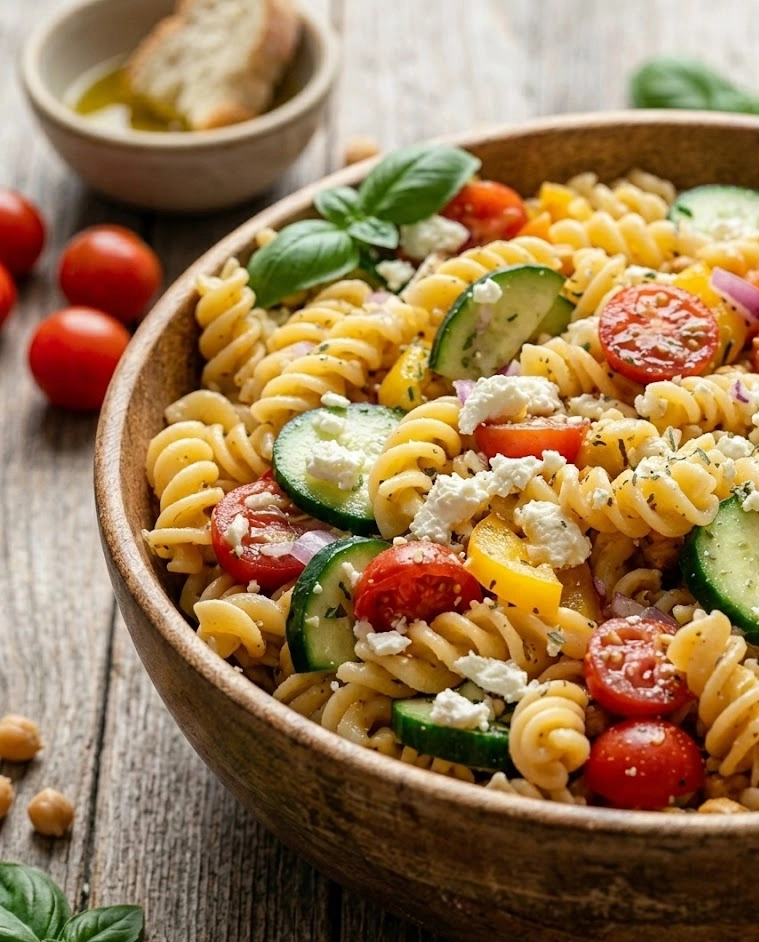
If your idea of pasta salad is a bowl of limp noodles coated in heavy mayo dressing, this recipe is going to change things for you. Greek pasta salad is everything that version is not — bright, crisp, filling, and genuinely refreshing. It is the kind of cold pasta salad that earns a permanent spot in your weekly rotation.
This version goes one step further by using high-protein pasta, which means it functions as a real meal rather than just a side dish. You get the satisfying, carb-forward base of a great pasta salad, the bold Mediterranean flavors of cucumber, tomato, feta, and fresh dill, and enough protein to actually keep you full. It is one of those pasta salad ideas that looks effortless and tastes like you put in far more work than you did.
Whether you are building a healthy meal prep lineup for the week or need something impressive for a summer gathering, this is the recipe to reach for.
Why You’ll Love This Pasta Salad
This is the kind of pasta salad recipe that genuinely delivers on every front. It is ready in about 25 minutes, requires zero cooking beyond boiling pasta, and the ingredients are simple enough to grab at any grocery store on your lunch break.
It also happens to be one of the most make-ahead-friendly pasta salad recipes out there. The flavor deepens significantly after a few hours in the fridge, which makes it perfect for Sunday meal prep and weekday lunches that feel anything but boring.
And because the dressing is oil and vinegar based rather than mayo based, it holds up beautifully without getting heavy or greasy. It stays fresh, bright, and appetizing whether you eat it the day you make it or three days later.
Common Mistakes (And How to Avoid Them)
Skipping the cucumber salting step. Cucumbers hold a significant amount of water, and if you add them straight to the salad, that moisture will slowly dilute the dressing and water down your entire bowl. Salt the sliced cucumber, let it sit for ten minutes, and pat it dry before mixing it in. This one step keeps your pasta salad dressing tasting bold rather than watered-down.
Adding all the dressing upfront. Pasta is absorbent, especially as it sits in the fridge. If you pour every drop of dressing in at the beginning, you may find your salad looking dry and dull by the next day. Hold back about a quarter of the dressing and stir it in right before serving to refresh the whole bowl.
Rinsing pasta with warm water. The point of rinsing a cold pasta salad is to stop the cooking and drop the temperature quickly. If your tap water is not genuinely cold, it is not doing the job. Use cold water — or add a handful of ice cubes to the rinse — to cool the noodles down fast and prevent them from sticking together.
Not tasting before serving. Cold temperatures dull saltiness and acidity. What tasted well-seasoned when warm will often taste flat straight from the fridge. Always taste, and adjust with a small splash of red wine vinegar, a pinch of salt, or an extra drizzle of olive oil before putting it on the table.
Chef’s Notes
If you can find Barilla Protein+ or any legume-based short pasta, use it here. It holds its shape exactly like regular pasta but brings significantly more protein per serving, which is what makes this a legitimate meal rather than just a side.
Fresh dill is worth seeking out for this recipe. Dried dill is a different ingredient entirely — it lacks the clean, grassy brightness that makes a Greek-style pasta salad feel alive. Even a small amount of fresh dill transforms the flavor profile in a way that dried herbs simply cannot replicate.
Make the dressing in a jar with a tight lid. Shake it vigorously just before pouring — this creates a better emulsion than whisking and ensures the oil and vinegar stay combined as you dress the salad rather than separating immediately on contact.
Key Ingredients
Protein pasta is the foundation and the differentiator in this recipe. Standard pasta salad recipes use regular semolina pasta, which provides carbohydrates but minimal protein. Protein-enriched pasta, made with added legume flour or egg whites, delivers a noticeably better macronutrient profile without changing the texture or flavor in any meaningful way. It is the single easiest upgrade you can make to any healthy pasta salad recipe.
Feta cheese is non-negotiable in a Greek pasta salad. Its briny, crumbly texture adds salinity and a slightly tangy richness that balances the acidity of the lemon-vinegar dressing. Block feta that you crumble yourself tends to be creamier and more flavorful than pre-crumbled bags, though both work.
Fresh dill is what signals that this is genuinely a Greek-style dish rather than a generic Mediterranean pasta salad. Its herbal, slightly anise-forward flavor is characteristic of Greek cooking and pairs particularly well with cucumber and lemon.
Red wine vinegar forms the acidic backbone of the dressing. It is sharper and more complex than white vinegar and brings a depth of flavor that complements the oregano and garlic without overpowering the fresh vegetables.
Extra virgin olive oil rounds out the dressing with richness and carries the fat-soluble flavors of the oregano and garlic throughout the salad. Use a good quality oil here — since it is not cooked, the flavor comes through directly.
Fresh lemon juice adds a citrus brightness that lifts the entire dish. The acidity works alongside the red wine vinegar to keep everything tasting fresh and vivid rather than heavy.
Bell peppers in red and yellow bring sweetness, crunch, and color. Both are fully ripe and noticeably sweeter than green peppers, which makes them the right choice for a salad where fresh vegetable flavor is one of the main attractions.
How to Make Greek Pasta Salad
Step 1 — Prep the vegetables. Peel and slice the cucumber into half-inch half-moons. Salt them lightly and set aside while you prep everything else. Dice the red and yellow bell peppers into half-inch pieces. Thinly slice the red onion. Halve the cherry tomatoes. Chop the fresh dill and have the feta crumbles ready to go.
Step 2 — Cook the pasta. Bring a large pot of heavily salted water to a rolling boil. Cook the protein pasta according to package directions until al dente, usually around nine to ten minutes. Drain thoroughly, then rinse under cold running water until completely cooled. This stops the cooking process and brings the temperature down so the dressing is not absorbed too aggressively all at once.
Step 3 — Make the dressing. Combine the olive oil, red wine vinegar, and freshly squeezed lemon juice in a jar or small bowl. Add the oregano, garlic powder, salt, and black pepper. Whisk or shake until the dressing is fully emulsified and the oil and vinegar are no longer separating.
Step 4 — Combine everything. Pat the cucumber dry and add it to a large mixing bowl along with the cooled pasta, bell peppers, red onion, and cherry tomatoes. Pour about three-quarters of the dressing over the top and toss everything together until evenly coated. Add the feta crumbles and fresh dill and toss once more gently so the feta does not break down completely.
Step 5 — Rest and serve. Taste and adjust seasoning. Cover the bowl and refrigerate for at least one hour before serving. Just before plating, stir in the remaining dressing, taste one more time, and adjust with extra salt, vinegar, or olive oil as needed.
Variations and Tips
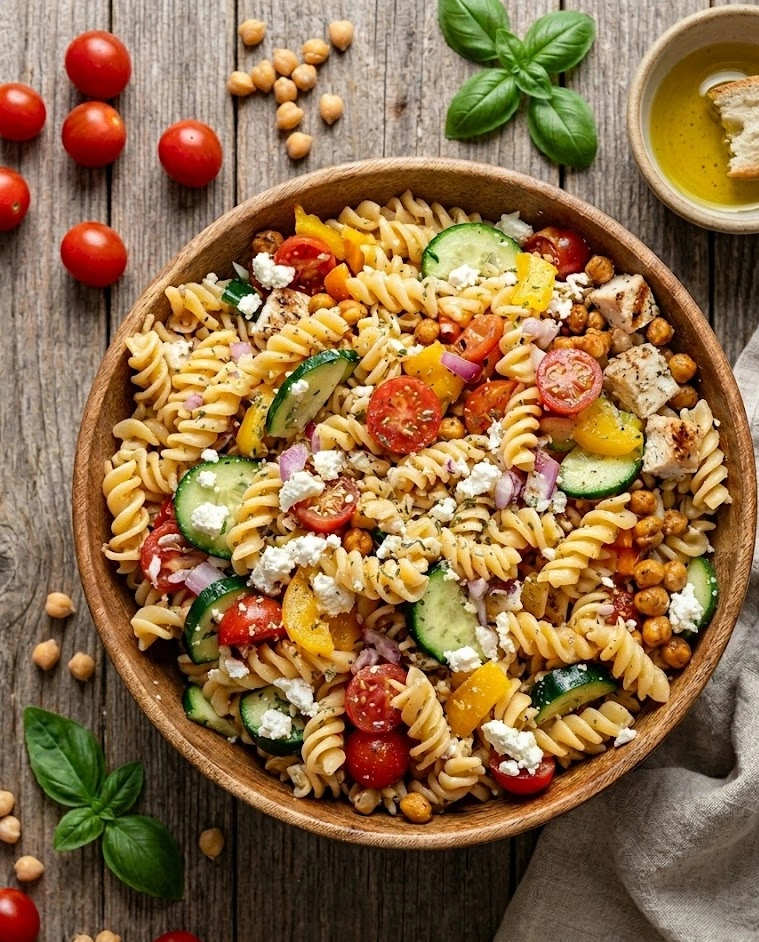
Add chicken for a pasta salad with chicken that works as a full dinner. Grilled lemon-herb chicken thighs sliced over the top or mixed in make this a genuinely complete and satisfying meal.
Make it vegan by swapping the feta for a plant-based feta alternative or simply using extra olives and a handful of chickpeas for the same briny, creamy effect.
Go gluten-free with chickpea or lentil rotini. These varieties hold up well in cold pasta salads and absorb dressing without turning mushy.
For a more aesthetic pasta salad presentation, use tricolor pasta, arrange the toppings by color in sections before tossing, and finish with a generous crumble of feta and a few whole dill sprigs on top. It photographs beautifully for Pinterest and social media.
Boost the brine by adding Kalamata olives and a tablespoon of capers. Both intensify the savory, Mediterranean flavor profile and complement the feta especially well.
Looking for more pasta salad inspiration? This Ultimate Pasta Salad Recipes Guide brings together 20 of the best easy, healthy cold pasta salad recipes — from classic Italian pasta salad with Italian dressing and creamy pasta salad to chicken pasta salad, Mediterranean, Greek, pesto, tahini Caesar, BLT, Hawaiian mac salad, and more. Every recipe is make-ahead friendly, packed with flavor, and built for real weekday meals and weekend entertaining. Browse all 20 pasta salad ideas and find your next favorite recipe.
How to Meal Prep This Pasta Salad
This is one of the strongest pasta salad ideas for structured weekly meal prep because it holds its quality over several days and the flavor actually improves as it sits.
Cook a full batch on Sunday. Divide it into individual airtight containers sized for one serving each. It will stay fresh and flavorful in the refrigerator for up to four days without any loss of quality.
If you want to keep the vegetables as crisp as possible through the week, store the chopped cucumber, tomato, and pepper separately in a second container and combine them with the dressed pasta each morning. This takes an extra thirty seconds and makes a noticeable difference in texture by day three or four.
For the dressing, make a double batch and store the extra in a sealed jar in the fridge for up to two weeks. It doubles as a salad dressing for green salads, a marinade for grilled chicken, or a quick drizzle over roasted vegetables — making it one of the most useful things you can have on hand during a busy week.
Cultural Context
Greek salad — known in Greece as horiatiki — is one of the most iconic dishes in Mediterranean cuisine. The classic version contains no lettuce and no pasta: just tomatoes, cucumbers, peppers, red onion, olives, and a slab of feta, dressed simply with olive oil and dried oregano. It is a dish built entirely around the quality of its raw ingredients, which reflects the broader Greek philosophy that good food does not need to be complicated.
The pasta salad version we know today is an adaptation that emerged largely through Greek-American and Mediterranean-influenced cooking in the United States. By pairing those classic horiatiki flavors with pasta, the dish transforms from a side into a complete meal — one that travels easily, holds well, and feeds a crowd without much effort.
The lemon and red wine vinegar dressing in this recipe is deeply rooted in Greek cooking tradition. Red wine vinegar is a pantry staple across the Aegean, and lemon is used as liberally in Greek kitchens as salt. Together they create the bright, acidic backbone that defines Mediterranean salad dressings and keeps this pasta salad tasting clean and vibrant rather than heavy — exactly as a dish inspired by one of the world’s great culinary traditions should.
High Protein Greek Pasta Salad
Equipment
- large pot
- colander
- mixing bowl
- knife
- cutting board
- Jar with lid for dressing
Ingredients
- 300 g protein pasta
- 1 cucumber, sliced
- 1 cup cherry tomatoes, halved
- 1 red bell pepper, diced
- 1 yellow bell pepper, diced
- 1/2 red onion, thinly sliced
- 150 g feta cheese, crumbled
- 2 tbsp fresh dill, chopped
- 1/4 cup extra virgin olive oil
- 2 tbsp red wine vinegar
- 2 tbsp fresh lemon juice
- 1 tsp dried oregano
- 1/2 tsp garlic powder
- salt, to taste
- black pepper, to taste
Instructions
- Slice the cucumber and lightly salt it, then let it sit for 10 minutes before patting dry. Dice the bell peppers, slice the onion, halve the tomatoes, and chop the dill.
- Bring a large pot of salted water to a boil and cook the protein pasta until al dente. Drain and rinse under cold water until fully cooled.
- In a jar or bowl, combine olive oil, red wine vinegar, lemon juice, oregano, garlic powder, salt, and pepper. Shake or whisk until emulsified.
- In a large bowl, combine pasta, cucumber, bell peppers, onion, and tomatoes. Add most of the dressing and toss to coat evenly.
- Add feta and fresh dill, then toss gently. Refrigerate for at least one hour. Before serving, add remaining dressing and adjust seasoning.