
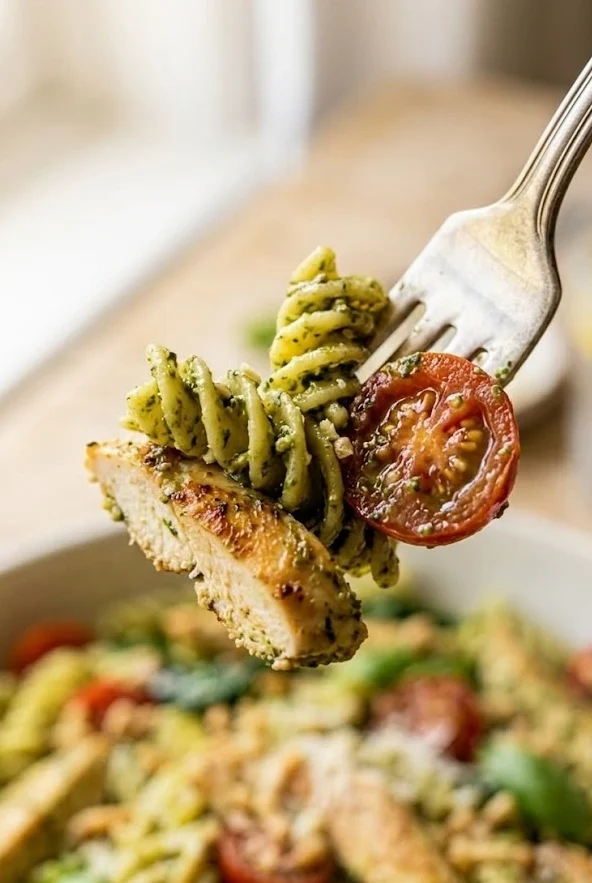
There are weeknight pasta dishes, and then there are recipes that stop you mid-bite and make you put your fork down just to appreciate what is happening. Chicken Pesto Pasta is that recipe. It is vibrant, deeply herby, loaded with tender chicken, and finished with a pesto that coats every single piece of pasta in pure basil-forward flavor.
This sits right at the crossroads of pasta salad ideas and a proper Italian-inspired meal. Serve it warm straight from the pan or cold from the fridge the next day – it is extraordinary either way, and it belongs in your regular rotation immediately.
Why You’ll Love This Chicken Pesto Pasta Recipe
What makes this recipe stand apart from standard pasta salad recipes is the pesto itself. Where a classic pasta salad with Italian dressing leans tangy and briny, pesto brings a rich, grassy, almost buttery depth that feels entirely different – and completely addictive.
Add chicken for protein and substance, and you have one of the most satisfying pasta salad ideas that functions equally well as a side dish or a full meal. It is the kind of recipe that looks impressive but is genuinely simple to pull together on any given evening.
Here is exactly why this recipe earns its place at the top of your pasta salad ideas list:
- On the table in under 30 minutes from start to finish
- Works hot, room temperature, or as a cold pasta salad
- One of the most naturally pasta salad healthy options available
- Stunning green color makes it a total pasta salad aesthetic standout
- Easily scaled up for crowds or down for solo meal prep
Common Chicken Pesto Pasta Mistakes (And How to Avoid Them)
Even with a recipe this straightforward, a few missteps can flatten the flavor or ruin the texture. Here is what to watch for.
Mistake 1: Using store-bought pesto without enhancing it. Jarred pesto is convenient and perfectly usable, but it almost always needs help. Stir in a squeeze of fresh lemon juice, a little extra Parmesan, and a drizzle of good olive oil before using it as your pasta salad dressing. The difference is immediate and significant.
Mistake 2: Overcooking the chicken. Dry, rubbery chicken is the fastest way to ruin a pasta salad with chicken. Cook it just until the internal temperature reaches 74°C (165°F) and let it rest before slicing. Rotisserie chicken is an excellent shortcut that guarantees juicy results every time.
Mistake 3: Adding pesto to steaming hot pasta. Heat destroys the bright green color and delicate basil flavor that make this recipe so beautiful. Let the pasta cool for 3 to 4 minutes before tossing with pesto to preserve both the color and the pasta salad aesthetic.
Mistake 4: Under-seasoning the final dish. Pesto can taste flat if the dish is not properly seasoned. Always taste after tossing and add salt, pepper, and an extra squeeze of lemon as needed. A pinch of chili flakes also does wonders here.
Key Ingredients in This Chicken Pesto Pasta
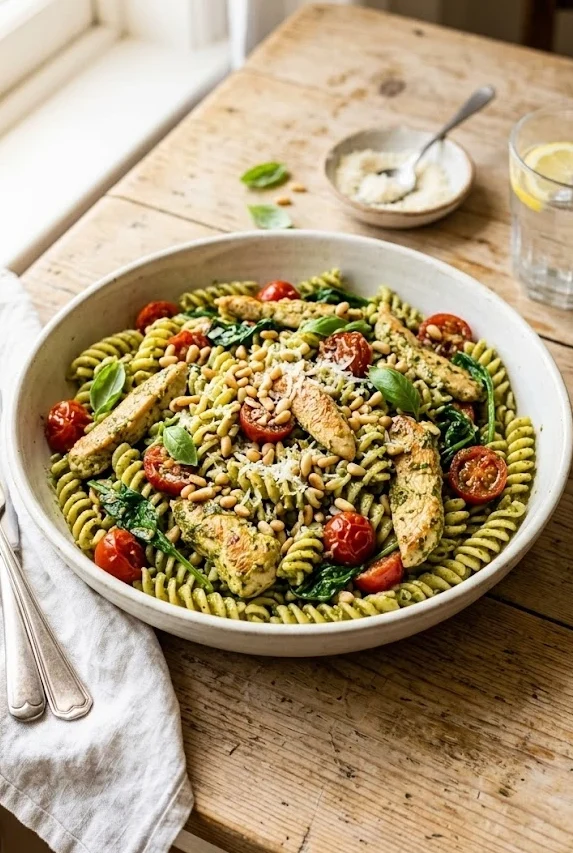
Pasta (fusilli or trofie): Fusilli is ideal for this recipe because its tight spirals grip the pesto and hold it against the pasta rather than letting it slide off. Trofie is the traditional pasta salad italian pairing for pesto, but any short pasta with texture works well.
Chicken breast or thigh: Breast gives a leaner result that suits a pasta salad healthy profile. Thigh is juicier and more forgiving if you are worried about overcooking. Both work beautifully in this pasta salad with chicken.
Basil pesto: The soul of the dish. Homemade is always worth it when you have the time – fresh basil, pine nuts, Parmesan, garlic, and olive oil blended into a thick, fragrant sauce. Store-bought is a completely valid shortcut for pasta salad recipes easy enough for busy weeknights.
Cherry tomatoes: Their sweetness and acidity cut through the richness of the pesto and add bursts of color that elevate the pasta salad aesthetic significantly.
Baby spinach or arugula: Stirred in at the end, these greens wilt slightly against the warm pasta and add both nutritional value and a peppery depth. This is what pushes this into genuine pasta salad recipes healthy territory.
Parmesan: Freshly grated over the top just before serving. Do not use the pre-grated stuff from a can – it does not melt or flavor the dish the same way.
Lemon: A squeeze of fresh lemon juice over the finished dish is non-negotiable. It lifts every other flavor and keeps the pesto tasting bright and fresh rather than heavy.
Pine nuts or walnuts: Toasted and scattered on top for crunch and nuttiness. This small finishing touch makes a large visual and textural difference.
How to Make Chicken Pesto Pasta
This recipe moves quickly, so have everything prepped before you start cooking.
- Season and cook the chicken. Pat 2 large chicken breasts or 4 thighs dry with paper towels. Season generously with salt, black pepper, garlic powder, and a drizzle of olive oil. Heat a skillet over medium-high heat and cook for 5 to 6 minutes per side until golden and cooked through. Transfer to a plate, cover loosely with foil, and rest for 5 minutes before slicing into strips or bite-sized pieces.
- Cook the pasta. Bring a large pot of generously salted water to a boil. Cook 300g (10 oz) fusilli according to package directions until just al dente. Reserve ½ cup of pasta cooking water before draining – this starchy water is essential for loosening the pesto into a silky pasta salad dressing consistency.
- Drain the pasta. For a warm dish, drain without rinsing. For a cold pasta salad version, rinse under cold water and drain thoroughly.
- Prepare the pesto dressing. If using store-bought pesto, transfer ½ cup to a bowl and stir in 1 tablespoon lemon juice, 2 tablespoons freshly grated Parmesan, and 1 tablespoon olive oil. If making homemade, blend 2 cups fresh basil, ⅓ cup pine nuts, ½ cup Parmesan, 2 garlic cloves, and ½ cup olive oil until smooth. Season with salt and pepper.
- Combine pasta and pesto. Add the drained pasta to a large bowl. Spoon over the pesto and toss well to coat. Add pasta water a tablespoon at a time if the mixture feels too thick or dry.
- Add the chicken and tomatoes. Fold in the sliced chicken and halved cherry tomatoes (200g). Toss gently so the tomatoes stay intact and the chicken is evenly distributed throughout the pasta salad.
- Fold in the greens. Add a large handful of baby spinach or arugula and toss once more. The residual warmth of the pasta will gently wilt the leaves without cooking them.
- Taste and finish. Squeeze half a lemon over the entire dish. Taste and adjust salt and pepper. Serve immediately topped with freshly grated Parmesan, toasted pine nuts, and a drizzle of good olive oil. Or cover and refrigerate for a stunning cold pasta salad the next day.
Variations and Pro Tips for Pasta Salad Recipes
Make it a cold pasta salad: This recipe transitions beautifully into pasta salad recipes cold territory. Simply rinse the pasta after cooking, toss with pesto at room temperature, and refrigerate for an hour before serving. Add a little extra pesto before serving as the pasta will absorb it as it chills.
Pasta salad with Italian dressing hybrid: Stir 2 tablespoons of Italian dressing into the pesto for a tangier, brighter pasta salad dressing that leans more into classic pasta salad italian flavor profiles.
Pasta salad healthy upgrades: Use whole wheat or chickpea pasta, increase the spinach or arugula significantly, and use a lighter pesto made with half the oil and extra lemon. The result is a pasta salad recipes healthy version that still tastes deeply satisfying.
Vegan version: Skip the chicken and Parmesan. Use a vegan pesto made with nutritional yeast instead of cheese and add roasted chickpeas for protein. Still one of the best pasta salad ideas for plant-based eaters.
Looking for more pasta salad inspiration? This Ultimate Pasta Salad Recipes Guide brings together 20 of the best easy, healthy cold pasta salad recipes — from classic Italian pasta salad with Italian dressing and creamy pasta salad to chicken pasta salad, Mediterranean, Greek, pesto, tahini Caesar, BLT, Hawaiian mac salad, and more. Every recipe is make-ahead friendly, packed with flavor, and built for real weekday meals and weekend entertaining. Browse all 20 pasta salad ideas and find your next favorite recipe.
Pro Tips:
- Toast the pine nuts in a dry pan for 2 minutes before using – the difference in flavor is remarkable.
- Add sun-dried tomatoes for a more intense, concentrated flavor alongside the fresh cherry tomatoes.
- A tiny scrape of lemon zest into the pesto doubles the citrus brightness without adding more liquid.
- For the most vibrant pasta salad aesthetic, do not mix the pesto in too aggressively – fold it gently so the green color stays vivid rather than turning muddy.
How to Meal Prep This Chicken Pesto Pasta
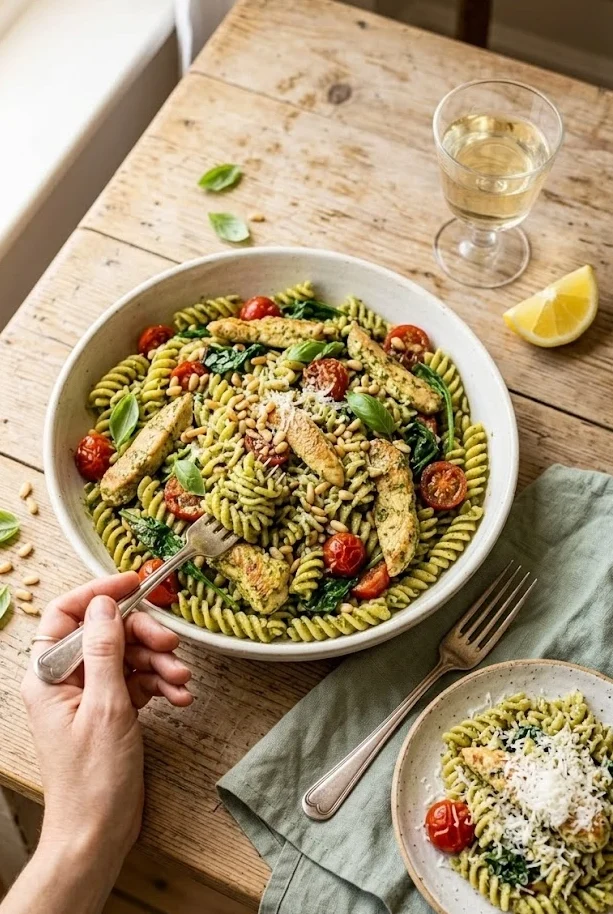
Chicken Pesto Pasta is one of the smartest pasta salad ideas for weekly meal prep because every component stores well and the flavors genuinely improve after a night in the fridge. Cook a double batch of chicken on Sunday and you will have protein ready for multiple meals throughout the week.
Store the assembled pasta salad in an airtight container in the fridge for up to 4 days. Keep a small amount of extra pesto in a separate jar and stir a teaspoon through each portion before eating to freshen the flavor and restore the vibrant green color that fades slightly as it sits.
For individual meal prep containers, portion the pasta and chicken first, then add cherry tomatoes and fresh greens only to the portions you plan to eat that day. This keeps the textures crisp and the presentation looking like a proper pasta salad aesthetic rather than a sad desk lunch.
FAQs About Chicken Pesto Pasta
Can I use store-bought pesto for this recipe? Absolutely. This is one of the most pasta salad recipes easy approaches precisely because good-quality jarred pesto works perfectly. Just enhance it with fresh lemon juice, extra Parmesan, and a drizzle of olive oil before using it as your pasta salad dressing.
Can I serve this as a cold pasta salad? Yes, and it is wonderful cold. It becomes a fully realized pasta salad recipes cold dish after an hour in the fridge. The pesto thickens and clings to the pasta even more intensely when chilled. Stir through a little extra pesto or a splash of olive oil before serving to loosen it.
Is chicken pesto pasta healthy? It is one of the most naturally pasta salad healthy recipes available. Pesto is made from whole food ingredients, chicken provides lean protein, and the fresh greens and tomatoes add significant nutritional value. Use whole wheat pasta to increase fiber further.
How do I stop the pesto from turning brown? The key is the lemon juice – acid preserves the green color of the basil. Also avoid exposing the pesto to excessive heat and store the finished dish covered tightly in the fridge to minimize oxidation. Folding rather than aggressively stirring also helps maintain that vivid green pasta salad aesthetic.
The Cultural Context Behind Pesto Pasta
Pesto originates from Genoa in the Liguria region of northwestern Italy, where it has been made for centuries using the intensely fragrant local basil, Ligurian olive oil, pine nuts, garlic, Pecorino, and Parmigiano-Reggiano. The word pesto comes from the Italian verb pestare, meaning to pound or crush – a reference to the traditional mortar and pestle method still used by purists today.
The pairing of pesto with pasta is one of the most iconic in all of pasta salad italian and broader Italian cuisine. Trofie al pesto is practically the national dish of Liguria. Bringing chicken into that combination is a modern, practical adaptation that reflects how Italian-American cooking has always worked – taking the soul of an Italian classic and building it into something generous, accessible, and built for feeding a table full of people.
Chicken Pesto Pasta
Equipment
- large pot
- skillet
- colander
- mixing bowl
- knife and cutting board
Ingredients
- 300 g fusilli pasta
- 2 chicken breasts or 4 thighs
- salt and black pepper to taste
- 1 tsp garlic powder
- 2 tbsp olive oil
- 1/2 cup basil pesto
- 1 tbsp lemon juice
- 2 tbsp Parmesan cheese, grated
- 200 g cherry tomatoes, halved
- 1 handful baby spinach or arugula
- 2 tbsp pine nuts or walnuts, toasted
- extra Parmesan for serving
Instructions
- Season chicken with salt, pepper, garlic powder, and olive oil. Cook in a skillet over medium-high heat for 5–6 minutes per side until fully cooked. Rest and slice.
- Bring a large pot of salted water to a boil and cook pasta until al dente. Reserve some pasta water, then drain.
- For cold pasta salad, rinse pasta under cold water and drain well. For warm version, skip rinsing.
- In a bowl, mix pesto with lemon juice, Parmesan, and olive oil to enhance flavor.
- Toss pasta with pesto, adding a little reserved pasta water if needed to loosen the sauce.
- Add sliced chicken and cherry tomatoes. Toss gently to combine.
- Fold in spinach or arugula and allow it to wilt slightly from the pasta’s warmth.
- Finish with lemon juice, extra Parmesan, toasted nuts, and adjust seasoning. Serve warm or chilled.