
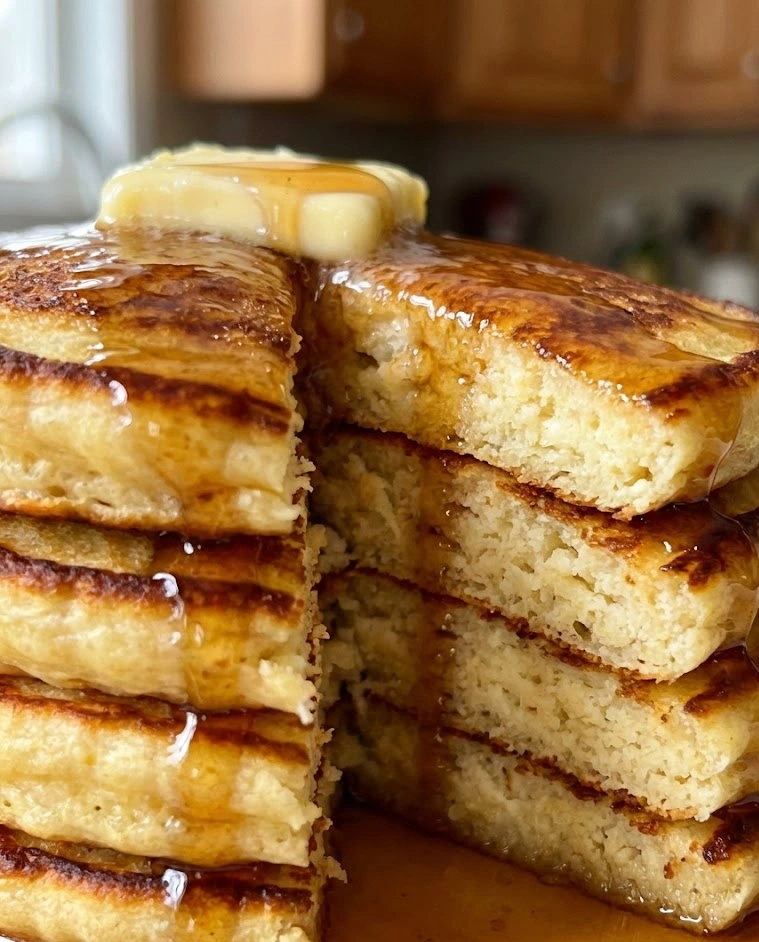
If you’ve been scrolling through cottage cheese recipes lately and wondering whether the hype is real — let this be the recipe that converts you for good. Cottage Cheese Pancakes are light, golden, protein-packed, and so satisfyingly fluffy that you’ll find yourself making them on repeat, weekday and weekend alike.
Here’s the beautiful thing: cottage cheese doesn’t taste like cottage cheese once it hits a hot pan. It melts seamlessly into the batter, lending a rich creaminess and a subtle tang that makes these pancakes taste almost like they came from a high-end brunch spot — except you made them in your own kitchen in under 20 minutes.
This is the breakfast upgrade you didn’t know you needed. Let’s make it happen.
Why You’ll Love This Recipe
The number one reason? The protein content is genuinely impressive. A standard stack of these pancakes delivers upwards of 20–25 grams of protein depending on your serving size — without protein powder, without supplements, without any of the chalky aftertaste that comes with “healthy” pancake alternatives. Cottage cheese does all the heavy lifting naturally.
Beyond the nutrition, these pancakes are weekday-friendly fast. The batter comes together in a single blender in about two minutes flat. There’s no separating eggs, no folding whipped whites, no resting the batter for an hour. Just blend, pour, and flip.
And perhaps most importantly — they are genuinely, legitimately delicious. The edges crisp up beautifully in butter, the centers stay pillowy soft, and they hold toppings like a dream. Kids love them, adults go back for seconds, and nobody ever guesses the secret ingredient until you tell them.
Common Mistakes (And How to Avoid Them)
Mistake #1: Using low-fat or fat-free cottage cheese. This is the most common pitfall in cottage cheese recipes, and it matters here more than almost anywhere else. Low-fat cottage cheese has a higher water content and less richness, which leads to thin, fragile pancakes that fall apart on the spatula. Always reach for full-fat — your pancakes will be structurally sound and far more flavorful.
Mistake #2: Skipping the blending step. Some recipes suggest stirring the batter by hand and leaving the curds intact. While this technically works, it produces an uneven, lumpy texture that many people find off-putting. Blending the cottage cheese smooth first is what creates that silky, creamy batter that mimics traditional pancakes so perfectly.
Mistake #3: Cooking on heat that’s too high. Cottage cheese pancakes are more delicate than their all-purpose flour counterparts. A pan that’s too hot will scorch the outside while leaving the center raw and wet. Medium heat — patient, consistent, medium heat — is your best friend here. Give the pan a full minute to preheat before the first pour.
Mistake #4: Flipping too early. Wait for the edges to look set and for bubbles to form across the surface before you even think about reaching for the spatula. These pancakes need a full 2–3 minutes on the first side. Rushing the flip leads to broken, deflated pancakes, and nobody deserves that heartbreak at breakfast.
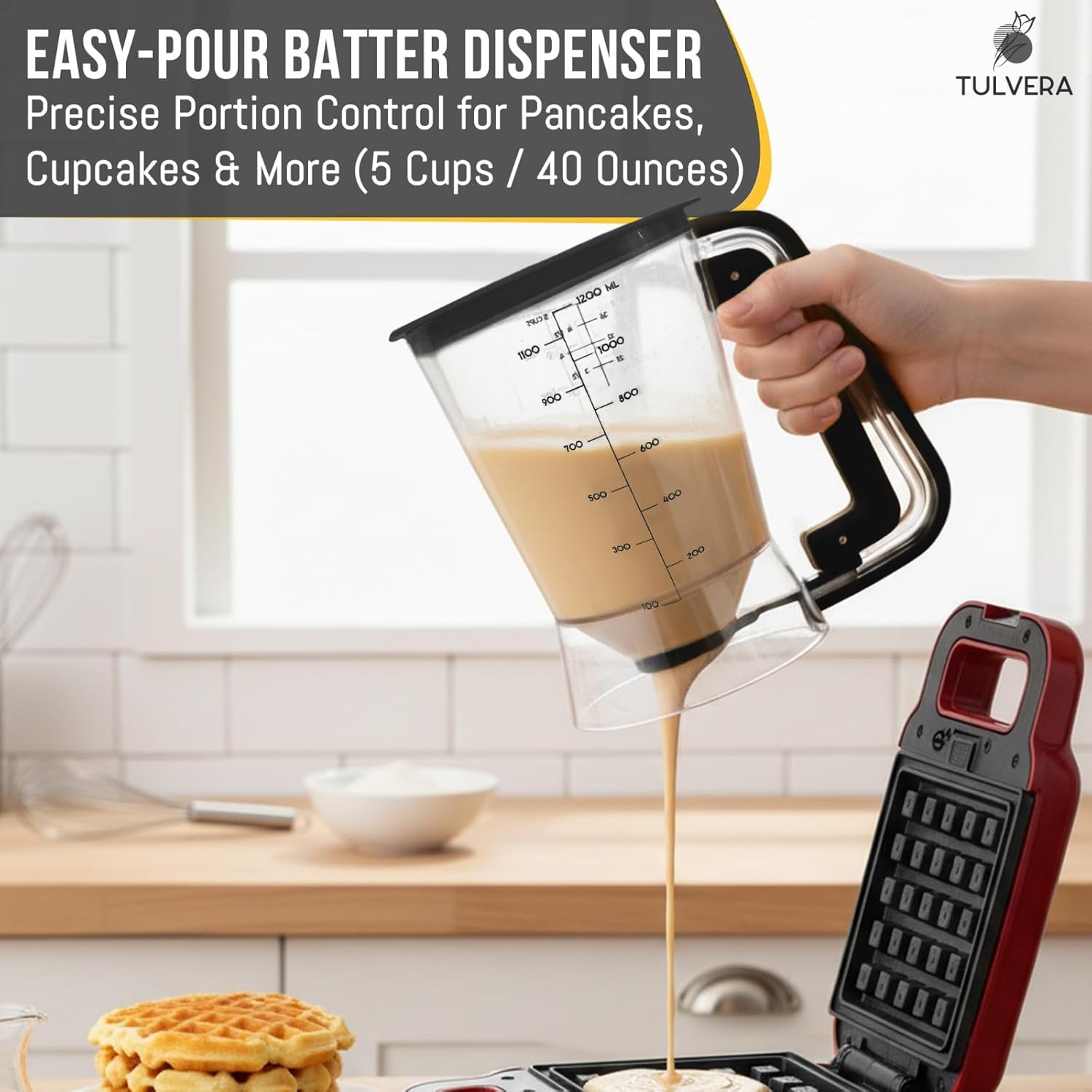
This Gadget Will Change Your Pancake Game Forever
 Buy Now →
 Chef’s Notes
The first time I made these, I was skeptical. Cottage cheese in pancakes felt like a wellness blogger trick — technically healthy but culinarily questionable. I was completely, happily wrong.
The real magic here is in what cottage cheese contributes structurally. The proteins in cottage cheese coagulate as they cook, which actually helps bind the pancakes and gives them a slightly chewy, satisfying interior that flour-only pancakes often lack. It’s the same principle behind using ricotta in Italian pancakes — the fresh cheese acts as both a binder and a tenderizer simultaneously.
My personal flourish: a tiny splash of vanilla extract and a quarter teaspoon of cinnamon in the batter. Neither flavor dominates, but together they add a warmth and depth that makes these taste far more intentional than a five-ingredient recipe has any right to be.
Key Ingredients
Full-Fat Cottage Cheese: The foundation of everything and the reason this lands squarely in the pantheon of great cottage cheese recipes. When blended smooth, full-fat cottage cheese creates a creamy, slightly tangy batter base that produces extraordinarily moist pancakes. The fat content is essential — it provides richness, prevents sticking, and contributes to that golden, lacy-edged exterior we’re all chasing.
Eggs: Two large eggs do double duty here. They bind the batter and add additional protein, pushing the nutritional profile even further into genuinely impressive territory. Use room temperature eggs if you can — they incorporate more evenly into the blended batter.
Rolled Oats or All-Purpose Flour: This is where you have a real choice. Rolled oats (blended into the batter) make these naturally gluten-free and add a slight nuttiness and fiber boost. All-purpose flour produces a more traditionally smooth, classic pancake texture. Both are excellent; it simply depends on your preference and dietary needs.
Baking Powder: Just half a teaspoon is enough to give the pancakes their lift and that signature fluffy interior. Don’t skip it, and make sure yours isn’t expired — a flat baking powder produces flat pancakes, full stop.
Vanilla Extract & Cinnamon: Technically optional, but strongly encouraged. Vanilla rounds out the mild tanginess of the cottage cheese, and cinnamon adds warmth without making these taste like a spice cake. Together they are the quiet heroes of this recipe.
Butter (for the pan): Cooking in real butter creates that gorgeous golden crust and adds a richness to the exterior that cooking spray simply cannot replicate. Use unsalted butter and add a fresh pat for each batch.
How to Make Cottage Cheese Pancakes
Yield: ~10 pancakes (2–3 servings) | Prep Time: 5 minutes | Cook Time: 15 minutes | Total Time: 20 minutes
Ingredients:
- 1 cup full-fat cottage cheese
- 2 large eggs, room temperature
- ½ cup rolled oats (or ½ cup all-purpose flour)
- ½ teaspoon baking powder
- 1 teaspoon vanilla extract
- ¼ teaspoon cinnamon
- Pinch of salt
- 1–2 tablespoons maple syrup or honey (optional, for sweetness)
- Unsalted butter, for the pan
For serving:
- Fresh berries, sliced banana, or peach compote
- Maple syrup
- Greek yogurt or whipped cream
- A dusting of powdered sugar
Instructions:
- Blend the batter. Add the cottage cheese, eggs, oats (or flour), baking powder, vanilla extract, cinnamon, salt, and maple syrup (if using) to a blender. Blend on high for 45–60 seconds until the batter is completely smooth and no curds remain. The batter will be thinner than traditional pancake batter — this is normal and correct.
- Rest the batter. Let the blended batter sit for 3–5 minutes while you heat the pan. This brief rest allows the oats (if using) to absorb a little moisture and the baking powder to activate, which gives you fluffier results.
- Heat your pan. Place a non-stick skillet or griddle over medium heat. Add about half a teaspoon of unsalted butter and let it melt completely, swirling to coat the surface. The butter should foam gently but not brown — if it browns immediately, your heat is too high. Reduce it slightly.
- Pour the batter. Use a ¼ cup measuring cup to pour batter portions onto the pan. These pancakes should be on the smaller side — about 3 to 4 inches in diameter — which makes them far easier to flip successfully than large, ambitious rounds.
- Cook the first side. Let the pancakes cook undisturbed for 2–3 minutes. You’ll know they’re ready to flip when the edges look visibly set and small bubbles have formed and begun to pop across the surface. Do not rush this.
- Flip with confidence. Use a thin, wide spatula and flip each pancake in one smooth, decisive motion. Cook the second side for 1–2 minutes until golden brown. The second side always cooks faster than the first.
- Keep warm and repeat. Transfer finished pancakes to a baking sheet in a 200°F oven to stay warm while you cook the remaining batches. Add a fresh pat of butter to the pan between each batch.
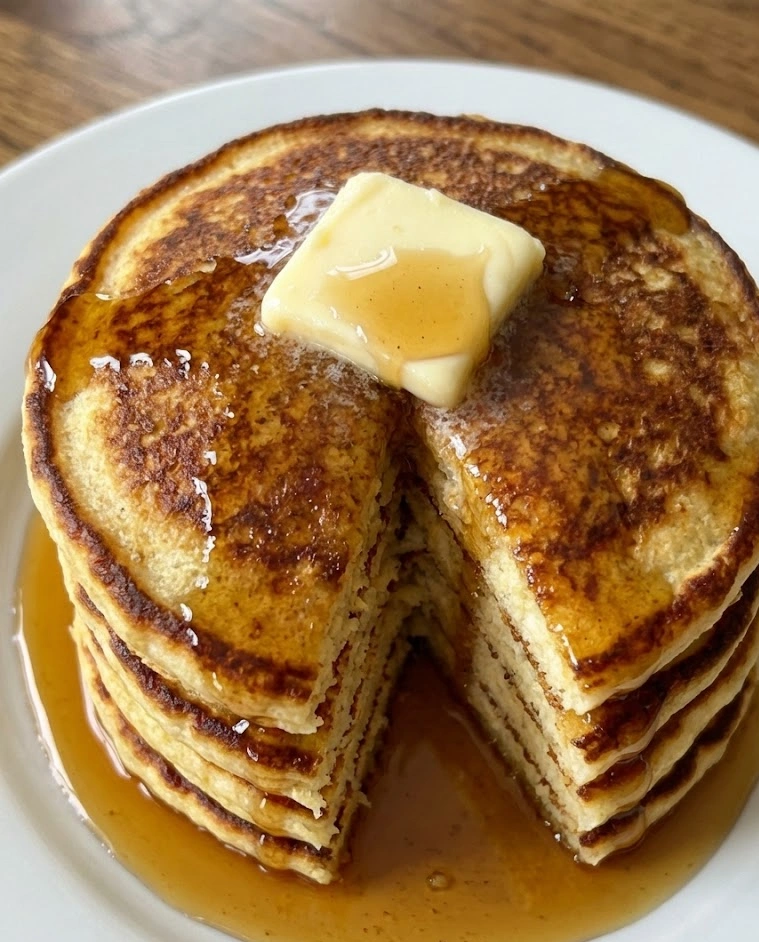
- Stack, top, and serve. Pile them high, drizzle generously with maple syrup, and add your toppings of choice. Serve immediately for maximum fluffiness.
Variations & Tips
Make it gluten-free: Use certified gluten-free rolled oats instead of flour. The texture is slightly heartier and nuttier, which many people actually prefer to the flour version.
Make it dairy-free: Swap the cottage cheese for a thick, unsweetened coconut yogurt or a full-fat dairy-free ricotta alternative. The protein content will drop, but the texture holds up reasonably well.
Savory version: Skip the vanilla, cinnamon, and maple syrup entirely. Add two tablespoons of finely chopped chives, a pinch of garlic powder, and a handful of shredded sharp cheddar to the batter. Top with a soft-fried egg and hot sauce — it’s an entirely different, equally spectacular dish.
Add-in ideas: Fold blueberries, chocolate chips, or finely diced apple directly into the batter after blending for built-in flavor pockets in every bite.
Meal prep tip: These pancakes refrigerate and reheat beautifully. Make a full batch, let them cool completely, then stack them between sheets of parchment paper in an airtight container. They’ll keep for 4 days in the fridge and up to 2 months in the freezer. Reheat in a toaster for crispy edges, or in the microwave for 60 seconds for a softer result.
Pro Tip — The Size Rule: Keep your pancakes small. Four inches max. Cottage cheese batter is more delicate than traditional batter, and smaller pancakes flip cleanly every single time. Resist the urge to make diner-style large rounds until you’ve gotten a feel for the batter’s behavior.
Cultural Context
Cottage cheese pancakes are not a new invention — they’re a beautiful, long-standing tradition hiding in plain sight across multiple culinary cultures. In Eastern Europe, particularly in Russia and Ukraine, a nearly identical dish called syrniki has been a beloved breakfast staple for centuries. Made with tvorog (a fresh farmer’s cheese closely related to cottage cheese), eggs, and a touch of flour, syrniki are pan-fried until golden and served with sour cream and jam. They are comfort food at its most fundamental — simple, nourishing, and deeply tied to the rhythms of home cooking.
Scandinavian cuisines have their own versions as well, often incorporating oats and lingonberry jam as accompaniments, reflecting the region’s long tradition of using fresh dairy in everyday baking.
In the American context, cottage cheese pancakes gained traction in mid-century cookbooks as a thrifty, protein-forward breakfast option during postwar years when home economists were enthusiastically promoting cottage cheese as a nutritional powerhouse. They faded somewhat from the mainstream as processed breakfast foods took over grocery store shelves — but they never fully disappeared from the recipe boxes of grandmothers who knew better.
Today, the explosion of cottage cheese recipes across social media is bringing these pancakes back to a whole new generation of home cooks who are discovering what Eastern European grandmothers and mid-century dietitians have always known: cottage cheese is one of the most quietly extraordinary ingredients in the entire kitchen. These pancakes are proof of that, one golden, fluffy stack at a time.
Cottage Cheese Pancakes
Ingredients
Equipment
Method
- Add cottage cheese, eggs, oats (or flour), baking powder, vanilla extract, cinnamon, salt, and maple syrup (if using) to a blender. Blend 45–60 seconds until completely smooth.
- Let the batter rest for 3–5 minutes while heating the pan to allow oats to hydrate and baking powder to activate.
- Heat a non-stick skillet over medium heat and melt butter to coat the surface.
- Pour about 1/4 cup batter per pancake onto the skillet, keeping pancakes 3–4 inches in diameter.
- Cook 2–3 minutes until edges are set and bubbles form on surface.
- Flip and cook 1–2 minutes more until golden brown.
- Repeat with remaining batter, adding more butter as needed. Keep pancakes warm in a 200°F oven if desired.
- Serve warm with maple syrup, fresh fruit, yogurt, or desired toppings.