
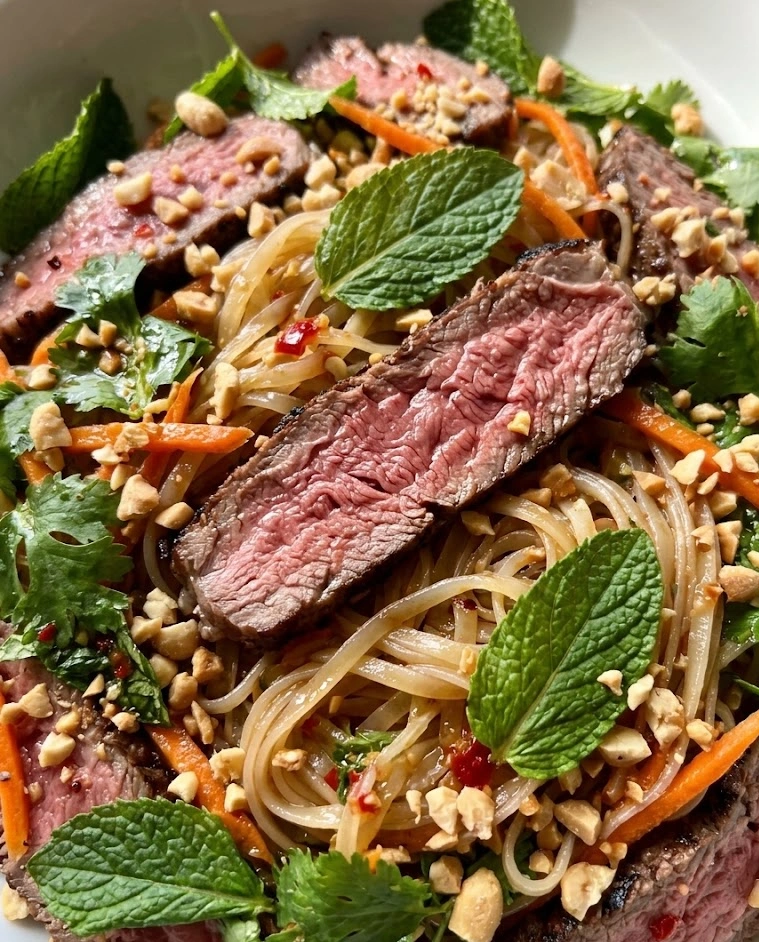
You’ve tried the grilled chicken. You’ve done the pasta salads. Your spring dinner ideas have been perfectly fine — but somewhere deep down, you know you want something that actually makes you lean forward at the table, eyes wide, reaching for another bite before you’ve finished the first. That dish exists, and it’s called Crying Tiger Beef Noodle Salad.
Crying Tiger is one of Thailand’s most celebrated and thrilling grilled beef dishes — smoky, intensely flavored beef served with a dipping sauce so bold and complex it allegedly makes tigers cry. We’ve taken that legendary foundation and built something extraordinary around it: springy rice noodles, an avalanche of fresh herbs and crisp vegetables, and that iconic sauce poured generously over everything like a dressing that rewires your brain.
This is what spring dinner ideas look like when you stop playing it safe. It’s light enough for a warm evening, exciting enough to silence a table, and fast enough for a Tuesday night. Let’s make something unforgettable.
Why You’ll Love This Crying Tiger Beef Noodle Salad
This recipe earns a permanent spot at the top of your spring dinner ideas list — and here’s exactly why:
- Ready in 35 minutes — the sauce and noodles come together while the beef marinates and grills. Everything lands on the table at once with minimal chaos.
- An explosion of flavor and texture — smoky beef, springy noodles, crisp vegetables, fresh herbs, and a sauce that hits every single taste receptor simultaneously. It’s genuinely thrilling to eat.
- Light but deeply satisfying — rice noodles and fresh vegetables make it feel like a true spring dinner while the beef and bold sauce make sure nobody leaves the table hungry.
- Wildly impressive for guests — this looks and tastes like a restaurant dish. Nobody needs to know how simple it actually is.
- Naturally gluten-free adaptable — with a simple soy sauce swap, the entire dish is gluten-free without losing a single drop of flavor.
Common Mistakes — And How to Avoid Them
This recipe is more forgiving than its exotic name suggests — but a few missteps are worth knowing about in advance.
Using the wrong cut of beef. Crying Tiger demands a cut with the right balance of tenderness and beefy flavor. Flank steak, skirt steak, and ribeye are all exceptional choices. Avoid anything labeled “stew beef” or round — these cuts are too tough and dry for quick, high-heat grilling and will make the whole dish feel chewy and disappointing.
Overcooking the beef. The goal is medium-rare to medium — a blush of pink in the center, a deeply charred, caramelized exterior. Crying Tiger beef cooked to well-done loses the juiciness and depth that make the dish extraordinary. Use a thermometer: 130–140°F (54–60°C) for medium-rare to medium, and pull it off the grill before it reaches that temperature as it will continue cooking as it rests.
Skipping the rest. After grilling, the beef absolutely must rest for at least 5–7 minutes before slicing. This is not optional. Cutting too soon sends all the accumulated juices streaming out onto your cutting board instead of staying locked inside the meat where they belong.
Slicing with the grain instead of against it. This is the single most common reason grilled beef ends up chewy. Always identify the direction of the muscle fibers and cut perpendicular to them — across the grain — into thin slices. The difference in tenderness is dramatic and immediately obvious.
Overdressing the noodles too early. Rice noodles absorb liquid aggressively and will soak up your dressing and turn sticky and clumped if dressed too far in advance. Toss the noodles with a light drizzle of sesame oil right after cooking to keep them separate, and dress the full salad only just before serving.
Making the sauce timid. The Crying Tiger dipping sauce is supposed to be bold, punchy, and borderline aggressive. Taste it and keep adjusting — it should make you blink. If it tastes flat or polite, add more fish sauce, more lime, or more chili until it’s fully alive.
Chef’s Notes
The details that take this from a good noodle salad to a genuinely legendary spring dinner:
- Score the beef lightly before marinating — just a few shallow diagonal cuts across the surface. It’s not about tenderizing; it’s about giving the marinade more surface area to cling to and promoting better caramelization on the grill.
- Use toasted rice powder in the sauce. This is the authentic Crying Tiger secret weapon. Toast raw jasmine rice in a dry pan until golden brown, then grind to a coarse powder in a spice grinder or mortar. It adds a nutty, subtly smoky texture to the sauce that is completely unique and absolutely irreplaceable.
- Char your beef aggressively. High heat, minimal movement, and patience. The dark, almost-burnt crust on the outside of the beef is where the most complex, deeply savory flavor lives. Don’t be afraid of color.
- Use a mix of herbs. Thai basil, regular basil, fresh mint, cilantro, and thinly sliced green onions all together is the correct move here. The layered herbal complexity is what makes this salad taste like it has twenty ingredients even when it has ten.
- Serve the extra sauce on the side. Put a small bowl of additional dipping sauce at the table. People will want more — guarantee it.
Key Ingredients — And Why They Matter
Flank or Skirt Steak is the ideal cut for Crying Tiger. Both are flat, grill quickly at high heat, develop incredible charred crusts, and slice beautifully against the grain into tender, juicy ribbons. Ribeye works for a more luxurious, buttery version. Whichever you choose, quality matters — this is a dish where the beef is the star and its flavor has nowhere to hide.
Fish Sauce is the non-negotiable backbone of the entire sauce. It is funky, intensely savory, deeply umami, and absolutely irreplaceable. There is no substitute that delivers the same depth of flavor. If you’ve never used it before, trust the process — combined with lime and sugar, it transforms into something far more complex and nuanced than its smell alone suggests.
Fresh Lime Juice is what makes the Crying Tiger sauce electric. It provides brightness, acidity, and that essential citrus lift that cuts through the richness of the beef and prevents the sauce from feeling heavy. Fresh only — bottled lime juice is dull and one-dimensional and will flatten the entire sauce.
Dried Chili Flakes are the tears in the tiger’s eyes. They build a slow, persistent heat that lingers beautifully rather than hitting all at once. Adjust the quantity to your heat preference, but resist eliminating them entirely — the heat is fundamental to the dish’s character and its famous name.
Toasted Rice Powder is the authentic detail that separates a real Crying Tiger sauce from an imitation. It adds a nutty, slightly smoky, mildly gritty texture to the sauce that is utterly distinctive and makes the whole dish taste authentically Thai rather than a Western approximation of it.
Rice Noodles are the perfect vehicle for this salad. Light, springy, and subtly chewy, they absorb the sauce beautifully without overpowering the beef or fresh vegetables. Use medium-width rice noodles — thin vermicelli gets lost and wide noodles overwhelm the delicate balance of the dish.
Fresh Herbs — Thai Basil, Mint, Cilantro form the fragrant, vibrant crown of this dish. They are not a garnish — they are a core ingredient. Use them generously and without reservation. The herbal freshness is what makes this feel like a true spring dinner idea rather than a heavy noodle dish.
Toasted Sesame Oil ties the noodle base together with a warm, nutty richness that bridges the gap between the grilled beef and the bright, acidic sauce. Just a small drizzle — it’s powerful and should enhance rather than dominate.
How to Make Crying Tiger Beef Noodle Salad
Ingredients — Beef Marinade (Serves 4)
- 1.5 lbs (680g) flank steak or skirt steak
- 2 tbsp oyster sauce
- 1 tbsp soy sauce (or tamari for gluten-free)
- 1 tbsp fish sauce
- 1 tsp dark soy sauce (for color and depth)
- 1 tsp sugar
- 1 tsp freshly cracked black pepper
- 2 cloves garlic, minced
Ingredients — Crying Tiger Dipping Sauce
- 3 tbsp fish sauce
- 3 tbsp fresh lime juice (about 2 limes)
- 1 tbsp tamarind paste (or an extra ½ tbsp lime juice)
- 2 tsp palm sugar or light brown sugar
- 1–2 tsp dried chili flakes (adjust to your heat preference)
- 1 tbsp toasted rice powder (see Chef’s Notes above)
- 2 shallots, very thinly sliced
- 1 tbsp fresh cilantro, roughly chopped
Ingredients — Noodle Salad Base
- 8 oz (225g) medium rice noodles
- 1 tsp toasted sesame oil
- 1 cup (90g) red cabbage, very thinly shredded
- 1 medium carrot, julienned or grated
- 1 English cucumber, halved and thinly sliced
- 1 cup (80g) bean sprouts
- 4 radishes, thinly sliced
- 3 green onions, thinly sliced
Fresh Herb Pile (The More the Better)
- Large handful of fresh Thai basil or regular basil
- Large handful of fresh mint leaves
- Large handful of fresh cilantro
- Lime wedges, for serving
- Toasted sesame seeds, for finishing
- Extra chili flakes, for the brave
Instructions
- Make the toasted rice powder. In a dry skillet over medium heat, toast 2 tablespoons of raw jasmine rice, stirring constantly, for 4–5 minutes until deep golden brown and nutty-smelling. Transfer to a spice grinder or mortar and pestle and grind to a coarse powder. Set aside.
- Marinate the beef. Whisk together the oyster sauce, soy sauce, fish sauce, dark soy sauce, sugar, black pepper, and garlic in a shallow dish. Add the steak, turn to coat all surfaces, and marinate at room temperature for 20–30 minutes, or refrigerate for up to 4 hours.
- Make the Crying Tiger sauce. In a small bowl, whisk together the fish sauce, lime juice, tamarind paste, and sugar until the sugar fully dissolves. Stir in the chili flakes, toasted rice powder, shallots, and cilantro. Taste aggressively — it should be bold, tangy, spicy, and savory all at once. Adjust any element until it makes you sit up straight. Set aside.
- Cook the rice noodles. Cook according to package directions — usually 4–6 minutes in boiling water. Drain, rinse under cold water until completely cool, and toss immediately with the sesame oil to prevent sticking. Set aside in a large serving bowl.
- Grill the beef. Preheat your grill or grill pan to screaming-hot high heat. Remove the steak from the marinade and shake off excess. Grill for 3–5 minutes per side for medium-rare, depending on thickness, without moving the meat — you want an aggressive, deeply charred crust. Internal temperature should reach 130–135°F (54–57°C) for medium-rare.
- Rest and slice. Transfer the steak to a cutting board and rest, uncovered, for 5–7 minutes. Identify the grain direction and slice thinly — about ¼ inch — directly against the grain at a slight diagonal angle for the widest, most beautiful slices.
- Assemble the salad. Add the red cabbage, carrot, cucumber, bean sprouts, radishes, and green onions to the noodle bowl and toss to combine. Pour roughly half of the Crying Tiger sauce over everything and toss again until evenly coated.
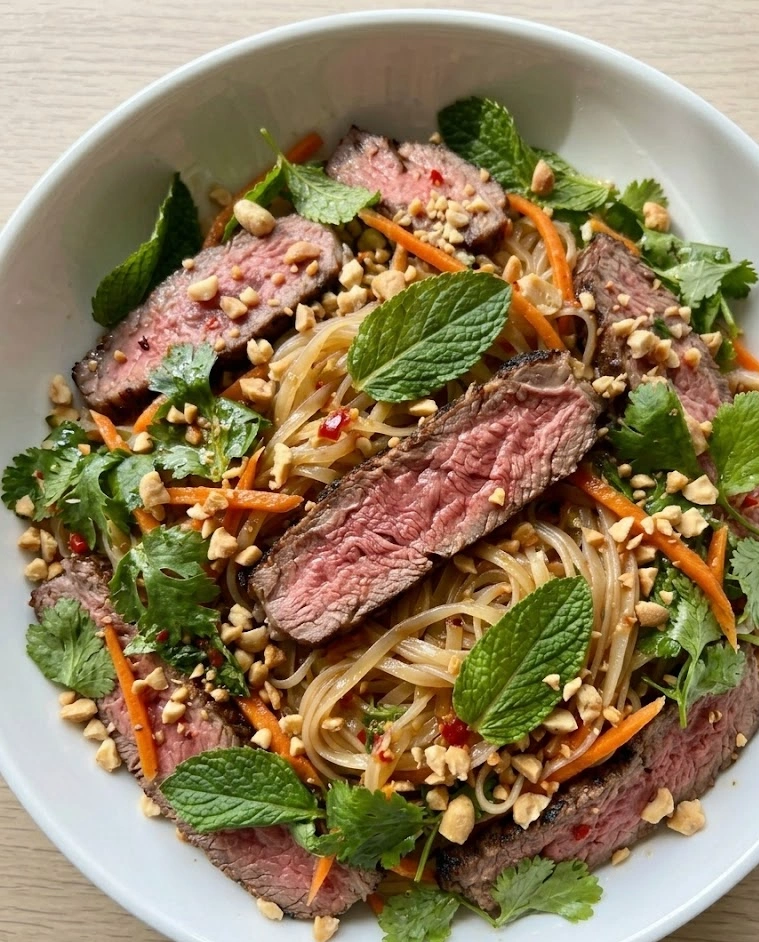
- Build the bowl. Divide the noodle salad among four bowls or arrange on a large platter. Fan the sliced beef generously over the top. Pile the fresh herbs — Thai basil, mint, and cilantro — in an abundant heap over everything. Scatter toasted sesame seeds over the top.
- Finish and serve. Spoon additional Crying Tiger sauce directly over the beef slices. Place the remaining sauce in a small bowl at the table for dipping. Serve immediately with lime wedges and extra chili flakes on the side.
Variations & Tips
Make it with chicken. Boneless, skinless chicken thighs work beautifully with the same marinade and the Crying Tiger sauce is just as extraordinary poured over grilled chicken as it is over beef. A fantastic lighter option for a spring dinner that still delivers maximum flavor impact.
Make it vegetarian. Substitute thick-cut king oyster mushrooms or extra-firm tofu, marinated and grilled in exactly the same way. The Crying Tiger sauce is so powerful and complex that it elevates anything it touches — the mushroom version in particular is stunning.
Make it gluten-free. Swap soy sauce for tamari and oyster sauce for a gluten-free oyster sauce alternative (widely available). Every other element of the recipe is naturally gluten-free. Rice noodles are already perfect.
Turn up the heat. Add thinly sliced fresh bird’s eye chilies directly into the sauce alongside the dried flakes for a layered, multi-dimensional heat that builds slowly and lingers beautifully. This is the authentic Thai approach and it is extraordinary.
Make it a platter. For entertaining, arrange the noodle salad on a large platter, fan the beef over the center, and scatter the herbs and vegetables in bold, colorful clusters around the outside. It is one of the most visually dramatic spring dinner ideas you can put in front of guests.
Pro tips:
- The hotter the grill, the better the crust. If your grill pan is smoking, you’re on the right track.
- Rest the beef on a slight angle on your cutting board so the juices pool to one side — then pour them back over the sliced beef for an extra hit of flavor.
- If you can’t find tamarind paste, a small squeeze of fresh lime with a few drops of Worcestershire sauce gets you surprisingly close.
How to Meal Prep
Crying Tiger Beef Noodle Salad is one of the smartest and most satisfying spring dinner ideas to build a week of meals around — with just a little planning, weeknight dinners become almost effortless.
Grill the beef and make the Crying Tiger sauce on Sunday. Store the sliced beef in an airtight container in the refrigerator for up to 3 days — it’s actually excellent cold, sliced thin over a fresh noodle base each night. The sauce keeps refrigerated for up to 5 days and deepens beautifully in flavor as the shallots soften and the chili blooms into the liquid. Make a double batch without hesitation.
Cook the rice noodles fresh each day for the best texture — they only take 5 minutes and freshly cooked noodles are dramatically better than refrigerated ones. Prep all the vegetables in advance and store them in separate containers so assembly each evening is just a matter of pulling components together. Keep the fresh herbs whole and unwashed in a damp paper towel in the fridge — they’ll stay vibrant and fragrant for up to 4 days.
For full advance prep, the noodles can be cooked, dressed with sesame oil, and refrigerated for up to 2 days. Rinse briefly under warm water before using to loosen them back up and refresh their texture before assembly.
Cultural Context: Crying Tiger and the Art of Thai Grilling
Crying Tiger — known in Thai as Seua Rong Hai — is one of the most beloved and iconic dishes in Thai cuisine, originating in the northeastern region of Thailand known as Isan. Isan cooking is famous throughout Thailand and the world for its bold, assertive flavors — heavy on fish sauce, lime, fresh herbs, toasted rice powder, and dried chilies — and Crying Tiger is perhaps its most famous ambassador.
The name itself is gloriously dramatic and deeply Thai in its storytelling sensibility. The most popular explanation is that the dipping sauce is so spicy and intensely flavored that even a tiger would weep upon tasting it. Others suggest the name comes from the striped grill marks on the beef resembling tiger stripes, with the fat dripping onto the coals below causing the fire to cry and hiss. Both explanations are wonderful and neither entirely satisfies — which feels appropriately mythological for a dish this extraordinary.
What makes Crying Tiger so special in the broader context of Thai cooking is how it embodies the central Thai culinary philosophy: the perfect, simultaneous balance of spicy, sour, salty, and sweet in every single bite. No single flavor is allowed to dominate. Everything exists in tension and harmony at once — a balance that takes Thai cooks years to master intuitively and that produces flavors more complex and satisfying than cuisines built on any single dominant note.
Bringing Crying Tiger into a spring dinner idea format — stretched over noodles and piled with fresh herbs and crisp seasonal vegetables — is an entirely natural evolution. Thai cuisine has always celebrated freshness and the bright, herbal qualities of seasonal produce. Laid over springy rice noodles on a warm spring evening, with a bowl of that electric sauce waiting at the table, this dish connects your dinner table to one of the world’s great culinary traditions in the most joyful and delicious way possible.
Crying Tiger Beef Noodle Salad
Ingredients
Equipment
Method
- Toast raw jasmine rice in a dry skillet until golden brown, then grind to a coarse powder to make toasted rice powder.
- Whisk oyster sauce, soy sauce, fish sauce, dark soy sauce, sugar, pepper, and garlic. Coat steak and marinate 20–30 minutes.
- Whisk fish sauce, lime juice, tamarind paste, sugar, chili flakes, toasted rice powder, shallots, and cilantro to make the dipping sauce. Adjust seasoning.
- Cook rice noodles according to package directions. Drain, rinse under cold water, and toss with sesame oil.
- Preheat grill to high heat. Grill steak 3–5 minutes per side until medium-rare (130–135°F). Rest 5–7 minutes.
- Slice beef thinly against the grain.
- Toss noodles with cabbage, carrot, cucumber, bean sprouts, radishes, and green onions. Add half the sauce and toss to coat.
- Top with sliced beef, fresh herbs, sesame seeds, and additional sauce. Serve immediately with lime wedges.