
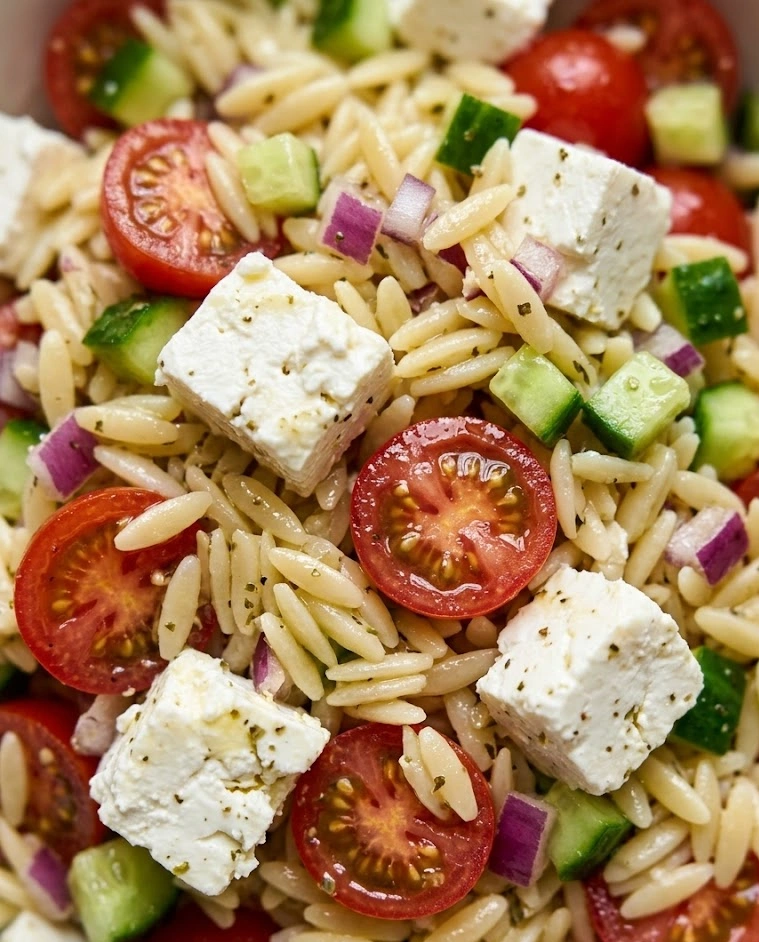
Here’s the thing about spring dinner ideas — the best ones don’t ask much of you. No hour-long prep, no complicated techniques, no standing over a hot stove while the evening slips away outside your window. The best spring dinners are the ones that come together fast, look absolutely stunning on the table, and taste like you put in far more effort than you actually did. This Greek Orzo Pasta Salad is exactly that dish.
Imagine tender, slightly chewy orzo — that wonderful little rice-shaped pasta — tossed with crisp cucumber, bursting cherry tomatoes, briny kalamata olives, roasted red peppers, a generous snowfall of creamy feta, and enough fresh herbs to make the whole bowl smell like a Mediterranean hillside in April. All of it pulled together by a bold, garlicky Greek vinaigrette that coats every single ingredient and makes the flavors sing in perfect harmony.
This is a spring dinner idea that works as a standalone meal, a showstopping side for grilled proteins, or the undisputed star of any potluck table. Twenty-five minutes, one pot, one bowl, and dinner is done. Let’s get into it.
Why You’ll Love This Greek Orzo Pasta Salad
Once this recipe enters your spring dinner ideas rotation, it simply doesn’t leave. Here’s why:
- On the table in 25 minutes — one pot of boiling water and a bowl of simple chopping is all that stands between you and dinner.
- Better as it sits — unlike most pasta salads, this one genuinely improves with time as the orzo absorbs the vinaigrette and the flavors deepen and meld together beautifully.
- Meal prep royalty — make a full batch on Sunday and eat brilliantly all week long with zero additional cooking.
- Crowd-pleasing without exception — vegetarians, meat-eaters, and picky kids all find something to love in this bowl.
- Effortlessly elegant — the colors alone — deep purple olives, ruby tomatoes, white feta, bright green herbs — make this one of the most visually beautiful spring dinner ideas you can put on a table.
Common Mistakes — And How to Avoid Them
Simple recipes still have landmines. Here’s how to navigate every one of them.
Cooking the orzo to mush. Orzo is small and cooks fast — faster than you expect. Start checking it a full minute before the package suggests and pull it when it still has just the faintest resistance in the center. It will continue cooking slightly in the residual heat after draining, and a slightly al dente orzo holds up infinitely better in a dressed salad than a soft, overcooked one.
Not salting the pasta water. This is the single most important step in any pasta dish and the one most home cooks skip or under-do. Your pasta water should taste pleasantly salty — like a light broth, not the ocean. Properly salted water seasons the orzo from the inside out, and no amount of dressing added later can fully compensate for bland pasta.
Rinsing the pasta with hot water. Always rinse your cooked orzo under cold running water after draining. This stops the cooking immediately, drops the temperature quickly, and washes off the excess surface starch that would otherwise make your salad gluey and clumped. Cold rinse only — every time.
Dressing too early. Dress the salad when the orzo is fully cooled — not warm, not room temperature, fully cooled. Warm orzo drinks up dressing aggressively and you’ll be left with a dry, under-dressed salad by the time it reaches the table. Cool it down first, dress it generously, and you’ll have a perfectly coated, glistening salad every single time.
Using pre-crumbled feta. This is worth repeating every single time feta appears in a recipe: buy the block packed in brine and crumble it yourself. Pre-crumbled feta is dry, chalky, and stripped of the creamy, briny richness that makes feta one of the great cheeses of the world. The difference in this salad is immediately, dramatically obvious.
Underseasoning the vinaigrette. A Greek vinaigrette should be assertive, bold, and unapologetically flavorful. Taste it before you dress the salad and keep adjusting — more lemon, more garlic, more salt, more oregano — until it makes your eyes light up on its own. A timid dressing produces a timid salad.
Chef’s Notes
The small details that separate a forgettable pasta salad from one people request the recipe for on the spot:
- Cook the orzo in broth instead of water. Vegetable or chicken broth adds a layer of savory depth to the orzo itself that you simply cannot achieve with plain water, even perfectly salted water. It takes zero extra effort and makes a noticeable difference in the final flavor.
- Add a splash of red wine vinegar to the pasta water. Just a tablespoon while the orzo cooks adds a subtle tang that seasons the pasta from the inside and echoes the vinaigrette flavors throughout the entire dish.
- Massage the red onion. Toss the diced red onion in a pinch of salt and a tiny squeeze of lemon and let it sit for 5 minutes before adding to the salad. This softens the sharpness dramatically and turns the onion from an aggressive intruder into a sweet, mellowed background note that integrates beautifully.
- Reserve a splash of pasta water. Before draining the orzo, scoop out about ¼ cup of the starchy cooking liquid. If the dressed salad feels too thick or sticky after resting, a splash of this pasta water loosens it back to the perfect consistency without diluting the flavor.
- Layer the feta. Add half when you first dress the salad so it softens slightly and enriches the dressing, then crumble the other half on top just before serving so there are beautiful, distinct creamy pieces visible throughout. Two textures of feta in one salad is a revelation.
Key Ingredients — And Why They Matter
Orzo is the inspired choice that sets this apart from every other Greek salad on the internet. This small, rice-shaped pasta has a wonderfully satisfying chew, a neutral flavor that absorbs dressing beautifully, and a texture that holds up over days in the refrigerator without turning soft or mushy. It transforms a side salad into a legitimate, filling spring dinner idea that requires nothing else alongside it.
Cherry Tomatoes bring the sweetness, juiciness, and color that anchor the whole dish visually and flavor-wise. In spring, cherry and grape tomatoes are reliably sweeter and more flavorful than larger slicing tomatoes, which are still weeks away from their peak. Halve them rather than quarter them so they retain their juice and don’t bleed into the salad prematurely.
English Cucumber provides the cool, crisp crunch that keeps every forkful fresh and lively. Its thin skin, minimal seeds, and clean flavor make it the clear choice over regular cucumbers, which can be bitter, watery, and overpowering in a delicate salad like this. Dice it small enough to integrate with the orzo rather than dominate it.
Kalamata Olives are the briny, meaty, deeply savory soul of this salad and of Greek cooking broadly. Their rich, almost wine-like flavor is unlike any other olive variety and absolutely non-negotiable here. Pit them yourself from whole olives for the best texture, or buy them pre-pitted in brine — just not canned black olives, which add nothing but a vague saltiness.
Roasted Red Peppers add a layer of sweet, smoky, jammy depth that raw bell peppers simply cannot provide. They soften the overall flavor profile of the salad and add a gorgeous pop of color. Use jarred roasted peppers for convenience — they’re excellent — or roast your own if you have the time and inclination.
Feta Cheese is the creamy, salty, tangy cornerstone that ties every element of this salad together. A block of authentic Greek feta packed in brine is the only acceptable choice. Its flavor is more complex, its texture more creamy and rich, and its saltiness more balanced than anything pre-crumbled and packaged in plastic. Treat yourself to the real thing.
Fresh Oregano and Parsley bring the herbaceous brightness that makes this salad taste unmistakably Greek. Fresh oregano has a more floral, less medicinal quality than dried, and its pairing with flat-leaf parsley creates the classic Mediterranean herb profile that runs through the entire cuisine. If fresh oregano is unavailable, use a smaller quantity of dried — about one-third of the fresh amount called for.
The Greek Vinaigrette is built on the simple, brilliant foundation of extra-virgin olive oil, fresh lemon juice, red wine vinegar, garlic, dried oregano, Dijon mustard, salt, and pepper. The mustard is the detail most people miss — it acts as an emulsifier that keeps the dressing cohesive and clinging to every piece of orzo and vegetable rather than pooling at the bottom of the bowl.
How to Make Greek Orzo Pasta Salad
Ingredients — Salad (Serves 4–6)
- 1½ cups (270g) dry orzo pasta
- 1 tbsp olive oil (for tossing after cooking)
- 1 cup (150g) cherry tomatoes, halved
- 1 English cucumber, quartered lengthwise and diced
- ½ cup (90g) kalamata olives, pitted and halved
- ½ cup (80g) roasted red peppers, diced
- ¼ red onion, finely diced
- ¾ cup (115g) feta cheese, crumbled from a block — divided
- ¼ cup fresh flat-leaf parsley, roughly chopped
- 2 tbsp fresh oregano leaves (or 1 tsp dried)
- 3 tbsp sun-dried tomatoes, roughly chopped (optional but spectacular)
- ¼ cup (35g) toasted pine nuts or slivered almonds (optional)
- Fresh cracked black pepper, to finish
Ingredients — Greek Vinaigrette
- 5 tbsp extra-virgin olive oil
- 3 tbsp fresh lemon juice (about 1½ lemons)
- 1 tbsp red wine vinegar
- 1 tsp lemon zest
- 2 cloves garlic, finely minced or grated
- 1 tsp dried oregano
- 1 tsp Dijon mustard
- ½ tsp honey
- ¾ tsp salt
- ¼ tsp black pepper
Instructions
- Cook the orzo. Bring a large pot of generously salted water — or vegetable broth — to a rolling boil. Add the orzo and cook according to package directions, usually 8–9 minutes, checking one minute early for that perfect al dente texture. Before draining, scoop out ¼ cup of the starchy cooking liquid and set aside.
- Drain and cool. Drain the orzo and immediately rinse thoroughly under cold running water until completely cool to the touch. Shake off excess water, transfer to a large bowl, and toss with 1 tablespoon of olive oil to prevent sticking. Spread out slightly and let cool completely.
- Make the vinaigrette. In a small bowl or jar, combine the olive oil, lemon juice, red wine vinegar, lemon zest, garlic, dried oregano, Dijon mustard, honey, salt, and pepper. Whisk vigorously — or shake the jar — until fully emulsified. Taste and adjust until it’s bold, bright, and assertive. Set aside.
- Prep the vegetables. While the orzo cools, halve the cherry tomatoes, dice the cucumber, halve the olives, dice the roasted red peppers, and finely dice the red onion. Toss the diced onion with a pinch of salt and a squeeze of lemon and let sit 5 minutes to mellow.
- Assemble. Add the cherry tomatoes, cucumber, olives, roasted red peppers, red onion, sun-dried tomatoes (if using), parsley, and oregano to the cooled orzo. Pour the vinaigrette over everything and toss thoroughly until every ingredient is evenly coated and glistening.
- Add the first layer of feta. Crumble half the feta into the salad and fold in gently — it will soften slightly and enrich the dressing in a spectacular way.
- Rest the salad. Let the dressed salad sit for at least 15–20 minutes at room temperature before serving, or refrigerate for 30–60 minutes. If it tightens up, loosen with a splash of the reserved pasta water and a tiny drizzle of olive oil.
- Finish and serve. Just before serving, crumble the remaining feta over the top in beautiful visible pieces. Scatter the toasted pine nuts if using, finish with a generous crack of black pepper and a few extra parsley leaves, and bring it to the table. Watch it disappear.
Variations & Tips
Add protein for a complete spring dinner. Sliced grilled chicken, seared shrimp, flaked baked salmon, or a can of drained chickpeas all integrate beautifully and transform this from a substantial side into a fully complete, nutritionally balanced spring dinner idea that satisfies every appetite at the table.
Make it vegan. Simply omit the feta or replace it with a marinated, pressed tofu crumbled to a similar texture, or a good-quality vegan feta alternative. Use agave or maple syrup in place of honey in the vinaigrette. The salad remains stunning and deeply flavorful.
Make it gluten-free. Swap the orzo for a gluten-free orzo alternative — several excellent rice and corn-based versions now exist — or substitute cooked quinoa or white rice. Quinoa in particular holds the vinaigrette magnificently and adds a pleasant protein boost.
Add warm roasted vegetables. Toss a sheet pan of roasted zucchini, asparagus, or cherry tomatoes into the salad for a heartier, more seasonal spring dinner variation. The contrast of warm roasted vegetables against the cool, dressed orzo is genuinely wonderful.
Make it a Greek grain bowl. Serve the salad over a bed of baby arugula or fresh spinach, add a soft-boiled egg or a few dolmades alongside, and finish with an extra drizzle of olive oil and a shower of za’atar for a dinner bowl that is absolutely restaurant-worthy.
Pro tips:
- Always make the vinaigrette first and let the garlic sit in the lemon and vinegar while you prepare everything else — it mellows and deepens beautifully.
- This salad is best served at cool room temperature rather than straight from the refrigerator — let it sit out for 10 minutes before serving for the fullest, most vibrant flavor.
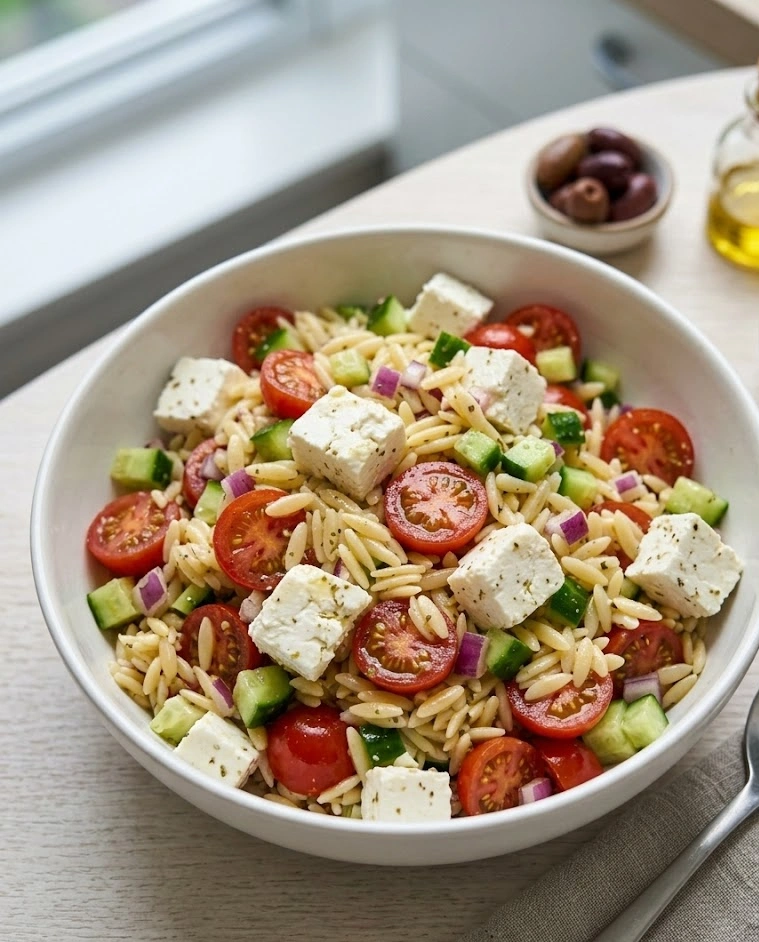
- A wide, shallow serving bowl shows off the colors and ingredients far more beautifully than a deep mixing bowl. Presentation matters, and this salad earns it.
How to Meal Prep
Greek Orzo Pasta Salad might be the single greatest spring dinner idea for weekly meal prep — and it’s not particularly close. Unlike leafy salads that wilt and grain salads that can turn mushy, orzo holds its texture and absorbs flavor over days in a way that makes it actively better on Wednesday than it was on Sunday.
Make a full batch — or a double batch without hesitation — and store it in a large airtight container in the refrigerator for up to 5 days. The orzo deepens in flavor daily as it drinks up the vinaigrette, the feta softens and enriches the dressing, and every ingredient integrates further into one cohesive, complex whole. Hold back the finishing feta, pine nuts, and fresh herbs and add them fresh each day for the best texture and visual impact.
For weekday lunches, portion into individual containers immediately after making and add a different protein to each — grilled chicken on Monday, chickpeas on Tuesday, a soft-boiled egg on Wednesday — for a week of effortless, varied, genuinely exciting lunches that make everyone around you deeply envious. Make a separate jar of extra vinaigrette to re-dress the salad midweek if the orzo has absorbed everything. It refreshes the entire bowl in seconds.
Cultural Context: Orzo, Greece, and the Mediterranean Spring Table
The story of Greek Orzo Pasta Salad sits beautifully at the intersection of two great culinary traditions — Greek and Italian — both of which trace their roots to the same ancient Mediterranean world that gave humanity olive oil, wine, cheese, and the foundational philosophy that the best food is simple food made with exceptional ingredients.
Orzo itself — called kritharaki in Greek, meaning “little barley” — has been a staple of Greek cooking for centuries, most famously in giouvetsi, a slow-baked lamb or beef dish where orzo absorbs rich braising juices in a clay pot. Its Italian name, orzo, simply means “barley” as well, reflecting its grain-like appearance and the shared agricultural heritage of the entire Mediterranean basin. The pasta traveled fluidly across borders throughout history because the Mediterranean was never a barrier — it was a highway of trade, culture, and flavor.
Greek cuisine itself is one of the oldest and most influential food traditions in the Western world. The ancient Greeks documented recipes, celebrated seasonal produce, and built a culinary philosophy centered on sophrosyne — moderation and balance — that still quietly underlies Mediterranean cooking today. The combination of olive oil, lemon, garlic, fresh herbs, and aged cheese that forms the backbone of this salad is a flavor profile that has existed in essentially this form for thousands of years.
Spring has always been the celebrated season of the Mediterranean table. After winter’s heavier, more sustaining cooking comes the explosion of fresh herbs from the garden, the first bright tomatoes, the cucumber harvest, the citrus still hanging heavy on backyard trees. This Greek Orzo Pasta Salad captures all of that seasonal abundance in a single bowl — ancient flavors, modern format, and the kind of effortless, joyful eating that the Mediterranean table has always done better than anyone else in the world.
Greek Orzo Pasta Salad
Ingredients
Equipment
Method
- Bring a large pot of generously salted water or broth to a boil. Cook the orzo according to package directions (about 8–9 minutes) until just al dente. Reserve 1/4 cup of pasta water before draining.
- Drain and rinse the orzo thoroughly under cold running water until completely cool. Transfer to a large bowl, toss with 1 tablespoon olive oil, and let cool fully.
- Whisk together olive oil, lemon juice, red wine vinegar, lemon zest, garlic, dried oregano, Dijon mustard, honey, salt, and pepper until fully emulsified.
- Halve tomatoes, dice cucumber, halve olives, dice roasted red peppers, and finely dice red onion. Let onion sit briefly with a pinch of salt and lemon to mellow.
- Add tomatoes, cucumber, olives, roasted red peppers, red onion, sun-dried tomatoes, parsley, and oregano to the cooled orzo. Pour vinaigrette over and toss thoroughly to coat.
- Crumble half of the feta into the salad and fold gently to incorporate and enrich the dressing.
- Let salad rest 15–20 minutes. If needed, loosen with reserved pasta water and a drizzle of olive oil.
- Top with remaining feta, toasted nuts if using, fresh cracked black pepper, and extra parsley before serving.