
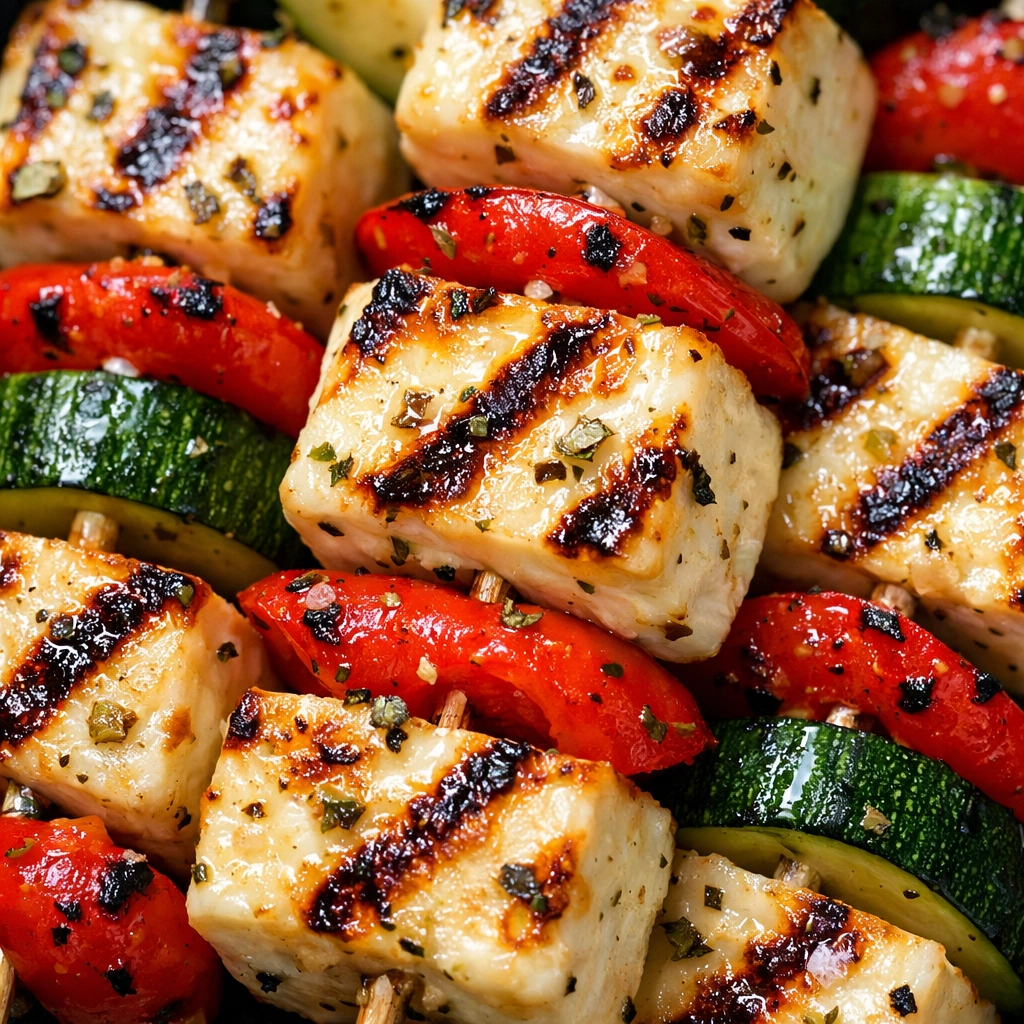
Every great cookout needs a grilling recipe that works for everyone at the table — the meat eaters, the vegetarians, and everyone in between. Grilled vegetable and halloumi skewers do not just fill that role politely. They fill it so well that they routinely disappear before the main proteins do.
Halloumi is the ingredient that makes this possible. It is a semi-hard brined cheese from Cyprus with an unusually high melting point, which means it holds its shape on a hot grill rather than collapsing into the grates. It browns, it chars at the edges, it develops a golden crust on the outside while staying firm and slightly squeaky inside — and it does all of that in the same amount of time it takes the vegetables alongside it to reach perfect tenderness.
Why You’ll Love This Grilling Recipe
The textural story of this grilling recipe is what sets it apart from every other vegetable skewer you have tried. Most vegetable skewers are a side dish. These are a main event. The halloumi brings protein, fat, and satisfying substance that makes the skewers feel genuinely filling in a way that purely vegetable preparations rarely achieve.
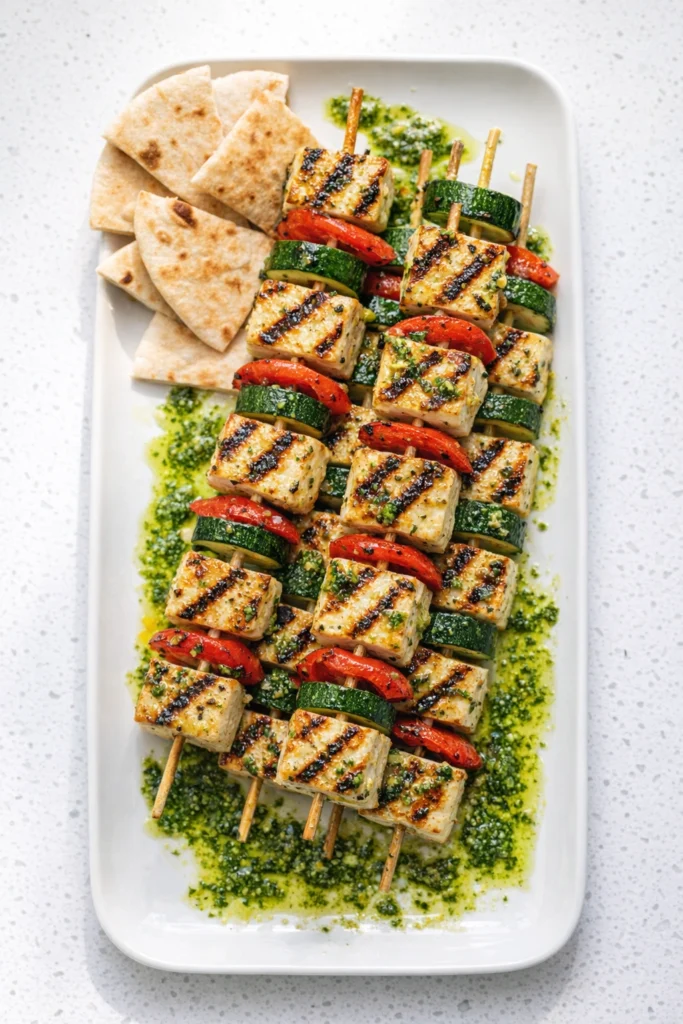
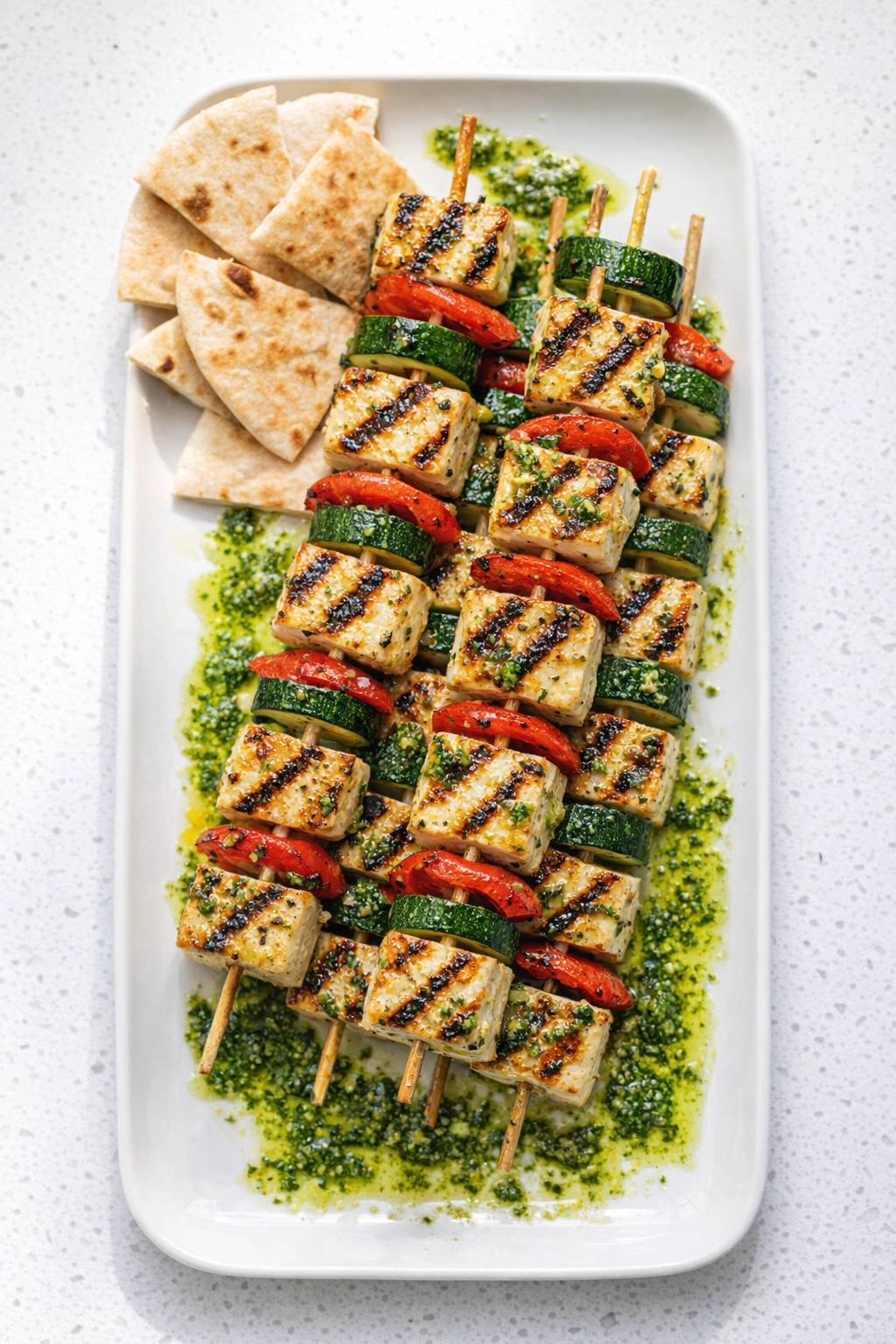
The visual impact is also significant. A platter of golden halloumi cubes threaded with charred red pepper, zucchini, red onion, and cherry tomatoes is one of the most naturally beautiful things you can pull off a grill. It requires no garnish and no plating skill to look impressive — the colors and the char do all the work.
And the timeline is entirely manageable. From threading to table, this grilling recipe takes under thirty minutes. The marinade is a single-bowl operation. The grill does not need to run at extreme temperatures. It is a genuinely low-stress addition to any cookout spread, whether it is the centerpiece or one of several things running on the grill at the same time.
Common Mistakes (And How to Avoid Them)
Cutting the halloumi too small. Small cubes of halloumi fall apart on the skewer and can slip through the grates during grilling. Cut the block into pieces that are at least one inch square, ideally closer to an inch and a half. The larger size also means more surface area for browning, which is exactly what you want from this grilling recipe.
Threading vegetables of wildly different densities together. Dense vegetables like red onion and bell pepper take longer to cook than delicate ones like cherry tomatoes and zucchini. If you mix them indiscriminately on the same skewer, some components will be perfectly charred while others are either still raw or completely collapsed. Group similar densities together or cut denser vegetables smaller to equalize the cooking time.
Skipping the soak on wooden skewers. Dry wooden skewers placed over a hot grill will catch fire and burn through before your vegetables are done. Soak them in cold water for at least thirty minutes before threading. Better yet, invest in a set of flat metal skewers — the flat profile prevents the ingredients from spinning when you rotate them, giving you more control over even browning throughout this grilling recipe.
Over-marinating the halloumi. Unlike meat, halloumi does not benefit from a long marinade. The dense structure of the cheese does not absorb liquid the way protein fibers do, and sitting in an acidic marinade for too long will cause the surface to soften and become harder to sear cleanly. Fifteen to twenty minutes is sufficient — just enough time for the surface to pick up flavor without compromising the texture.
Chef’s Notes
Halloumi varies considerably by brand, and the quality difference matters in this grilling recipe. Look for halloumi made with a blend of sheep and goat milk rather than purely cow milk — the traditional composition produces a firmer, more flavorful cheese that holds up better on the grill and develops a more interesting char. Many specialty grocery stores and Mediterranean markets carry imported Cypriot halloumi, which is worth seeking out if it is available to you.
One technique worth adopting from professional grill cooks is the practice of pre-grilling the halloumi separately for thirty to forty-five seconds per side on the hottest part of the grill before threading it onto the skewers. This sets a light sear on the cheese surface that acts as a protective crust, reducing sticking and giving you a better final result once the full skewers go on.
If you are cooking for a crowd and managing multiple things on the grill simultaneously, halloumi skewers are forgiving in a way that meat-based grilling recipes are not. They will not dry out dramatically if they spend an extra minute or two on the grill, making them ideal for the organized chaos of a large backyard cookout.
Key Ingredients
Halloumi Cheese — The anchor of this grilling recipe and the ingredient that transforms vegetable skewers from a side dish into a meal. Its high melting point is a function of its production process — halloumi is heated during making, which alters the protein structure and allows it to withstand direct grill heat without melting. Choose a block around 250 grams for four servings.
Red Bell Pepper — Brings sweetness, vibrant color, and a satisfying char when it hits the grill. Red peppers have a higher sugar content than green or yellow varieties, which means they caramelize more dramatically and contribute more visual appeal to the finished skewer.
Zucchini — A natural partner for the grill. Zucchini cooks quickly, absorbs the flavors of the marinade well, and develops beautiful grill marks that add visual texture to the skewer. Cut it into rounds about three-quarters of an inch thick for the best balance between cook time and structural integrity.
Red Onion — Adds a sharp, pungent bite that softens into something sweet and jammy over the heat of the grill. Red onion also contributes a deep purple color that makes the finished skewer more visually dynamic. Cut it into wedges that keep two or three layers together so the pieces stay on the skewer rather than separating.
Cherry Tomatoes — Added whole, cherry tomatoes blister and concentrate in flavor over the grill while staying intact enough to remain on the skewer. They burst with juice when bitten into, adding a bright acidity that cuts through the richness of the halloumi.
Olive Oil — The base of the marinade and an essential component for preventing sticking and promoting even browning. Use a good quality extra virgin olive oil — its flavor is part of the overall profile of this grilling recipe, not just a functional lubricant.
Lemon Zest and Juice — The acid component that lifts the entire marinade and gives the finished skewers a brightness that keeps the flavor from feeling heavy. Lemon and halloumi is one of the great natural pairings in Mediterranean cooking.
Fresh Oregano and Thyme — These two herbs give the marinade a distinctly Mediterranean character that suits both the halloumi and the vegetables. Fresh herbs produce a cleaner, more vibrant result than dried, though dried will work in a pinch at about a third of the quantity.
Smoked Paprika — A small amount adds a subtle smokiness to the marinade that complements the char from the grill and gives the finished skewers a warm, reddish color that looks beautiful on the plate.
How to Make Grilled Vegetable And Halloumi Skewers
- Soak the skewers. If using wooden skewers, submerge them in cold water for a minimum of thirty minutes before threading. This prevents burning during grilling.
- Make the marinade. In a large bowl, whisk together four tablespoons of extra virgin olive oil, the zest and juice of one lemon, one teaspoon of smoked paprika, one teaspoon of fresh thyme leaves, one tablespoon of fresh oregano, half a teaspoon of salt, and a generous grind of black pepper.
- Prep the ingredients. Cut the halloumi into one-and-a-half inch cubes. Cut the red bell pepper into similar-sized chunks. Slice the zucchini into three-quarter-inch rounds. Cut the red onion into wedges keeping the layers together. Leave the cherry tomatoes whole.
- Marinate. Add all the prepared ingredients to the bowl with the marinade and toss gently to coat everything evenly. Let sit at room temperature for fifteen to twenty minutes. Do not exceed thirty minutes for the halloumi.
- Thread the skewers. Thread the ingredients onto the skewers alternating colors and textures for visual appeal. A good sequence is halloumi, red pepper, zucchini, red onion, cherry tomato, then repeat. Leave a small gap between each piece to allow heat circulation on all sides.
- Preheat the grill. Heat your grill to medium-high, around 400 degrees Fahrenheit. Clean and oil the grates thoroughly. A well-oiled grate is particularly important for halloumi, which will stick aggressively to any surface that has not been properly prepared.
- Grill the skewers. Place the skewers on the grill and cook for ten to twelve minutes total, turning every two to three minutes to achieve even charring on all sides. The halloumi should be deeply golden with dark grill marks and the vegetables should be tender with charred edges.
- Rest and serve. Transfer the skewers to a platter and rest for two minutes. Finish with a squeeze of fresh lemon juice, a drizzle of olive oil, and a scatter of fresh oregano leaves or chopped flat-leaf parsley. Serve immediately while the halloumi is still warm and at its best texture.
Variations and Tips
For a Middle Eastern direction, swap the Mediterranean herb marinade for a blend of olive oil, cumin, coriander, turmeric, and a pinch of cinnamon. Serve the finished skewers with warm flatbread and a generous spoonful of hummus or labneh. This version of the grilling recipe is particularly well suited to a mezze-style spread.
For added heat, add half a teaspoon of chili flakes to the marinade or thread thin slices of fresh red chili between the ingredients on the skewer. The heat plays very well against the mild saltiness of the halloumi.
For a balsamic glaze finish, brush the skewers with a good quality balsamic reduction during the final minute of grilling. The sweetness and acidity of the glaze caramelizes beautifully against the charred vegetables and adds a glossy, restaurant-style finish to the plate.
To make it vegan, replace the halloumi with extra firm tofu that has been pressed and dried thoroughly, or use a thick-cut king oyster mushroom instead. Neither will replicate the unique texture of halloumi exactly, but both hold up well on the grill and absorb the marinade beautifully.
Pro tip for preventing sticking: In addition to oiling the grates, brush each skewer with a fresh coat of olive oil immediately before it goes onto the grill. The additional surface oil creates a barrier between the halloumi and the metal that dramatically reduces tearing when you rotate the skewers.
How to Meal Prep
The marinade for this grilling recipe can be made up to three days in advance and stored in a sealed jar in the refrigerator. The vegetables can be cut and stored in an airtight container for up to two days, making the actual assembly on the day of the cookout a five-minute task.
Fully assembled uncooked skewers can be threaded, covered, and refrigerated for up to four hours before grilling. Remove them from the refrigerator thirty minutes before cooking to take the chill off — cold ingredients placed directly on the grill will cook unevenly and are more likely to stick.
Cooked halloumi skewers are best served fresh, as halloumi firms and loses its appealing texture when cold. However, leftover grilled vegetables stripped from the skewers are excellent the following day tossed through pasta, layered into a grain bowl, or folded into a warm wrap with hummus and fresh herbs.
Cultural Context
Halloumi’s origins are rooted in Cyprus, where it has been produced for centuries using a traditional method that has changed remarkably little over time. The cheese was historically made by rural Cypriot families using milk from their own sheep and goats, and its resistance to melting made it practical in the warm Mediterranean climate where refrigeration was not always available. Grilling halloumi directly over fire is as old as the cheese itself.
The skewer format that anchors this grilling recipe draws from the broader tradition of kebab cooking that stretches across the Middle East, the Eastern Mediterranean, and Central Asia — a tradition built on the practical genius of threading ingredients onto sticks and holding them over fire. From the shish kebab of Turkey to the souvlaki of Greece to the kofta of Lebanon and Egypt, the skewer is one of humanity’s oldest and most universal cooking tools.
This recipe brings those two traditions together in a form that feels entirely contemporary while being rooted in thousands of years of open-fire cooking. The fact that it also happens to be vegetarian, visually stunning, and ready in under thirty minutes is simply a bonus.
Grilled Vegetable And Halloumi Skewers
Ingredients
Equipment
Method
- Soak wooden skewers in cold water for at least 30 minutes to prevent burning.
- In a large bowl, whisk together olive oil, lemon zest and juice, smoked paprika, oregano, thyme, salt, and black pepper.
- Cut halloumi into large cubes and prepare all vegetables into evenly sized pieces.
- Add halloumi and vegetables to the marinade and toss gently to coat. Let sit for 15–20 minutes.
- Thread halloumi and vegetables onto skewers, alternating pieces and leaving space between each.
- Preheat grill to medium-high heat (about 400°F) and oil the grates.
- Grill skewers for 10–12 minutes, turning every 2–3 minutes, until halloumi is golden and vegetables are tender with charred edges.
- Remove from grill, rest briefly, then finish with extra lemon juice, olive oil, and fresh herbs before serving.