
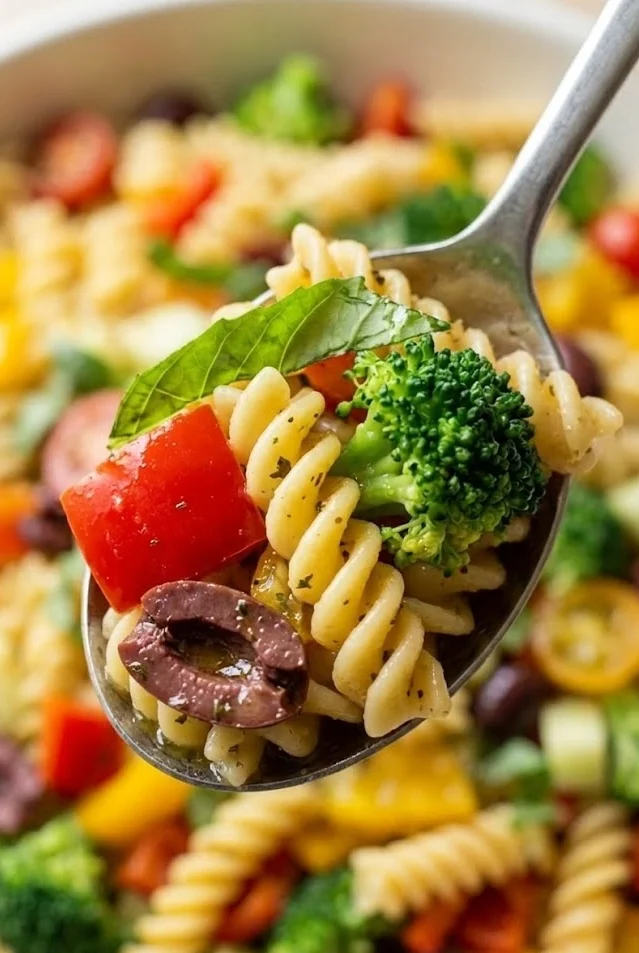
There is a version of pasta salad that does not need meat, cheese towers, or creamy dressings to be deeply satisfying. It just needs the right vegetables, treated with respect, and a bold enough dressing to tie everything together with conviction. Italian Veggie Pasta Salad is exactly that version – and it is one of the most genuinely beautiful pasta salad ideas you will ever put on a table.
This is the cold pasta salad recipe that converts skeptics. The people who claim they need meat in a pasta salad, the ones who think healthy pasta salad recipes taste like compromise – this is the dish that changes their mind. Bold Italian dressing, peak-season vegetables, and a composition that looks as good as it tastes make this one of the most compelling pasta salad recipes in any category, meat-free or otherwise.
Why You’ll Love This Italian Veggie Pasta Salad Recipe
What makes this recipe genuinely exciting rather than merely virtuous is the dressing. A properly made Italian dressing – sharp with red wine vinegar, fragrant with oregano and basil, rounded with good olive oil and a touch of Dijon – does something remarkable to raw and lightly blanched vegetables. It seasons them from the outside in and transforms a collection of individual ingredients into a cohesive, deeply flavored pasta salad that tastes like it has been marinating for hours.
This is also one of the most visually striking pasta salad aesthetic results you can achieve. The combination of green zucchini, red bell pepper, yellow cherry tomatoes, deep purple olives, and bright orange carrot against pale pasta and glistening dressing is genuinely stunning – the kind of bowl that stops people mid-conversation at a cookout.
Here is why this recipe belongs permanently in your pasta salad recipes rotation:
- Ready in under 30 minutes with no complicated technique
- Completely meat-free without tasting like anything is missing
- One of the most naturally pasta salad recipes healthy options available
- Improves significantly after an hour or two in the fridge
- Scales effortlessly for a family dinner or a crowd of thirty
- A total pasta salad aesthetic standout on any table
Common Italian Veggie Pasta Salad Mistakes (And How to Avoid Them)
Vegetable-forward pasta salad recipes require slightly different thinking than meat-based versions. Here is what goes wrong most often and exactly how to avoid it.
Mistake 1: Using raw vegetables without any preparation. Some vegetables work beautifully raw in a cold pasta salad – bell peppers, cherry tomatoes, cucumber, and red onion among them. Others, like broccoli, green beans, and zucchini, benefit enormously from a quick blanch that softens their raw edge, brightens their color, and makes them far more pleasant to eat alongside soft pasta. Know which vegetables need preparation and treat them accordingly.
Mistake 2: Under-seasoning the dressing. A pasta salad with Italian dressing only works if the dressing is genuinely bold. Vegetables need more seasoning than cured meats, which bring their own salt and fat to the equation. Taste the dressing before it goes anywhere near the pasta and make sure it is sharper and more intensely seasoned than feels comfortable – it will mellow significantly once it coats everything.
Mistake 3: Cutting vegetables inconsistently. Every piece of vegetable in this pasta salad should be roughly the same size as the pasta itself. Large chunks of zucchini or halved bell pepper strips that dwarf the pasta create an unbalanced eating experience. Uniform, modest cuts ensure every forkful delivers pasta, dressing, and multiple vegetables simultaneously.
Mistake 4: Not marinating long enough. This is a pasta salad recipes cold dish that genuinely needs time. A minimum of one hour in the fridge – ideally two to three – allows the vegetables to absorb the Italian dressing and the entire composition to harmonize. Serving it immediately after tossing produces a salad where every ingredient still tastes like itself rather than part of a unified whole.
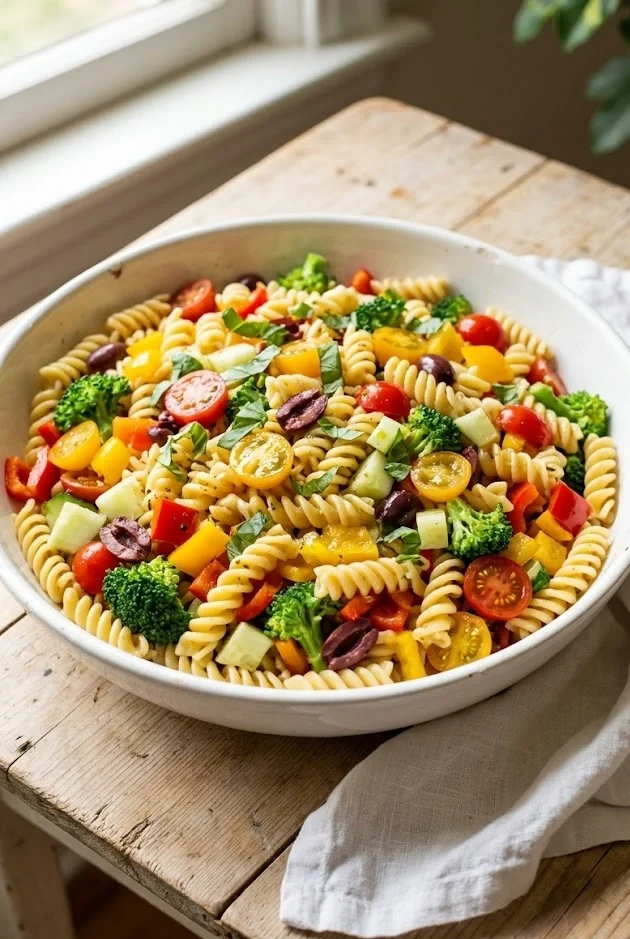
Key Ingredients in This Italian Veggie Pasta Salad
Rotini or penne: Both shapes work well here. Rotini grips the pasta salad dressing in its spirals and catches small vegetable fragments. Penne provides a more substantial bite that holds up well against chunkier vegetable pieces. Either produces a great pasta salad italian style result.
Zucchini: Diced small and either used raw for maximum crunch or quickly blanched for a softer, more integrated texture. Zucchini absorbs Italian dressing beautifully and adds a mild, clean flavor that lets the other vegetables shine.
Red and yellow bell peppers: The color contribution of bell peppers to the pasta salad aesthetic of this dish is as important as their flavor. Diced into pieces roughly the size of the pasta, they add sweetness, crunch, and the visual vibrancy that makes this salad so immediately appealing.
Cherry tomatoes: A mix of red and yellow if available. Their sweetness and acidity are essential in a pasta salad with Italian dressing recipe – the tomato juices blend into the vinaigrette as the salad marinates and enrich the entire dressing with a subtle depth.
Cucumber: English cucumber, diced with the skin on for color. It adds coolness and freshness that balance the intensity of the dressing and the richness of the olives.
Broccoli florets: Blanched briefly – no more than 90 seconds in boiling water – then shocked in ice water to set their vivid green color. Small, tender broccoli florets add substance and nutritional density that make this one of the most genuinely pasta salad recipes healthy options in the category.
Kalamata olives: Their brininess and depth are essential to the pasta salad italian character of this dish. Halve them so the olive flavor distributes throughout the salad rather than arriving in isolated, overwhelming bursts.
Artichoke hearts: Packed in water or oil and quartered. This is one of the most underused ingredients in pasta salad ideas and one of the most transformative. Artichoke hearts add a tender, slightly nutty flavor that elevates this salad significantly above standard vegetable pasta salads.
Red onion: Thinly sliced and soaked in cold water for 10 minutes before adding. This removes the harshest raw edge while preserving the essential sharpness and color that red onion contributes to the pasta salad aesthetic.
The homemade Italian dressing: Red wine vinegar, olive oil, Dijon mustard, garlic, dried oregano, dried basil, a pinch of sugar, salt, and black pepper. This dressing is the engine of the entire recipe and is worth making from scratch every single time.
Fresh basil and parsley: Added at the very end. These herbs are the finishing element that transitions the salad from good to genuinely memorable and provide the herby brightness that is the hallmark of pasta salad italian cooking at its best.
How to Make Italian Veggie Pasta Salad
Work through these steps in order and you will have the most vibrant, flavorful Italian Veggie Pasta Salad of your life.
- Make the dressing first. In a jar or bowl, combine ⅓ cup red wine vinegar, ½ cup good-quality olive oil, 1 teaspoon Dijon mustard, 2 minced garlic cloves, 1 teaspoon dried oregano, ½ teaspoon dried basil, ½ teaspoon sugar, salt, and generous black pepper. Whisk or shake until fully emulsified. Taste – it should be sharp, herby, and boldly seasoned. Set aside.
- Blanch the broccoli. Bring a small pot of salted water to a boil. Add small broccoli florets (about 150g) and blanch for exactly 90 seconds. Transfer immediately to a bowl of ice water to stop the cooking and set the color. Drain after 2 minutes and pat dry.
- Cook the pasta. Bring a large pot of generously salted water to a boil. Cook 300g (10 oz) rotini or penne until just al dente according to package directions. Reserve ¼ cup of pasta water before draining in case you need to loosen the dressing later.
- Rinse and drain thoroughly. Transfer cooked pasta to a colander and rinse under cold running water until completely cool. Shake well and drain for at least 3 minutes. Thorough draining is essential – water on the pasta dilutes the pasta salad dressing and weakens the Italian flavor.
- Prep all vegetables. Dice 1 zucchini, 1 red bell pepper, and 1 yellow bell pepper into small, uniform pieces. Halve 200g cherry tomatoes. Dice half an English cucumber. Halve 1 cup Kalamata olives. Quarter 1 can drained artichoke hearts. Thinly slice ¼ red onion and soak in cold water for 10 minutes, then drain.
- Combine pasta and vegetables. Add the drained pasta to a very large mixing bowl. Add all the prepared vegetables, the blanched broccoli, and the drained red onion. Toss gently to distribute everything evenly.
- Dress the salad. Pour three-quarters of the dressing over the pasta and vegetables. Toss thoroughly until everything is evenly coated. The dressing should touch every piece of pasta and every vegetable. Reserve the remaining dressing for serving.
- Chill. Cover and refrigerate for a minimum of 1 hour, ideally 2 to 3 hours. For the deepest flavor, refrigerate overnight.
- Finish before serving. Remove from the fridge and add the reserved dressing. Toss well. Taste and adjust – add more salt, a splash of red wine vinegar, or extra oregano as needed. Fold in a generous handful of torn fresh basil and chopped parsley. Serve cold.
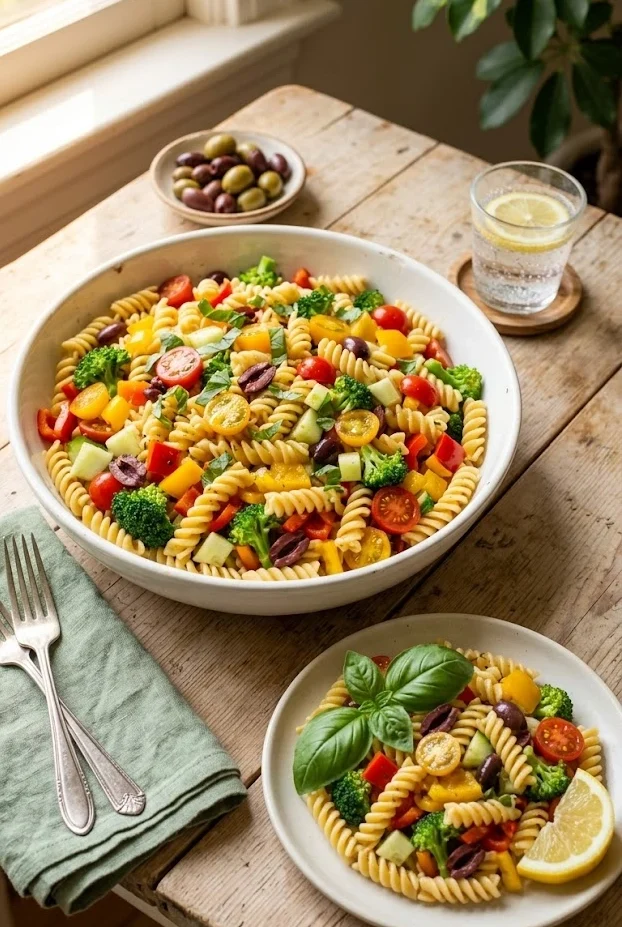
Variations and Pro Tips for Pasta Salad Recipes
Add protein for a pasta salad with chicken version: Grilled chicken breast, chickpeas, white beans, or canned tuna all integrate beautifully into this recipe. Chickpeas in particular are the ideal protein addition for keeping this in genuinely pasta salad recipes healthy territory while adding substance and a slightly nutty flavor.
Pasta salad healthy upgrades: Use whole wheat or legume-based pasta, increase the vegetable-to-pasta ratio significantly, and lighten the dressing by reducing the oil and increasing the vinegar. Add baby spinach or arugula tossed in at the end for extra greens without changing the character of the dish.
Add cheese for a richer version: Cubed Provolone, crumbled feta, or shaved Parmesan all work beautifully here if you want to move away from a strictly vegan result. Feta in particular pairs extraordinarily well with the Italian dressing and the vegetable combination, adding creaminess and salt that deepen the overall flavor.
Pasta salad with Italian dressing variations: Try a lemon-herb dressing instead of the standard red wine vinegar base for a brighter, more summery result. Replace the red wine vinegar with fresh lemon juice and add extra fresh herbs – the effect is lighter and more delicate while still fully pasta salad italian in character.
Looking for more pasta salad inspiration? This Ultimate Pasta Salad Recipes Guide brings together 20 of the best easy, healthy cold pasta salad recipes — from classic Italian pasta salad with Italian dressing and creamy pasta salad to chicken pasta salad, Mediterranean, Greek, pesto, tahini Caesar, BLT, Hawaiian mac salad, and more. Every recipe is make-ahead friendly, packed with flavor, and built for real weekday meals and weekend entertaining. Browse all 20 pasta salad ideas and find your next favorite recipe.
Pro Tips:
- Dress the pasta while it is still slightly warm even for a cold pasta salad result – warm pasta absorbs dressing far more efficiently than cold and produces a more deeply flavored finished dish.
- Add a tablespoon of capers alongside the olives for an extra layer of briny, sharp flavor that works beautifully against the sweetness of the roasted peppers and tomatoes.
- Roast the zucchini and bell peppers at 220°C (425°F) for 15 minutes instead of using them raw for a more intense, caramelized vegetable flavor that transforms the entire pasta salad aesthetic and flavor profile.
- Sun-dried tomatoes packed in oil, roughly chopped and added alongside the fresh cherry tomatoes, add a concentrated sweetness and chewiness that makes this one of the most complex and satisfying pasta salad ideas in the vegetable category.
How to Meal Prep This Italian Veggie Pasta Salad
Italian Veggie Pasta Salad is one of the absolute best pasta salad recipes for meal prep because it is entirely plant-based, holds its texture and flavor exceptionally well over several days, and genuinely improves with time in the fridge. There are no perishable proteins to worry about and no components that wilt dramatically within hours of assembly.
Make a full batch on Sunday and store it in a large airtight container in the fridge. It keeps beautifully for up to 5 days – longer than most pasta salads because the vinaigrette base preserves the vegetables better than a creamy dressing would. The flavor peaks somewhere around day two, when the dressing has fully penetrated every ingredient and the herbs have had time to infuse the entire bowl.
Reserve a small jar of extra Italian dressing in the fridge and stir a teaspoon through each portion before eating to refresh the brightness of the pasta salad dressing after a few days of absorption. Add fresh basil only to the portions you plan to eat that day, as cut basil darkens quickly in a dressed salad. For individual meal prep containers, portion generously and pack with a wedge of lemon on the side for a final brightness boost before eating.
FAQs About Italian Veggie Pasta Salad Recipes
Can I use any vegetables I have on hand? Absolutely – this is one of the most flexible pasta salad ideas in the entire cold pasta salad category. The recipe works with whatever vegetables are at peak season or already in your refrigerator. The guiding principle is to use a mix of colors, textures, and flavors – something sweet, something sharp, something with crunch, and something soft. The Italian dressing ties any combination together.
Can I make this pasta salad vegan? This recipe is already fully vegan as written. The homemade Italian dressing contains no animal products and every ingredient in the salad is plant-based. It is one of the most naturally pasta salad recipes healthy and vegan-friendly options in the entire pasta salad category without requiring any substitutions.
How long does Italian Veggie Pasta Salad last in the fridge? Stored in an airtight container, this keeps well for up to 5 days. The vinaigrette base makes it one of the longer-lasting pasta salad recipes cold options because the acid in the dressing acts as a mild preservative for the vegetables. Stir through a little extra dressing before each serving to refresh the flavor.
Is this pasta salad good for potlucks and large gatherings? It is one of the best pasta salad ideas for exactly this purpose. It travels well, holds its temperature safely, looks visually stunning in a large bowl, accommodates almost every dietary restriction, and improves with the time spent sitting while other dishes are being set up and served. Scale the recipe by simply doubling or tripling every ingredient proportionally.
The Cultural Context Behind Italian Veggie Pasta Salad
The Italian culinary tradition has always placed vegetables at the center of the table rather than treating them as supporting characters to meat or pasta. From the agrodolce preparations of Sicily to the pinzimonio of Tuscany – raw vegetables dipped in seasoned olive oil – Italian cooking has centuries of practice in making vegetables the most compelling thing on a table.
Cold pasta dishes with vegetables have roots in the Italian tradition of eating pasta at room temperature during summer months, when hot food is unappealing and the season’s produce is at its most vivid and flavorful. The pasta salad italian approach to vegetables – dressing them generously in acid and olive oil, allowing them to marinate, and serving them with good pasta and fresh herbs – is simply this tradition expressed in a format that has traveled well across cultures and continues to be embraced everywhere that good, simple, vegetable-forward cooking is valued.
Italian Veggie Pasta Salad is not a health-trend recipe or a meat-free compromise. It is a dish with genuine culinary roots, made entirely from ingredients that belong together, dressed in a way that honors where they came from.
Italian Veggie Pasta Salad
Equipment
- large pot
- colander
- mixing bowl
- whisk or jar
- knife and cutting board
Ingredients
- 300 g rotini or penne pasta
- 1 zucchini, diced
- 1 red bell pepper, diced
- 1 yellow bell pepper, diced
- 200 g cherry tomatoes, halved
- 0.5 English cucumber, diced
- 150 g broccoli florets
- 1 cup Kalamata olives, halved
- 1 can artichoke hearts, drained and quartered
- 0.25 red onion, thinly sliced
- 0.33 cup red wine vinegar
- 0.5 cup olive oil
- 1 tsp Dijon mustard
- 2 cloves garlic, minced
- 1 tsp dried oregano
- 0.5 tsp dried basil
- 0.5 tsp sugar
- salt and black pepper to taste
- 1 handful fresh basil, torn
- 1 handful fresh parsley, chopped
Instructions
- In a jar or bowl, whisk together red wine vinegar, olive oil, Dijon mustard, garlic, oregano, basil, sugar, salt, and pepper until emulsified.
- Bring a pot of salted water to a boil and blanch broccoli florets for 90 seconds. Transfer to ice water, then drain and dry.
- Cook pasta in salted boiling water until al dente. Drain and rinse under cold water until fully cooled, then drain thoroughly.
- Dice and prepare all vegetables: zucchini, bell peppers, tomatoes, cucumber, olives, artichokes, and red onion.
- Combine cooled pasta, vegetables, and broccoli in a large bowl and toss gently.
- Pour most of the dressing over the salad and toss until evenly coated. Reserve some dressing for later.
- Cover and refrigerate for at least 1–2 hours to allow flavors to develop.
- Before serving, add remaining dressing, toss well, and fold in fresh basil and parsley. Adjust seasoning and serve cold.