
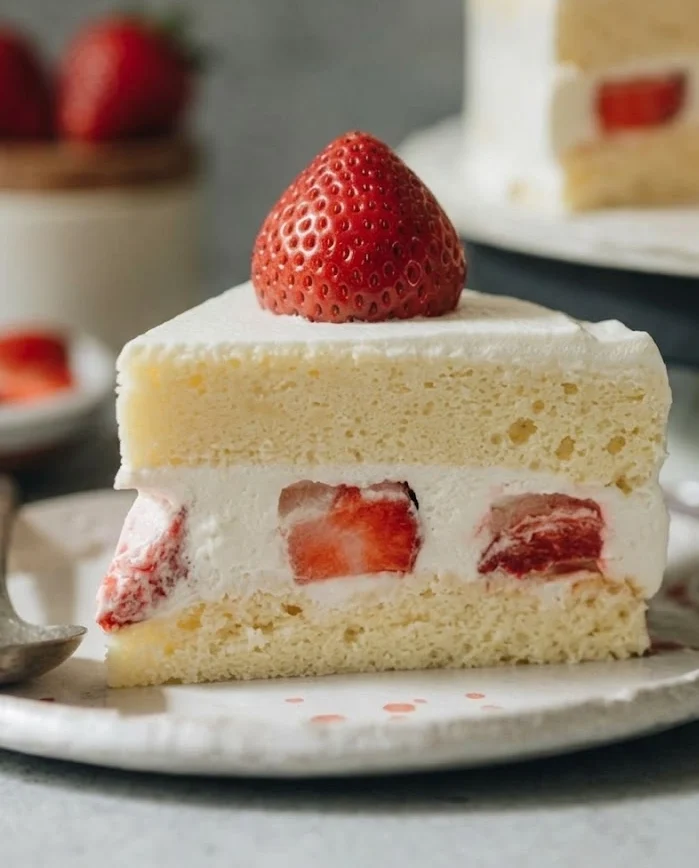
If you have been searching for a dessert recipe that looks stunning, tastes extraordinary, and does not rely on excessive sugar or artificial flavors, you just found it. The Japanese Strawberry Shortcake is one of the most beloved cakes in all of East Asia, and once you make it at home, you will understand exactly why.
This is not the dense, heavily frosted layer cake most Western bakers are used to. It is something else entirely — a cloud-like chiffon sponge, a barely-sweet whipped cream, and ripe strawberries tucked inside and piled generously on top. It is the kind of dessert recipe that makes people stop mid-bite and ask, “What is in this?”
Why You’ll Love This Dessert Recipe
This cake checks every box you could want from a show-stopping dessert recipe. It is visually beautiful, naturally not-too-sweet, and made with fewer than ten simple ingredients you can find at any grocery store.
It is also incredibly versatile. Whether you are baking a birthday cake, preparing dessert recipes for a crowd, or simply treating yourself on a Sunday afternoon, this recipe delivers every time. Unlike heavier chocolate cakes or dense pound cakes, this one feels light enough to enjoy a second slice without regret.
The whipped cream frosting is stabilized with a small amount of gelatin, which means the cake holds its shape in the fridge for up to two days. This makes it one of those rare dessert recipes that actually improves with a little advance planning.
Common Mistakes (And How to Avoid Them)
Over-whipping the egg whites. This is the number one reason chiffon cakes fail. You want medium peaks — glossy and soft — not stiff peaks. Over-whipped whites make the batter too rigid and prevent the cake from rising properly inside the water bath.
Skipping the water bath. The bain-marie is not optional here. It regulates the oven temperature around the cake, creating the steamy, gentle environment that produces that signature ultra-moist, velvety crumb. If you skip it, the cake will bake unevenly and likely crack.
Using cold eggs or cream. Cold egg whites do not whip as efficiently. Pull your eggs from the fridge at least 30 minutes before baking. Cold heavy cream, however, whips better — so keep that one chilled until the very last moment.
Ignoring your actual oven temperature. Many home ovens run hotter or cooler than the display suggests. An inexpensive oven thermometer is a game-changer for any baked dessert recipe, especially this delicate one.
Chef’s Notes
Use cake flour, not all-purpose. The lower protein content in cake flour is what gives this sponge its impossibly tender texture. All-purpose flour will make it noticeably denser and chewier.
Always use hot water in the water bath. Adding hot water directly — instead of cold water that heats up in the oven — helps the cake rise more consistently and evenly from the very start of baking.
Do not open the oven door before the one-hour mark. Every time the oven door opens, heat escapes and the delicate structure of the sponge risks collapsing before it has had time to set.
Let the cake cool completely before slicing or assembling. Rushing this step will cause the cream to melt and the layers to slide apart. Patience here is the difference between a beautiful cake and a messy one.
Key Ingredients
Cake flour creates the fine, soft crumb that defines this dessert recipe. It has less gluten than standard flour, which keeps each bite tender rather than chewy.
Separated eggs do the heavy lifting here. The yolks add richness and structure to the base, while the whipped whites act as the leavening agent — no baking powder needed. This technique is what separates a true Japanese sponge from an ordinary cake.
Whole milk and unsalted butter are melted together to create a moist, flavorful base. The fat content in whole milk contributes to a richer flavor without making the cake heavy.
Heavy whipping cream is the only frosting you need. When whipped to soft peaks with a touch of powdered sugar and optional gelatin, it is light, barely sweet, and the perfect complement to fresh fruit.
Fresh strawberries are the soul of this dessert recipe. Macerated briefly in a little sugar, they release their juices and become sweeter and glossier — perfect for layering inside the cake where they soak beautifully into the syrup-brushed sponge.
Cake syrup — simply sugar dissolved in hot water, optionally mixed with the strawberry macerating liquid — keeps the layers moist and adds a subtle sweetness that ties everything together.
How to Make Japanese Strawberry Shortcake
Step 1: Prepare your pan and oven. Line an 8-inch round cake pan with parchment paper. Preheat your oven to 325°F (160°C). Prepare a larger, deep pan for your water bath and bring a small pot of water to a boil.
Step 2: Make the yolk base. Melt the butter and whole milk together in a heatproof bowl. Sift in the cake flour and mix until smooth. Add the egg yolks and stir until fully combined and glossy.
Step 3: Whip the egg whites. In a clean mixing bowl, beat the egg whites on medium-high speed until frothy. Gradually add the sugar and continue beating until soft, glossy, medium peaks form. Do not go further.
Step 4: Fold the batters together. Fold one quarter of the whipped whites into the yolk mixture to lighten it. Then gently fold everything back into the bowl of whipped whites. Use slow, careful strokes to preserve as much air as possible.
Step 5: Bake in a water bath. Pour the batter into the prepared pan. Drop it gently from about 5 inches onto the counter twice to release large air bubbles. Set the cake pan into the larger pan and pour in an inch of hot water. Bake for 1 hour 30 minutes without opening the door until the final 30 minutes.
Step 6: Cool completely. Run a knife around the edge, flip onto a cooling rack, peel the parchment, and allow the cake to cool fully — at least 1 to 2 hours.
Step 7: Macerate the strawberries. Slice half the strawberries and toss with sugar. Let sit for one hour, then remove from the liquid and pat lightly dry. Mix the reserved liquid with the cake syrup.
Step 8: Whip the cream. Combine cold heavy cream with sifted powdered sugar. Whip to soft peaks. If using stabilized cream, bloom gelatin in cold water, melt it, fold a spoonful of cream into it, then incorporate into the rest.
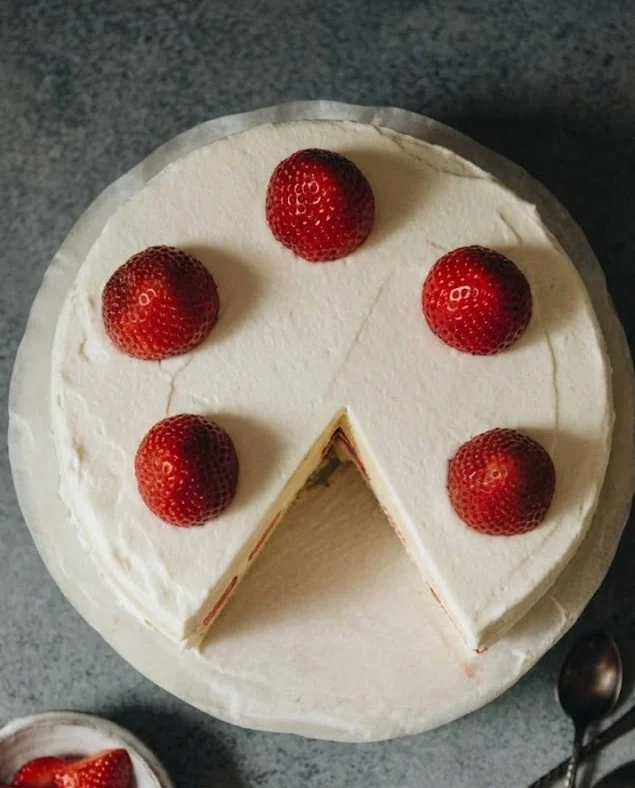
Step 9: Slice and assemble. Cut the cooled cake into two even layers. Brush each layer with the syrup. Spread a layer of cream on the bottom half, top generously with macerated strawberries, add another thin layer of cream, then place the top layer. Frost the top and sides, smooth with an offset spatula, and decorate with fresh whole strawberries.
Step 10: Chill and serve. Refrigerate for at least 30 minutes if using stabilized cream. Serve at room temperature for the best texture.
Variations and Tips
Make it gluten-free by substituting a fine, gluten-free cake flour blend at a 1:1 ratio. The texture will be slightly different but still excellent.
Make it dairy-free by using full-fat coconut milk in place of whole milk and a plant-based butter. For the frosting, full-fat coconut cream whips well when chilled overnight.
No gelatin? No problem. Skip it and simply make regular whipped cream. Just plan to serve the cake within a few hours of assembling, as the cream will not hold its shape overnight.
Swap the fruit. This dessert recipe works beautifully with raspberries, sliced peaches, or a mix of summer berries in place of — or alongside — strawberries.
Pro tip: Use a cake scraper or the flat back of a large spoon dipped in warm water to achieve that perfectly smooth, minimalist frosting finish that is the visual signature of Japanese-style desserts.
How to Meal Prep
This is one of the more make-ahead-friendly dessert recipes in the cake category. The sponge can be baked up to two days in advance and stored, tightly wrapped, at room temperature or in the refrigerator.
The macerated strawberries can also be prepared a day ahead and kept in the fridge. Whip and stabilize the cream on the day of assembly for the best texture. Once fully assembled with stabilized cream, the finished cake keeps refrigerated for up to 48 hours — making it a practical choice for dessert recipes for a crowd, birthday parties, or any event where you need to bake ahead.
Cultural Context
The Japanese Strawberry Shortcake — known as Ichigo Shortcake — is one of the most iconic dessert recipes in Japanese food culture. Unlike its American namesake, which is a biscuit-based affair, the Japanese version is centered on a chiffon or genoise sponge cake that is prized above all for its extraordinary lightness.
The cake became enormously popular in Japan in the 20th century through the influence of Western baking traditions blended with local preferences for subtlety and refinement. Japanese bakeries, or Panya, developed their own philosophy around dessert recipes: lower sugar, fresher cream, and the natural flavor of seasonal fruit allowed to shine without competition.
Strawberry shortcake became the cake of celebration across Japan and quickly spread its influence throughout East Asia, including China, Korea, and Taiwan, where it appears at birthdays, anniversaries, and holidays. Today, it represents a broader design philosophy in Japanese dessert recipes — that restraint, balance, and quality of ingredients always produce a more memorable result than excess.
Japanese Strawberry Shortcake
Ingredients
Equipment
Method
- Line an 8-inch cake pan with parchment paper and preheat the oven to 325°F (160°C). Prepare a larger pan for a water bath and bring water to a boil.
- Melt butter and milk together, then mix in sifted cake flour. Add egg yolks and stir until smooth and glossy.
- Whip egg whites until frothy, then gradually add sugar and beat to soft, glossy medium peaks.
- Fold a portion of egg whites into the yolk mixture, then gently fold everything together to keep the batter airy.
- Pour batter into the pan, tap lightly to remove air bubbles, and bake in a water bath for 90 minutes.
- Cool completely on a rack before slicing into layers.
- Slice strawberries and macerate with a little sugar. Reserve juices for syrup.
- Whip cold cream with powdered sugar to soft peaks. Add gelatin if using for stability.
- Slice cake into layers, brush with syrup, spread cream, and layer strawberries between each layer.
- Frost the cake, decorate with strawberries, chill briefly, then serve.