
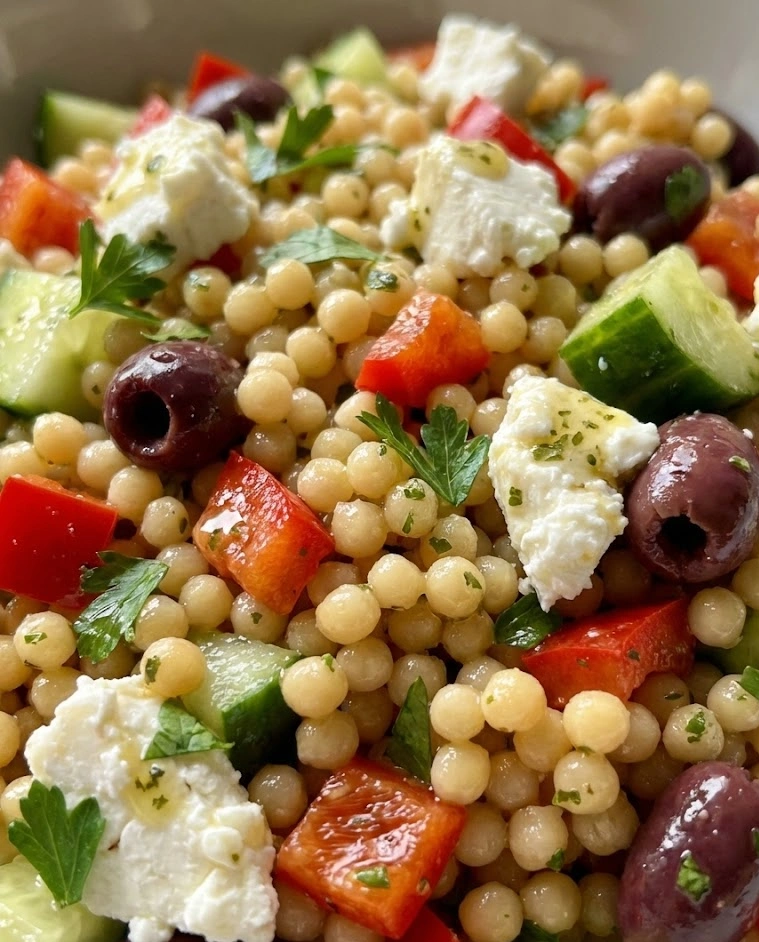
When spring finally arrives and the last thing you want is to stand over a hot stove, your spring dinner ideas need to shift — lighter, brighter, and full of the kind of fresh energy the season actually calls for. This Mediterranean Couscous Salad is exactly that shift.
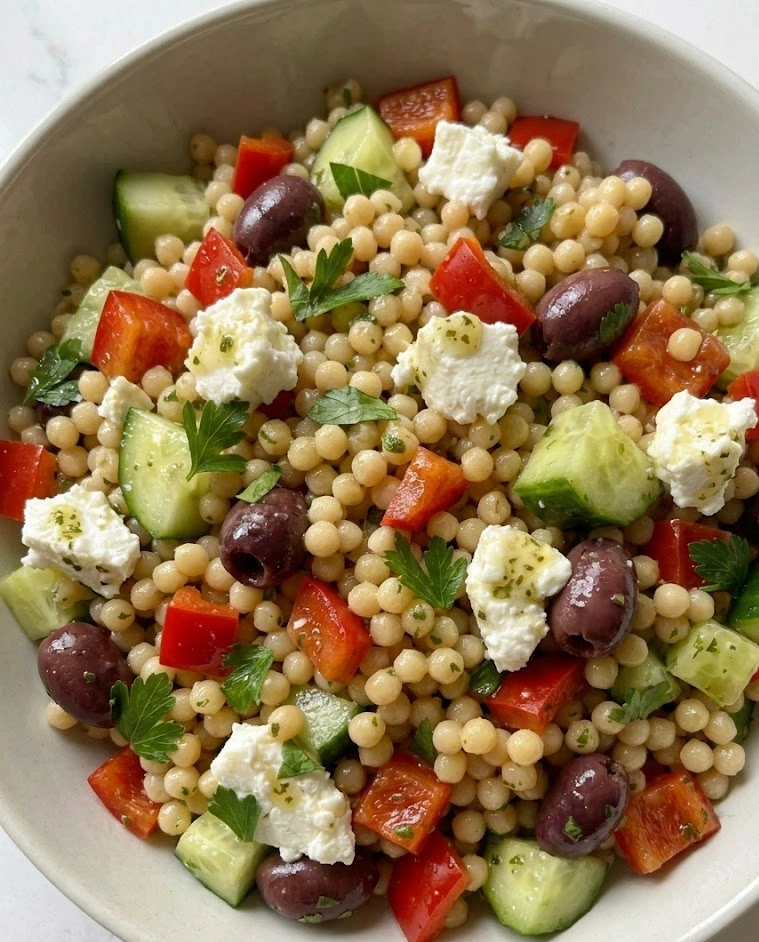
It’s the kind of dish that looks like you spent all afternoon in the kitchen but comes together in just 20 minutes. Fluffy, tender couscous tossed with juicy cherry tomatoes, crisp cucumber, salty kalamata olives, creamy feta, fresh parsley and mint, all pulled together by a punchy lemon-herb vinaigrette that tastes like a Mediterranean breeze in a bowl. It is, without question, one of the most joyful spring dinner ideas you’ll ever put on your table.
Serve it as a stunning standalone dinner, a vibrant side for grilled proteins, or the centerpiece of a spring spread. However it lands on your table, one thing is certain: this salad doesn’t leave leftovers.
Why You’ll Love This Mediterranean Couscous Salad
This recipe earns a permanent spot in your spring dinner ideas lineup — and here’s exactly why:
- Ready in 20 minutes — couscous cooks faster than any other grain, making this genuinely the fastest impressive dinner you’ll ever make.
- No oven, no heat — just boiling water and assembly. On a warm spring evening, that matters enormously.
- Travels and meal preps like a dream — it only gets better as it sits, making it perfect for lunches, potlucks, and picnics.
- Nutritious and satisfying — packed with plant-based protein, fiber, healthy fats, and enough substance to be a full, complete dinner.
- Endlessly adaptable — add grilled chicken, shrimp, or chickpeas; swap the herbs; change the cheese. This recipe welcomes every interpretation.
Common Mistakes — And How to Avoid Them
A few simple missteps can flatten this otherwise vibrant dish. Here’s how to keep it at its absolute best.
Using too much water for the couscous. The standard 1:1 ratio of couscous to boiling water is all you need. Using more makes the couscous waterlogged, heavy, and clumpy — the exact opposite of the light, fluffy texture you’re after. Measure precisely, cover tightly, and resist the urge to peek.
Not fluffing properly. Once the couscous has absorbed the water, the single most important step is fluffing it thoroughly with a fork — not a spoon, not your hands, a fork — to separate every single grain. Skipping or rushing this step results in a dense, clumped texture that no amount of dressing will fix.
Dressing while the couscous is hot. Hot couscous will absorb all of your dressing instantly, leaving a dry, under-seasoned salad by the time it reaches the table. Let it cool to room temperature first — or even chill it slightly — before adding the vinaigrette and fresh ingredients.
Under-seasoning the couscous itself. The couscous needs to be seasoned from the inside out. Cook it in salted water with a drizzle of olive oil and a squeeze of lemon — not plain water. Bland couscous is the most common reason a Mediterranean salad falls flat.
Chopping vegetables too large. The magic of this salad is in getting a little bit of everything in each forkful. Dice your cucumber, tomatoes, and olives small enough that they integrate with the couscous rather than sitting on top of it. Aim for roughly the same size as a single grain of couscous — maybe four or five times larger.
Chef’s Notes
A few insider moves that separate a good Mediterranean couscous salad from an absolutely unforgettable one:
- Toast the dry couscous in a dry skillet for 2–3 minutes before adding water. It develops a subtle nuttiness that adds incredible depth and makes the whole salad taste more complex without a single extra ingredient.
- Use the best olive oil you can. The vinaigrette here is simple by design, which means the quality of your olive oil is front and center. This is the moment to reach for the good bottle — a grassy, peppery extra-virgin olive oil will transform the entire dressing.
- Add the feta last. Toss everything together first, then crumble the feta on top and fold in gently just once or twice. This keeps the feta in beautiful chunky pieces rather than dissolving into a salty paste throughout the salad.
- Fresh herbs are non-negotiable. Dried parsley or dried mint will not do the same job here. The brightness and fragrance of fresh herbs is what makes this dish taste like spring. If mint feels too bold, substitute fresh basil — equally gorgeous.
- Let it marinate. This salad is genuinely better after 30 minutes at room temperature or an hour in the fridge. The couscous absorbs the vinaigrette and the flavors deepen and meld in a way that makes the first forkful taste like the hundredth — fully developed and perfectly balanced.
Key Ingredients — And Why They Matter
Couscous is the brilliant foundation of this spring dinner idea. Made from semolina wheat, couscous cooks in minutes — just add boiling water, cover, and wait. It has a mild, slightly nutty flavor and a tender, fluffy texture that soaks up dressing beautifully without becoming soggy. Pearl couscous (also called Israeli couscous) can be substituted for a chewier, heartier texture.
Cherry Tomatoes bring juicy bursts of sweetness and acidity that punctuate every bite. In spring and early summer, tomatoes are at their peak sweetness — halved cherry tomatoes are particularly perfect here because they hold their shape rather than weeping and making the salad watery.
English Cucumber adds the essential fresh crunch that keeps this salad lively and textural rather than soft throughout. English cucumbers are preferred because their skin is thin and their seed cavity is minimal, meaning you get pure, crisp flavor without bitterness or excess water.
Kalamata Olives are the briny, deeply savory soul of Mediterranean cooking. Their rich, slightly wine-like flavor is irreplaceable in this salad. Don’t substitute canned black olives — they’re mild to the point of bland and will make the whole dish taste flat.
Feta Cheese brings creamy, salty, tangy richness that ties every other element together. Buy a block of feta packed in brine and crumble it yourself — it’s creamier, saltier, and far more flavorful than the pre-crumbled variety, which tends to be dry and chalky.
Fresh Parsley and Mint are the herbal heartbeat of this recipe. Parsley brings fresh, grassy brightness while mint adds a cooling, springlike lift that is absolutely distinctive and makes this salad taste like the season. Together they are the defining flavor notes of classic Mediterranean cooking.
The Lemon-Herb Vinaigrette is simple, bright, and absolutely essential. Fresh lemon juice, good olive oil, garlic, dried oregano, a touch of honey, salt, and pepper. It takes 60 seconds to make and does more to elevate this salad than any other single element. Freshly squeezed lemon only — bottled juice is flat and one-note in comparison.
Red Onion adds a sharp, peppery bite that cuts through the richness of the feta and olive oil. If raw red onion feels too assertive, soak the sliced pieces in cold water for 10 minutes before adding — it mellows the sharpness dramatically while keeping the beautiful color and crunch.
How to Make Mediterranean Couscous Salad
Ingredients — Salad (Serves 4–6)
- 1½ cups (270g) dry couscous
- 1½ cups (360ml) boiling water or vegetable broth
- 1 tbsp olive oil
- ½ tsp salt
- 1 cup (150g) cherry tomatoes, halved
- 1 English cucumber, diced small
- ½ cup (90g) kalamata olives, pitted and halved
- ¼ red onion, finely diced
- ¾ cup (115g) feta cheese, crumbled from a block
- ¼ cup fresh flat-leaf parsley, roughly chopped
- 2 tbsp fresh mint leaves, roughly chopped
- ¼ cup (40g) sun-dried tomatoes, roughly chopped (optional but incredible)
- ¼ cup (35g) toasted pine nuts or slivered almonds (optional)
Ingredients — Lemon-Herb Vinaigrette
- 4 tbsp extra-virgin olive oil
- 3 tbsp fresh lemon juice (about 1½ lemons)
- 1 tsp lemon zest
- 1 clove garlic, finely minced or grated
- 1 tsp dried oregano
- ½ tsp honey
- ½ tsp salt
- ¼ tsp black pepper
Instructions
- Toast the couscous (optional but highly recommended). In a dry skillet over medium heat, add the dry couscous and toast, stirring frequently, for 2–3 minutes until it smells lightly nutty and turns a shade deeper in color. Remove from heat.
- Cook the couscous. Transfer couscous to a large heatproof bowl. Add the olive oil and salt, then pour the boiling water or broth directly over the top. Stir once, cover tightly with a plate or plastic wrap, and let sit undisturbed for 5 minutes.
- Fluff and cool. Uncover and fluff the couscous thoroughly with a fork, separating every grain. Spread it out slightly in the bowl or on a sheet pan and let it cool to room temperature, about 10–15 minutes.
- Make the vinaigrette. While the couscous cools, whisk together the olive oil, lemon juice, lemon zest, garlic, oregano, honey, salt, and pepper in a small bowl or jar until fully emulsified. Taste and adjust — it should be bright, tangy, and well-seasoned.
- Prep the vegetables. Halve the cherry tomatoes, dice the cucumber, halve the olives, finely dice the red onion, and roughly chop the parsley and mint. If using sun-dried tomatoes and nuts, prep those too.
- Assemble the salad. Add the cherry tomatoes, cucumber, olives, red onion, parsley, and mint to the cooled couscous. Pour the vinaigrette over everything and toss gently but thoroughly until every grain is coated and all the vegetables are evenly distributed.
- Add the feta. Crumble the feta over the top and fold in gently with just one or two turns — you want chunky, visible pieces throughout, not crumbles dissolved into the salad.
- Taste and rest. Taste for seasoning — feta is salty, so you may need very little added salt. Let the salad rest for at least 15–30 minutes before serving if you have time. Top with toasted pine nuts just before serving if using, to preserve their crunch.
- Serve at room temperature or slightly chilled, with extra lemon wedges and fresh herbs on the side.
Variations & Tips
Add protein and make it a full spring dinner. Top with grilled chicken, seared shrimp, baked salmon, or roasted chickpeas. All four options are extraordinary here and transform the salad into a hearty, complete spring dinner idea that satisfies even the biggest appetites.
Make it vegan. Simply omit the feta or replace it with a good-quality dairy-free feta alternative. A handful of toasted chickpeas adds a satisfying salty, creamy element in its place. The vinaigrette is already vegan — just confirm your honey substitute if needed.
Make it gluten-free. Swap the couscous for cooked quinoa, white rice, or a gluten-free grain of your choice. Quinoa in particular is a fantastic swap — it has a similar fluffy texture and absorbs the vinaigrette just as beautifully.
Add a grain swap for extra heartiness. Pearl couscous (Israeli couscous) makes this dish feel more substantial and dinner-worthy. Orzo pasta is another wonderful option for a more Italian-Mediterranean twist.
Switch up the vegetables. Roasted red peppers, artichoke hearts, thinly sliced radishes, baby arugula, or blanched asparagus tips are all spectacular additions or substitutions that keep this recipe feeling fresh every time you make it.
Pro tips:
- Make a double batch of the vinaigrette — it keeps in the fridge for a week and works on everything from salads to grilled vegetables to grain bowls.
- For a dinner party, serve the salad in a wide, shallow bowl and arrange toppings in sections for a visually stunning presentation.
- Toast your nuts fresh every time — stale toasted nuts add a bitter note that can undercut the freshness of the whole dish.
How to Meal Prep
This is hands-down one of the best spring dinner ideas for meal prep, and the reasons are obvious the moment you make it. Unlike most salads that wilt and weep within hours, Mediterranean Couscous Salad holds its texture and flavor for days.
Make the full recipe on Sunday and store it in an airtight container in the refrigerator for up to 4 days. The flavors actually improve with time as the couscous absorbs the vinaigrette more deeply. For the best results, store the toasted nuts and the feta separately and add them fresh each time you serve — this keeps the nuts crunchy and the feta in beautiful distinct pieces rather than dissolving into the salad over time.
For weekday lunches, portion directly into individual containers right after making. Add a protein — sliced grilled chicken, a can of drained chickpeas, or a few strips of baked salmon — to each container for a complete, balanced meal that requires zero effort on a busy Tuesday afternoon. The vinaigrette can be made separately and stored in a jar for up to a week, making it easy to re-dress the salad if it absorbs everything after a few days.
Cultural Context: The Mediterranean Table and the Spirit of Spring Eating
Mediterranean cuisine is not simply a collection of recipes — it is a philosophy of eating. Rooted in the food traditions of Greece, Lebanon, Turkey, Italy, Morocco, and across the entire Mediterranean basin, this way of cooking prioritizes freshness, seasonality, simplicity, and the extraordinary power of high-quality ingredients allowed to shine without complication. It is, in many ways, the original farm-to-table movement.
Couscous itself has a history spanning over a thousand years, originating with the Berber peoples of North Africa — present-day Morocco, Algeria, Tunisia, and Libya — where it remains a deeply beloved cultural staple and a centerpiece of communal celebrations and everyday family meals alike. From North Africa it traveled across the Mediterranean through trade routes and cultural exchange, eventually becoming beloved across the Middle East, southern Europe, and the entire world.
The combination of grains with fresh vegetables, herbs, olives, and cheese is one of the oldest and most enduring flavor combinations in human culinary history. Long before “meal prep” was a concept, Mediterranean home cooks were making large grain salads that fed families across multiple meals, kept beautifully in cool pantries, and improved in flavor with each passing hour.
There is also something deeply seasonal about this style of cooking. Spring in the Mediterranean is a time of extraordinary abundance — the olive trees are flowering, the herb gardens are bursting, the citrus trees are heavy with fruit, and the markets overflow with the kind of produce that needs nothing more than a good knife and a drizzle of olive oil. This Mediterranean Couscous Salad captures all of that energy in a single bowl. It is food that tastes like warm evenings, open windows, and the very best version of the season.
Mediterranean Couscous Salad
Ingredients
Equipment
Method
- Optional: Toast dry couscous in a skillet over medium heat for 2–3 minutes until lightly golden and fragrant.
- Place couscous in a heatproof bowl. Add olive oil and salt, then pour boiling water or broth over top. Stir once, cover tightly, and let sit 5 minutes.
- Fluff couscous thoroughly with a fork and let cool to room temperature.
- Whisk together olive oil, lemon juice, lemon zest, garlic, oregano, honey, salt, and black pepper until emulsified.
- Add cherry tomatoes, cucumber, olives, red onion, parsley, and mint to cooled couscous. Pour vinaigrette over and toss gently to combine.
- Fold in crumbled feta gently. Top with sun-dried tomatoes and toasted nuts if using.
- Let rest 15–30 minutes before serving for best flavor. Serve at room temperature or slightly chilled.