
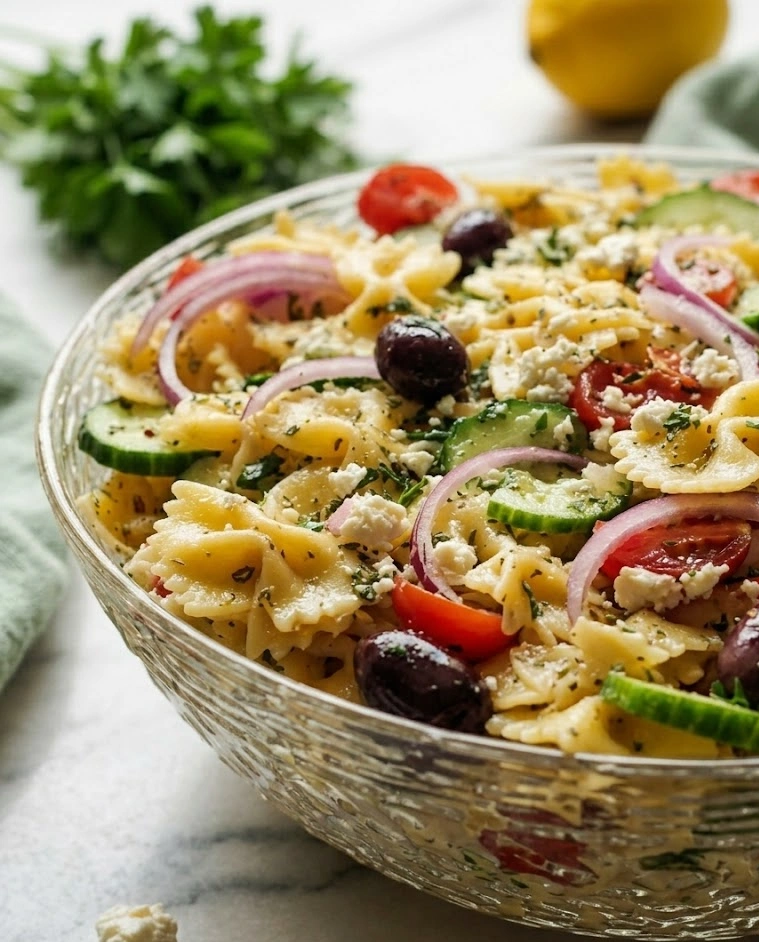
Some pasta salad recipes are fine. This one is the kind you find yourself thinking about on the drive home from the potluck, already mentally planning when you will make it again.
Mediterranean pasta salad is a study in how a handful of the right ingredients, treated well and dressed boldly, can produce something that feels far more impressive than the effort involved. There is no mayo, no heavy cream-based dressing, and no ingredient you cannot pronounce. Just good pasta, fresh vegetables, briny olives, creamy feta, and a bright red wine vinaigrette built on garlic, oregano, and lemon — the flavors that have defined Mediterranean cooking for centuries.
It is one of the most reliable healthy pasta salad recipes you will come across: genuinely nourishing, naturally light, and satisfying enough to work as a full meal when you need it to. If you have been searching for a pasta salad dressing that actually earns its place in the bowl rather than just making things wet, this is the recipe that delivers.
Why You’ll Love This Pasta Salad
This is a pasta salad recipe that rewards you twice — first when you make it and immediately want to eat it, and again the next day when the vinaigrette has soaked deeper into the pasta and every flavor has had time to meld into something more complete and rounded than the day before.
It is also one of those pasta salad ideas where the flexibility works in your favor. The ingredient list is short and built around things most people already have in their fridge and pantry. You can scale it up easily for a crowd, swap vegetables freely based on what is in season, and adjust the dressing by feel rather than measuring precisely every time.
And because everything here is vegetable and pantry-based with no proteins that need special handling, it assembles faster than almost any other pasta salad recipe with similarly bold results.
Common Mistakes (And How to Avoid Them)
Under-salting the pasta water. This is the foundational error of nearly every bland pasta salad — and it matters even more when the dressing is a vinaigrette rather than a heavy mayo or cream-based coating. A vinaigrette seasons from the outside, which means the pasta itself must carry its own flavor from within. Salt your water generously, taste it, and add more if it does not taste noticeably salty before the pasta goes in.
Rinsing pasta too aggressively. A brief cold rinse — 20 to 30 seconds — is exactly what this recipe calls for. It stops the cooking and removes excess starch that would make the pasta clump. But rinsing for too long cools the pasta completely before the dressing can be absorbed, and strips away the surface texture that helps the vinaigrette cling. Brief is the word. Stop as soon as the pasta feels cool to the touch.
Adding the dressing to fully cold pasta. The vinaigrette needs to go onto pasta that is still slightly warm. Warm pasta is porous and absorbent — it draws the olive oil, garlic, and oregano into itself and becomes seasoned from the inside rather than just coated on the surface. Cold pasta repels dressing, and the result is a salad where the flavor sits in the liquid at the bottom of the bowl rather than in the pasta itself.
Not saving extra dressing for serving. Pasta is particularly absorbent, and after a few hours in the fridge this salad will have soaked up a significant portion of its vinaigrette. What looked perfectly dressed when you put it away will look dry when you pull it out. Always make a small extra batch of dressing to stir through right before serving, or at minimum hold back a few tablespoons from the original batch.
Chef’s Notes
Make the dressing first and let it sit while the pasta water comes to a boil. This resting time is not decorative — garlic and dried oregano both bloom and intensify when given a few minutes to infuse into the oil and vinegar before the dressing is used. A vinaigrette that has rested for even ten minutes tastes noticeably more complex than one poured straight from the whisk.
Kalamata olives are worth specifying here. Black canned olives and kalamata olives are entirely different ingredients. Kalamatas are cured in red wine vinegar, which gives them a meaty texture and a deeply savory, slightly tangy brine that integrates beautifully with the red wine vinegar in the dressing. Canned black olives are mild and one-dimensional by comparison. If you can only find one type, make it kalamata.
The honey in the dressing is not optional, even though the amount is small. It softens the sharpness of the raw garlic and balances the acidity of the red wine vinegar without making the dressing taste sweet. Remove it and the vinaigrette tilts too sharp and one-dimensional. Keep it and everything rounds out exactly as it should.
Key Ingredients
Rotini pasta is the structural backbone of this Mediterranean pasta salad and the right shape for the job. Its tight spirals trap kalamata olive slices, crumbled feta, and small pieces of herb in every twist, which means the salad eats evenly from the first forkful to the last rather than delivering a random bite of plain pasta followed by a mouthful of toppings. Penne and fusilli are close alternatives, but rotini holds the most in its coils.
Kalamata olives bring the briniest, most assertive flavor in the bowl. They are cured in a red wine vinegar brine that makes them taste savory, slightly tangy, and deeply Mediterranean in a way that no other commonly available olive replicates. They are also the ingredient most closely associated with Greek salad tradition, which is the flavor lineage this pasta salad draws from.
Feta cheese is the creamy counterweight to the acidic vinaigrette. Its saltiness seasons the salad from within, its crumbly texture distributes throughout the bowl without dominating any single bite, and its slight tang reinforces the lemon and vinegar notes in the dressing. Block feta that you crumble yourself just before serving is noticeably creamier and more flavorful than pre-crumbled.
Cherry tomatoes contribute juicy acidity and sweetness that soften the sharpness of the red onion and balance the brine of the olives. Halving them releases their juices directly into the dressing, which gets absorbed by the surrounding pasta and adds a natural tomato note to the overall flavor of the bowl.
Red wine vinegar is the acidic anchor of the dressing and the ingredient most responsible for making this pasta salad dressing taste distinctly Mediterranean rather than generic. It has a depth and slight fruitiness that white wine vinegar lacks, and it pairs naturally with garlic, oregano, and olive oil in a way that feels like it was always meant to be used this way.
Extra-virgin olive oil provides richness, carries the fat-soluble flavor compounds of the garlic and oregano throughout the dressing, and gives the vinaigrette a smooth, cohesive texture that coats the pasta properly. The quality of the oil matters here since it is not being cooked — use the best one you have available.
Fresh parsley finishes the salad with a clean, green brightness that cuts through the richness of the feta and olive oil and keeps the whole bowl tasting vivid and fresh rather than heavy.
How to Make Mediterranean Pasta Salad
Step 1 — Make the vinaigrette. In a small bowl or jar, whisk together the extra-virgin olive oil, red wine vinegar, lemon juice, freshly pressed garlic, oregano, honey, salt, pepper, and red pepper flakes until the dressing comes together into a cohesive emulsion. Set it aside and let it rest while you prepare the rest of the recipe — this gives the garlic and oregano time to infuse.
Step 2 — Cook the pasta and prep the vegetables. Bring a large pot of heavily salted water to a rolling boil. Cook the rotini according to package directions until just al dente. While the pasta cooks, peel and slice the cucumber into half-inch half-moons, halve the cherry tomatoes, thinly slice the red onion, and chop the fresh parsley.
Step 3 — Dress the warm pasta. Drain the cooked pasta and rinse briefly under cold water for 20 to 30 seconds — just long enough to stop the cooking and reduce surface starch, not long enough to cool it completely. Transfer the still-warm pasta to a large mixing bowl and immediately pour the vinaigrette over it. Toss thoroughly so every piece of pasta is coated while it is still absorbent.
Step 4 — Assemble the salad. Add the prepared cucumber, cherry tomatoes, kalamata olives, crumbled feta, sliced red onion, and chopped parsley to the dressed pasta. Toss everything together gently but thoroughly. Taste and adjust seasoning — a pinch more salt, a squeeze of extra lemon, or a drizzle of olive oil if anything feels off.
Step 5 — Chill and serve. Refrigerate the salad for at least one hour before serving. Just before bringing it to the table, give it a good stir, taste it again, and add a splash of dressing or a squeeze of lemon if it has dried out. Serve cold or at cool room temperature.
Variations and Tips
Make it a healthy pasta salad with protein by stirring in a can of drained chickpeas or white beans. Both absorb the vinaigrette beautifully and turn this from a side dish into a genuinely complete, plant-based meal with solid staying power.
Add chicken for a pasta salad with chicken that works as dinner. Grilled lemon-herb chicken or sliced rotisserie chicken laid over the top or tossed through brings lean protein and makes the whole bowl more filling. The Mediterranean dressing complements almost any simply seasoned chicken beautifully.
Make it gluten-free by substituting chickpea rotini or brown rice penne. Both hold up well in cold pasta salads and absorb the vinaigrette without turning mushy, making this one of the more adaptable healthy pasta salad recipes for dietary needs.
Amplify the Mediterranean character by adding marinated artichoke hearts, sun-dried tomatoes, or thinly sliced roasted red peppers from a jar. Any of these ingredients deepens the pantry-forward, briny flavor profile that defines this pasta salad.
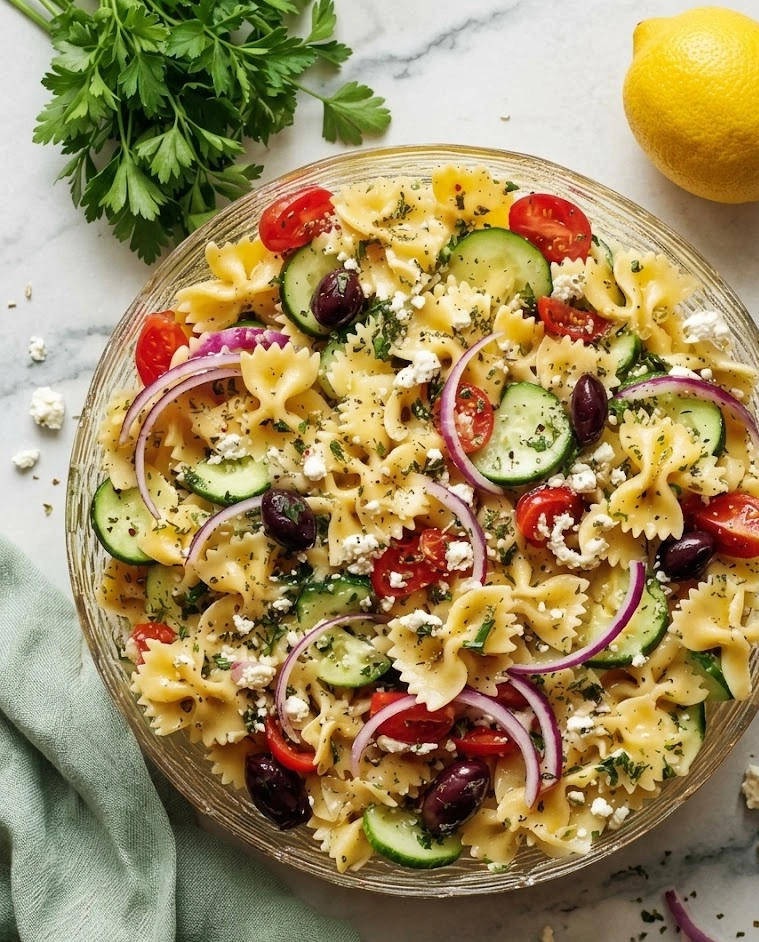
For a pasta salad aesthetic presentation, arrange the toppings visually before tossing — cluster the cherry tomatoes on one side, the olives on another, and scatter the feta generously across the top. Finish with a few whole parsley sprigs and a visible drizzle of olive oil. It photographs especially well in natural light and earns significant engagement on Pinterest.
How to Meal Prep This Pasta Salad
Mediterranean pasta salad is one of the strongest pasta salad recipes for structured weekly meal prep, and it requires almost no special technique to keep it performing well across multiple days.
Make the full recipe on Sunday. Divide it into individual airtight containers and refrigerate. It keeps well for up to four days without any significant loss of quality — in fact, the flavor on day two and three is often better than day one, as the vinaigrette continues to penetrate the pasta and the garlic mellows into something deeper and less sharp.
The one practical consideration is dressing retention. Pasta absorbs vinaigrette as it sits, so if you are planning to eat this over several days, make a double batch of the dressing and store it separately in a small jar in the fridge. Stir a tablespoon or two into each portion just before eating to bring the salad back to its original glossy, well-coated state.
If you want to add feta for each serving individually rather than mixing it all in at once, it stays slightly creamier and more distinct when added fresh rather than sitting with the acidic dressing for several days. Either way works — it is a matter of personal preference rather than food safety.
The salad works served cold directly from the fridge or allowed to sit at room temperature for 15 minutes before eating. Both are good. The flavors are slightly more vivid at cool room temperature than ice cold, which is worth knowing if you have the time to plan ahead.
Cultural Context
The Mediterranean diet is one of the most studied and consistently praised dietary patterns in the world, and for good reason. It is built around vegetables, legumes, whole grains, fish, olive oil, and moderate amounts of cheese and wine — a framework that has sustained the populations living around the Mediterranean Sea for thousands of years and is associated with some of the lowest rates of cardiovascular disease and chronic illness observed anywhere on the planet.
This pasta salad sits comfortably within that tradition, drawing most directly from the Greek culinary vocabulary. The combination of cucumber, tomato, kalamata olive, feta, red onion, and oregano is essentially the ingredient list of a classic horiatiki — the Greek village salad — transposed onto pasta rather than served loose. The red wine vinegar dressing with garlic and olive oil is standard across the Aegean, used on salads, grilled vegetables, and legume dishes throughout Greek home cooking.
What the pasta brings to this combination is a carbohydrate foundation that makes the dish more sustaining and practical for modern meal prep and feeding a crowd. Pasta itself has deep roots in Mediterranean food culture — Italy and Greece both have long histories of durum wheat production and pasta-making — so the pairing is less of a creative stretch than it might initially seem.
The result is a dish that draws on genuine culinary heritage while meeting the practical demands of contemporary cooking: fast to make, easy to store, nutritionally sound, and built from ingredients that have been feeding people well for a very long time.
Mediterranean Pasta Salad
Ingredients
Equipment
Method
- In a bowl or jar, whisk together olive oil, red wine vinegar, lemon juice, garlic, oregano, honey, red pepper flakes, salt, and pepper. Let sit to develop flavor.
- Cook rotini in salted boiling water until al dente. While cooking, slice cucumber, halve tomatoes, slice onion, and chop parsley.
- Drain pasta and rinse briefly under cold water for 20–30 seconds. Transfer to a bowl while still slightly warm.
- Pour dressing over the warm pasta and toss thoroughly to coat and absorb flavor.
- Add cucumber, tomatoes, olives, red onion, feta, and parsley. Toss gently and adjust seasoning if needed.
- Refrigerate for at least one hour. Before serving, stir and refresh with extra dressing or lemon juice if needed.