
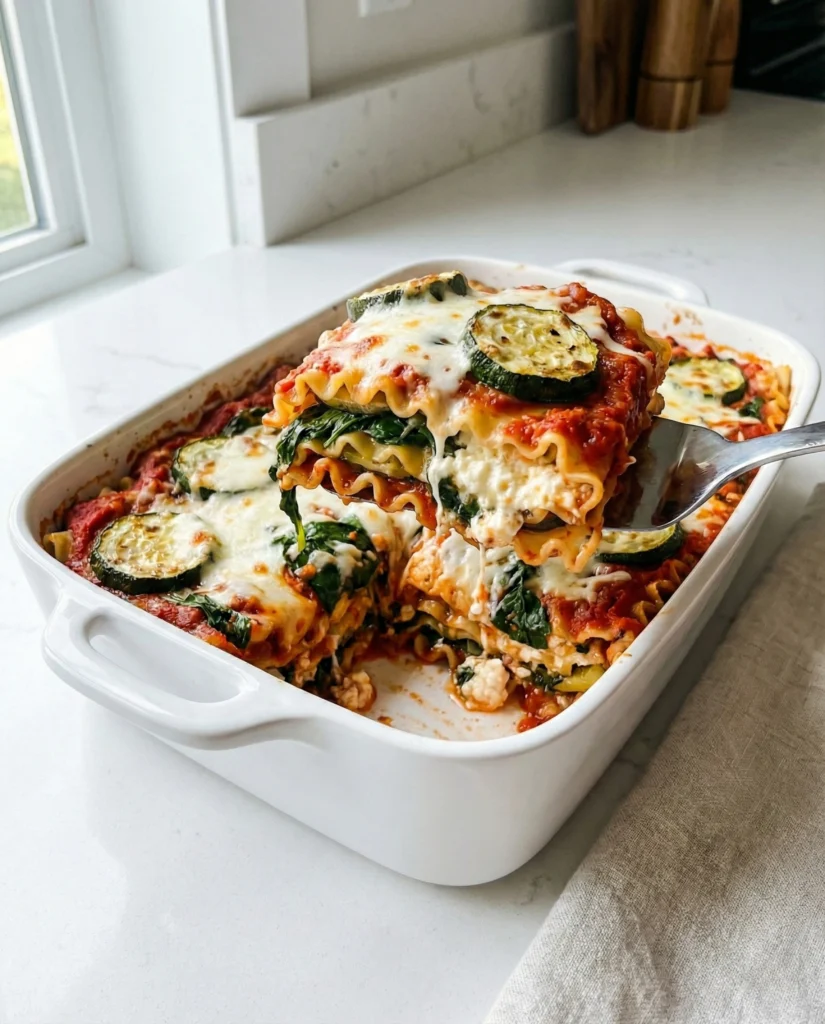
If you’ve been exploring cottage cheese recipes lately, you already know this ingredient is quietly revolutionizing the way we cook. It’s creamy, protein-packed, and incredibly versatile — and nowhere does it shine more beautifully than in a bubbling, golden-topped lasagna.
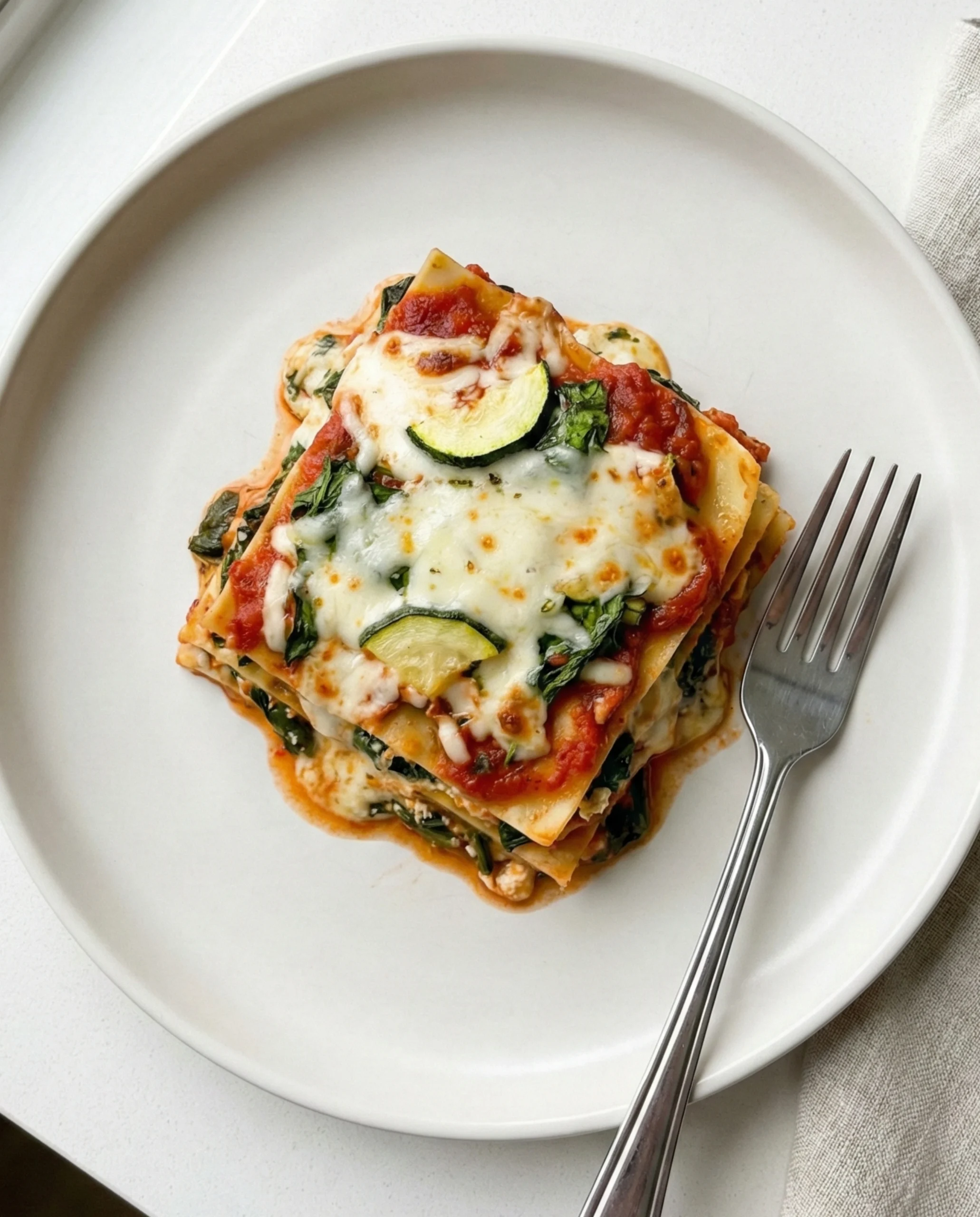
This Vegetable Cottage Cheese Lasagna takes everything you love about the classic Italian-American comfort dish and makes it even better. We’re talking silky layers of blended cottage cheese standing in for the traditional ricotta, vibrant seasonal vegetables roasted to sweet, caramelized perfection, a deeply savory tomato sauce, and enough melted mozzarella on top to make you genuinely emotional.
It’s the kind of dish that feeds a crowd, fills your kitchen with the most incredible aroma, and tastes even better the next day. Whether you’re cooking for a big family dinner, bringing something to a potluck, or stocking your freezer with meals for the week — this is the one. Let’s build something beautiful.
Why You’ll Love This Vegetable Cottage Cheese Lasagna
This recipe is everything a great comfort dish should be — generous, flavorful, and surprisingly forgiving to make. But it’s also one of those cottage cheese recipes that quietly works smarter than it looks.
- Protein-packed without the meat: Cottage cheese delivers serious protein in every layer, making this a fully satisfying vegetarian main dish.
- Lighter than traditional lasagna: Cottage cheese has significantly fewer calories and less fat than ricotta, without sacrificing any of the creaminess.
- Meal prep royalty: This lasagna is even better on day two. It stores, reheats, and freezes like a dream.
- Vegetable forward: Roasting the vegetables first concentrates their flavor — no soggy, watery lasagna here.
- Crowd-pleasing: Even dedicated meat-eaters come back for seconds. Every single time.
- Flexible: Use whatever vegetables are in season or already in your fridge.
Common Mistakes (And How to Avoid Them)
Even seasoned cooks run into trouble with lasagna. Here are the most common pitfalls with this style of cottage cheese recipes — and exactly how to sidestep them.
1. Not Roasting the Vegetables First
It’s tempting to skip this step, but please don’t. Raw vegetables release a tremendous amount of water as they bake inside the lasagna, which leads to a soupy, structurally unstable mess. Roasting them first drives off that moisture and concentrates their natural sweetness. It takes 20 minutes and it makes an enormous difference.
2. Using Watery Cottage Cheese Straight from the Tub
Different brands of cottage cheese have different moisture levels. If yours looks particularly wet, drain it through a fine mesh sieve for 15–20 minutes before blending. Too much liquid in the cheese layer = layers that slide apart and a pool of water at the bottom of your pan.
3. Assembling Straight Into a Cold Pan and Baking Immediately
Let your tomato sauce simmer long enough to thicken properly before assembling. A thin, watery sauce won’t set between the layers — it’ll just run everywhere. Aim for a sauce that coats the back of a spoon before it goes anywhere near your baking dish.
4. Skipping the Foil for the First Half of Baking
Lasagna needs to steam to cook through evenly. Bake it covered with foil for the first 35 minutes, then uncover for the final 15–20 minutes to let the top get gloriously golden and bubbly. Skipping the foil leads to dry edges and an undercooked center.
5. Cutting Into It Immediately
We know. It smells incredible. But lasagna needs to rest for at least 15 minutes after coming out of the oven. This allows the layers to set and firm up so you get clean, beautiful slices instead of a delicious landslide.
Chef’s Notes
Lasagna is one of those dishes I believe everyone should have a signature version of — and this Vegetable Cottage Cheese Lasagna has become mine. I started making it when I wanted a meatless option that still felt substantial and celebratory, not like a compromise.
The turning point was discovering that blended cottage cheese, seasoned with fresh herbs, lemon zest, and a good handful of Parmesan, is actually superior to ricotta in lasagna. It’s lighter, it blends more smoothly, and it carries seasoning beautifully. I’ve served this to Italian grandmothers. They approved.
Pro tip: Add a full teaspoon of lemon zest to your cottage cheese layer. It sounds unusual, but it cuts through the richness of the cheese and the tomato sauce in a way that makes the whole dish taste brighter and more alive. Trust the process.
Another pro tip: Make your tomato sauce the day before. A sauce that’s had time to rest overnight develops a depth of flavor that no 30-minute sauce can match.
Key Ingredients
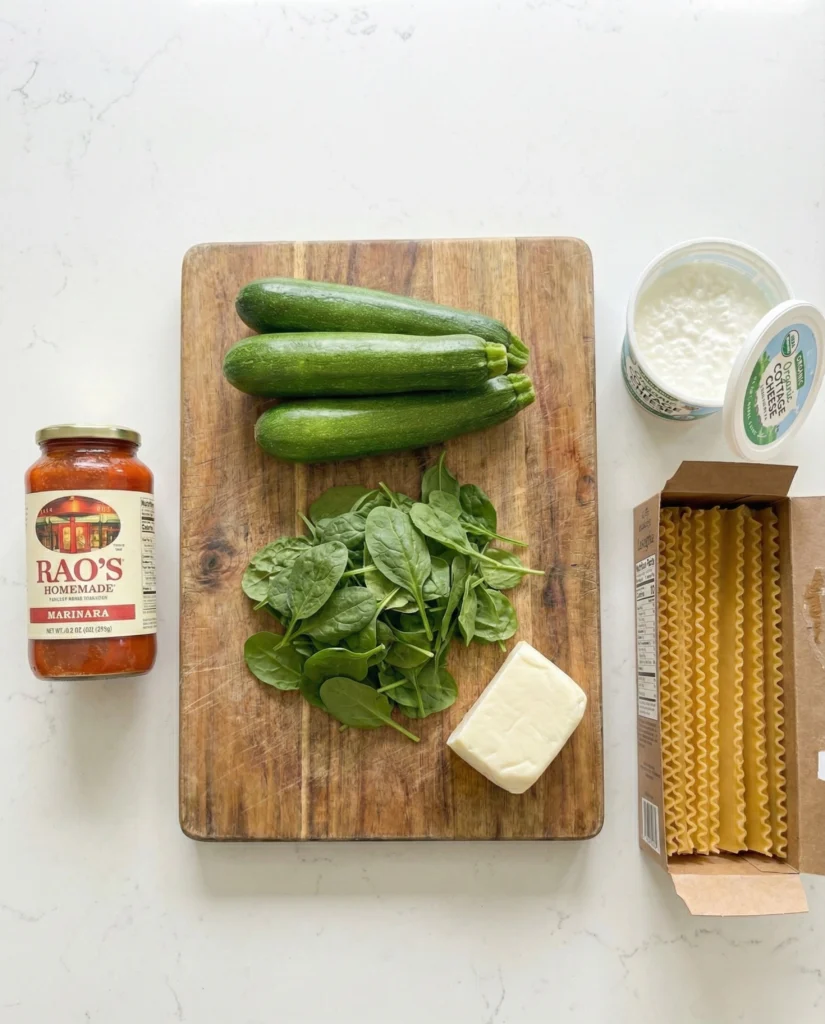
Every layer of this lasagna is doing important work. Here’s why each component matters.
- Full-Fat Cottage Cheese: The foundation of our cheese layer and the hero of this cottage cheese recipe. When blended with egg, herbs, lemon zest, and Parmesan, it becomes a filling so creamy and flavorful you’ll never miss ricotta. Full-fat is essential — low-fat versions are too watery and lack the richness needed to carry the other flavors.
- Lasagna Noodles: Classic dried lasagna noodles work perfectly. No-boil noodles are a convenient option, but they absorb more liquid from the sauce — if you use them, add an extra ½ cup of water to your tomato sauce before assembling.
- Mixed Vegetables: We’re using zucchini, bell peppers, mushrooms, and spinach — a combination that offers varying textures and flavors. The zucchini and peppers roast into something sweet and tender; mushrooms add meatiness and umami; spinach wilts into the layers and adds color and nutrition.
- Crushed Tomatoes: The base of a great lasagna sauce. Use the best quality you can find — San Marzano style if possible. The tomato flavor is front and center here, so it matters.
- Fresh Garlic + Onion: Non-negotiable aromatics that build the savory foundation of the entire dish.
- Fresh Basil + Dried Oregano: Basil goes into the sauce and also into the cottage cheese layer. Oregano deepens the herbal, Italian flavor profile throughout.
- Mozzarella Cheese: Go for whole-milk, low-moisture mozzarella. It melts into that gorgeous, stretchy, golden top layer that makes lasagna so visually irresistible. Fresh mozzarella releases too much water — stick with the block variety.
- Parmesan Cheese: Goes into the cottage cheese layer and gets scattered over the top. It adds sharpness, saltiness, and helps the top crust develop a beautiful golden color.
- Eggs: Two eggs mixed into the cottage cheese layer act as a binder, helping the filling set into clean, sliceable layers as the lasagna bakes.
- Lemon Zest: The secret weapon. Just a teaspoon brightens the entire cheese layer and makes every bite taste more vibrant.
- Olive Oil: Used for roasting the vegetables and sautéing the aromatics. Use a good one — it’s flavor all the way down.
How to Make Vegetable Cottage Cheese Lasagna
Ingredients (Serves 8–10)
For the roasted vegetables:
- 1 medium zucchini, diced
- 1 red bell pepper, diced
- 1 yellow bell pepper, diced
- 2 cups cremini mushrooms, sliced
- 2 cups fresh spinach
- 3 tbsp olive oil
- Salt and pepper to taste
For the tomato sauce:
- 2 tbsp olive oil
- 1 medium yellow onion, finely diced
- 5 cloves garlic, minced
- 2 cans (28 oz each) crushed tomatoes
- 1 tsp dried oregano
- 1 tsp sugar (balances acidity)
- ½ tsp red pepper flakes
- Salt and pepper to taste
- Large handful of fresh basil, torn
For the cottage cheese layer:
- 3 cups full-fat cottage cheese
- 2 large eggs
- 1 cup freshly grated Parmesan cheese, divided
- 1 tsp lemon zest
- ¼ cup fresh basil, finely chopped
- Salt and pepper to taste
For assembly:
- 12–15 lasagna noodles, cooked al dente
- 3 cups whole-milk low-moisture mozzarella, shredded
- Extra Parmesan for topping
- Fresh basil for garnish
Instructions
- Roast the vegetables. Preheat your oven to 425°F. Toss zucchini, bell peppers, and mushrooms with olive oil, salt, and pepper. Spread on a large sheet pan in a single layer. Roast for 20–22 minutes until tender and caramelized at the edges. In the last 3 minutes, add the spinach and toss to wilt. Remove from oven and set aside. Reduce oven temperature to 375°F.
- Make the tomato sauce. Heat olive oil in a large saucepan over medium heat. Add onion and cook for 6–7 minutes until softened and translucent. Add garlic and cook for another 60 seconds. Add crushed tomatoes, oregano, sugar, red pepper flakes, salt, and pepper. Simmer uncovered for 20–25 minutes until sauce has thickened noticeably. Stir in fresh basil at the end. Taste and adjust seasoning.
- Cook the noodles. While the sauce simmers, cook lasagna noodles according to package directions until just al dente — they’ll continue cooking in the oven. Drain and lay flat on lightly oiled parchment paper to prevent sticking.
- Make the cottage cheese layer. Add cottage cheese to a blender or food processor. Blend for 30–45 seconds until completely smooth. Transfer to a bowl and stir in eggs, ¾ cup of the Parmesan, lemon zest, fresh basil, salt, and pepper. Mix well to combine.
- Assemble the lasagna. Spread a thin layer of tomato sauce on the bottom of a 9×13-inch baking dish. This prevents the noodles from sticking. Then layer in this order: noodles, cottage cheese mixture, roasted vegetables, tomato sauce, mozzarella. Repeat layers until you run out of ingredients, finishing with a top layer of tomato sauce, then mozzarella, then the remaining ¼ cup Parmesan.
- Bake covered. Cover the dish tightly with aluminum foil — lightly grease the underside so it doesn’t stick to the cheese. Bake at 375°F for 35 minutes.
- Bake uncovered. Remove foil and bake for another 15–20 minutes until the top is deeply golden, bubbling at the edges, and irresistible.
- Rest before serving. Remove from oven and let the lasagna rest, uncovered, for at least 15 minutes. This is non-negotiable for clean slices. Garnish with fresh basil and serve.
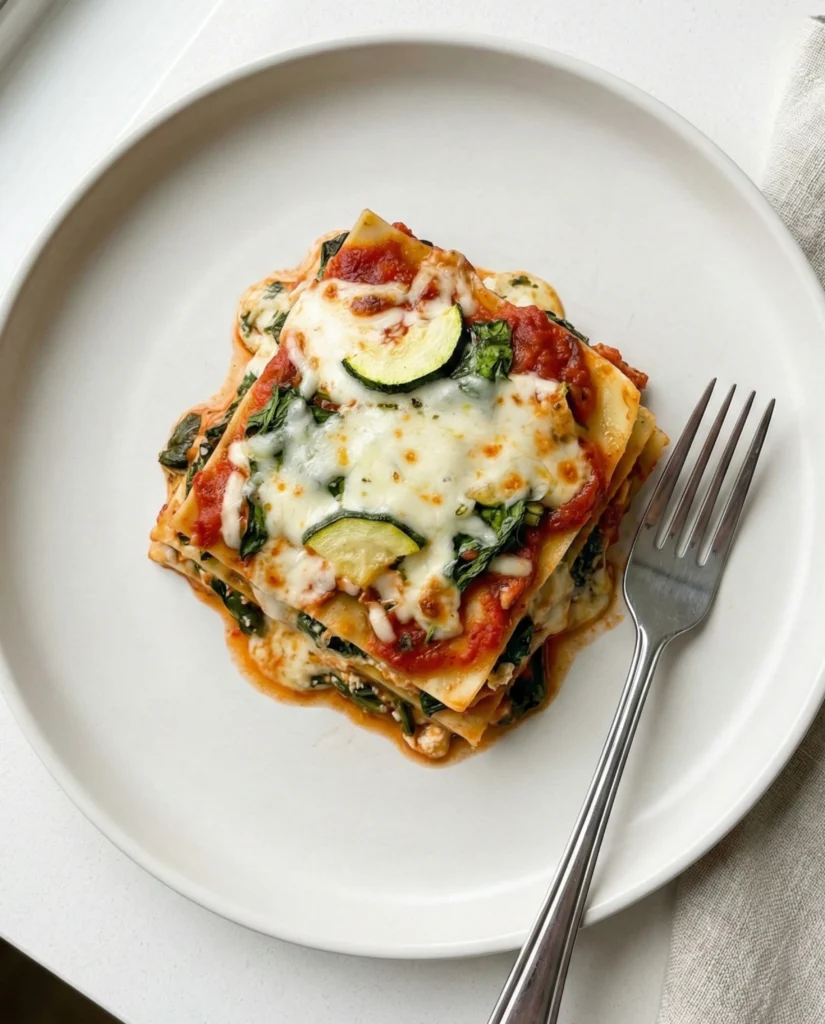
Variations & Tips
The best thing about cottage cheese recipes is that they welcome creativity. Here’s how to make this lasagna your own.
Dietary Swaps
- Vegan: Use a plant-based cottage cheese alternative (cashew-based works best), replace eggs with 2 tbsp ground flaxseed mixed with 6 tbsp water, and use vegan mozzarella and Parmesan. The result is still deeply satisfying.
- Gluten-free: Swap in your favorite GF lasagna noodles. Add 5 minutes to the covered bake time as GF pasta sometimes takes longer to soften fully.
- Extra protein: Stir ½ cup of cooked white beans or lentils into the tomato sauce for even more staying power.
Flavor Variations
- Pesto layer: Spread a thin layer of basil pesto over the cottage cheese layer before adding the vegetables. It adds a gorgeous herbal depth.
- Butternut squash version: Swap zucchini and peppers for roasted butternut squash and sage for a stunning autumn variation.
- Spicy arrabiata style: Double the red pepper flakes in the sauce and add a teaspoon of smoked paprika for a fiery, smoky version.
- White lasagna: Skip the tomato sauce entirely and replace it with a simple béchamel or additional blended cottage cheese thinned with vegetable broth and seasoned with nutmeg and garlic. Stunning and unexpected.
Pro Tips
- Salt your pasta water aggressively — it’s the only chance you get to season the noodles themselves.
- Slightly undercook your noodles. They’ll finish cooking in the oven and you want them to have a little resistance before they go in.
- Let the finished lasagna sit for the full 15 minutes. Set a timer. Walk away. It’s worth every second.
- Use a sharp knife and a flat spatula to serve clean slices. Wipe the knife between cuts for picture-perfect portions.
How to Meal Prep
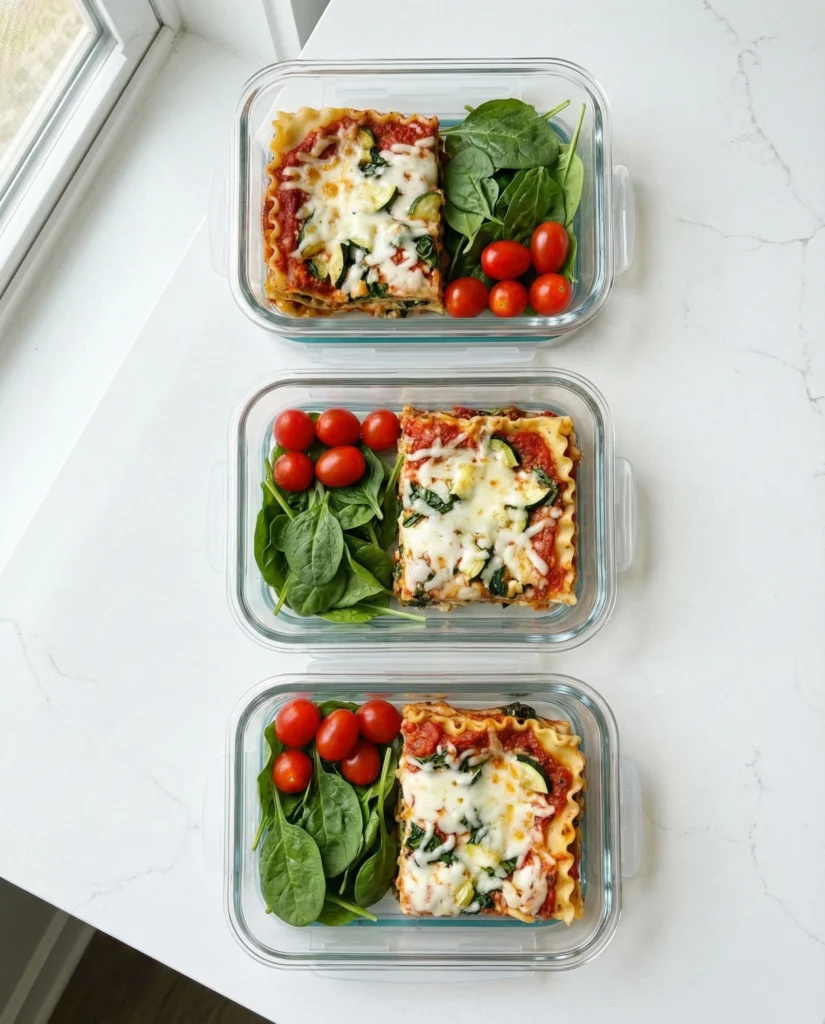
This is one of the absolute best cottage cheese recipes for meal prep. Lasagna is practically designed for making ahead, and this version holds up beautifully over several days.
- Refrigerator: Cool completely, then cover tightly and refrigerate for up to 5 days. Reheat individual slices in the microwave for 2–3 minutes, or cover the whole dish with foil and warm in a 350°F oven for 20–25 minutes.
- Freezer: This lasagna freezes exceptionally well. You can freeze it before baking (assemble, wrap tightly in two layers of foil, freeze for up to 3 months) or after baking (cool completely, slice into portions, wrap individually, freeze). To bake from frozen, thaw overnight in the fridge then bake as directed.
- Make the components ahead: The tomato sauce can be made up to 3 days in advance and refrigerated, or frozen for up to 3 months. The roasted vegetables can be prepped 2 days ahead. The cottage cheese layer can be mixed the night before.
- Full assemble-ahead: Assemble the entire lasagna up to 24 hours before baking. Cover and refrigerate. Add 10–15 extra minutes to the covered baking time since it’ll be going in cold.
Cultural Context
Lasagna is one of the oldest documented pasta dishes in the world. Its roots trace back to ancient Rome, where layered pasta dishes called lagana were recorded as early as the 1st century AD. The modern layered baked lasagna as we know it is believed to have originated in the Emilia-Romagna region of northern Italy — specifically Bologna, which is also the birthplace of ragù Bolognese. Traditional Bolognese lasagna uses no ricotta at all; instead, it relies on béchamel sauce between the layers.
Ricotta-based lasagna, the version most familiar to American home cooks, is more closely associated with southern Italian and Italian-American cooking. As Italian immigrants arrived in the United States in the late 19th and early 20th centuries, they adapted their recipes to the ingredients available to them. Ricotta was abundant and affordable, and it quickly became the standard filling for American-style lasagna.
The use of cottage cheese in lasagna is a particularly American innovation — born of practicality, economics, and regional availability. In many parts of the United States where ricotta was historically harder to find or more expensive, cottage cheese became the natural substitute. And as generations of home cooks discovered, it works beautifully — especially when blended smooth.
Today’s cottage cheese recipes represent the latest chapter in this long, evolving story. A new wave of health-conscious cooks is turning to cottage cheese not just as a substitute, but as a first choice — drawn by its superior protein content, lighter texture, and remarkable versatility. This Vegetable Cottage Cheese Lasagna honors that full tradition: ancient Italian technique, Italian-American heart, and a modern nutritional sensibility all baked together into one extraordinary dish.
Vegetable Cottage Cheese Lasagna
Ingredients
Equipment
Method
- Preheat oven to 425°F. Toss zucchini, bell peppers, and mushrooms with olive oil, salt, and pepper. Roast 20–22 minutes until tender. Add spinach during the last 3 minutes to wilt. Reduce oven temperature to 375°F.
- Heat olive oil in a saucepan. Sauté onion 6–7 minutes until soft. Add garlic and cook 60 seconds. Stir in crushed tomatoes, oregano, sugar, red pepper flakes, salt, and pepper. Simmer 20–25 minutes until thickened. Add fresh basil and adjust seasoning.
- Cook lasagna noodles according to package directions until al dente. Drain and lay flat to prevent sticking.
- Blend cottage cheese until smooth. Transfer to a bowl and mix with eggs, 3/4 cup Parmesan, lemon zest, basil, salt, and pepper.
- Spread a thin layer of tomato sauce in a 9×13-inch baking dish. Layer noodles, cottage cheese mixture, roasted vegetables, tomato sauce, and mozzarella. Repeat layers, finishing with sauce, mozzarella, and remaining Parmesan.
- Cover tightly with foil and bake at 375°F for 35 minutes.
- Remove foil and bake 15–20 minutes more until golden and bubbling.
- Let rest at least 15 minutes before slicing. Garnish with fresh basil and serve.