
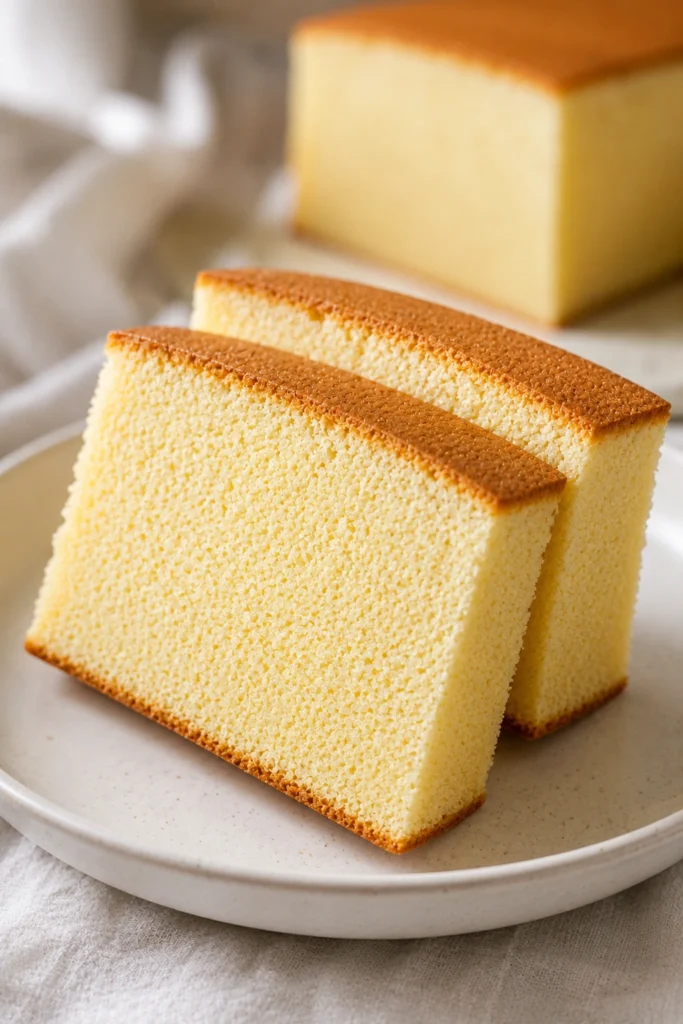
Some dessert recipes look beautiful and taste even better — and this Soft Japanese Castella Cake is exactly that kind of recipe. Cloud-like, impossibly moist, and subtly sweet, this is the kind of cake that makes people stop mid-bite and ask for the recipe immediately.
If you have been curious about Japanese baking, this is the perfect place to start. Just seven simple pantry ingredients stand between you and one of the most satisfying easy dessert recipes you will ever add to your collection.
Why You’ll Love This Easy Japanese Dessert Recipe
This cake earns its place as a weekday staple and a weekend showstopper at the same time.
For starters, it is genuinely simple. There are no complicated techniques, no special equipment beyond a standard square pan, and no experience required. The method is straightforward enough for beginners yet impressive enough to serve as a fancy dessert at a dinner table or a beautiful addition to a dessert board spread.
It is also wonderfully family-friendly. Kids are obsessed with the pillowy, melt-in-your-mouth texture, and it works just as well plain as it does topped with jam, honey, or a generous swipe of chocolate hazelnut spread. This is the kind of yummy cake that becomes a household staple the first time you make it.
Finally, the versatility is hard to beat. Serve it as an afternoon snack, a quick breakfast treat, or the centerpiece of a simple dessert table. It fits beautifully in every setting, from casual to aesthetic.
Common Mistakes — And How to Avoid Them
Rushing the Meringue
The foundation of a proper castella cake is a firm, glossy meringue. If you under-whip the egg whites, you will end up with a flat, dense cake rather than the airy, cloud-like crumb this recipe is known for. Beat the whites gradually, adding the sugar in three additions, until the peaks are stiff and hold their shape.
Overmixing Once the Flour Goes In
Castella batter is delicate. Once you begin folding in the sifted flour, switch to a gentle hand and use a spatula to fold from the bottom up. Overmixing deflates the air you worked so hard to build into the meringue, and the result will be a flat, rubbery cake instead of a beautifully light sponge.
Skipping the Foil Around the Pan
Wrapping the sides of the pan with aluminum foil is one of the most important tips for this recipe, and it is easy to overlook. Without it, the edges of the cake will bake faster and develop a thick, dry crust that ruins the uniformly soft texture castella is celebrated for.
Opening the Oven Door Too Early
This is a low and slow bake at 150°C (300°F). Opening the oven door during the first 40 minutes causes the batter to collapse before it has had time to set. Trust the process, set a timer, and resist the urge to check until the very end.
Key Ingredients for Japanese Castella Milk Cake
Eggs — The Star of the Show
Six large eggs are what give this cake its extraordinary structure and cloud-like texture. The egg whites are whipped into a firm meringue, which provides all the lift and airiness. The yolks add richness, moisture, and that beautiful golden color in the crumb.
Honey
Traditional Japanese castella is made with malt syrup, which is not always easy to find. Honey is an excellent and accessible substitute. It softens the crumb, adds a delicate floral sweetness, and contributes to the golden, lightly caramelized surface of the finished cake. Warming the honey with a small amount of milk before adding it to the batter helps it incorporate evenly without deflating the mixture.
Milk and Vegetable Oil
These two ingredients work together to keep the cake moist without making it heavy. The milk adds a subtle dairy richness, while the oil keeps the crumb tender long after the cake has cooled. Unlike butter, which can firm up and dry out a sponge over time, oil keeps every slice just as soft on day two as it was fresh from the oven.
All-Purpose Flour
Plain all-purpose flour gives the cake enough structure to hold its shape while staying incredibly delicate. Sifting it before folding it into the batter is non-negotiable — unsifted flour forms clumps that are difficult to incorporate without overmixing.
Baking Powder (Optional but Helpful)
Traditionally, castella relies entirely on whipped egg whites for its rise. Adding a small amount of baking powder provides an extra layer of insurance for those new to working with meringue-based batters. If your egg whites are whipped to perfection, you can leave it out entirely.
How to Make Soft Japanese Castella Cake
- Preheat your oven to 150°C (300°F). Grease a 23cm square pan and line it with parchment paper.
- Whip the egg whites until foamy, then gradually add the granulated sugar in three additions, continuing to beat until you have a firm, glossy meringue with stiff peaks.
- Add the egg yolks one at a time, mixing well after each addition.
- Add the vegetable oil in the same manner, mixing gently, then pour in most of the milk, reserving 2 tablespoons for the honey.
- Sift the flour and baking powder together. Fold the dry ingredients into the batter in three additions using a spatula, lifting from the bottom up with each fold to preserve the airiness.
- Warm the honey with the reserved 2 tablespoons of milk until just dissolved. Fold this into the batter gently.
- Pour the batter into the prepared pan and tap it lightly on the counter a few times to release any air bubbles and level the surface.
- Wrap the outside sides of the pan with aluminum foil to prevent the edges from overbaking.
- Bake for 45 to 55 minutes, until a skewer inserted in the center comes out clean with just a few moist crumbs clinging to it.
- Turn off the oven and leave the cake inside for 5 more minutes before removing.
- Tap the pan gently on the counter, then turn the cake out onto a wire rack. Peel off the parchment paper.
- Place the pan back over the cake as it cools — or wrap it loosely — to help it stay as moist and soft as possible.
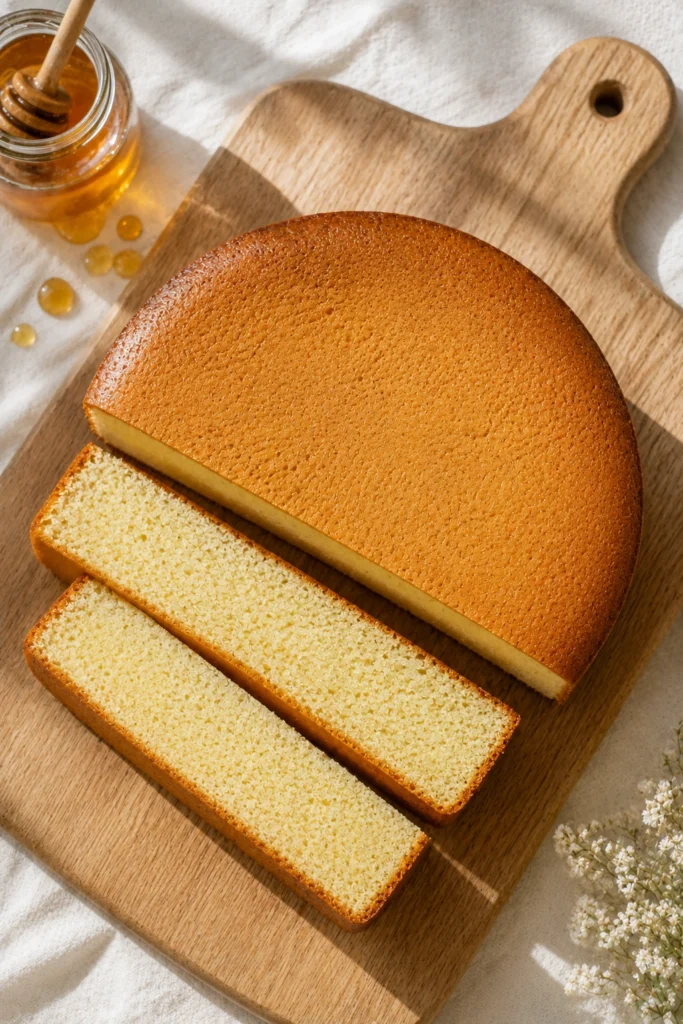
- Once fully cooled, trim the edges to reveal the beautiful pale, fluffy interior on all four sides.
Variations and Tips for the Best Castella Cake
Make It Your Own
This simple cake is a wonderful base for creative variations. Add a teaspoon of matcha powder to the flour for a beautiful green tea castella with a slightly earthy, elegant flavor — a true aesthetic dessert for any table setting. A splash of vanilla extract or a little lemon zest also works beautifully with the delicate sweetness of the base batter.
For a dairy-free version, substitute the milk with unsweetened oat milk or almond milk. The texture remains soft and fluffy with minimal difference in flavor.
Pro Tips for a Perfect Bake
Make sure all your eggs are at room temperature before you begin. Cold egg whites take longer to whip and do not achieve the same stable volume as room-temperature ones.
Do not skip the step of placing the pan back over the cake as it cools. This simple trick traps just enough steam to keep the crumb moist and prevent the surface from drying out or cracking as the cake contracts.
Trimming the edges before serving is not just for aesthetics — it reveals the soft, even interior and gives every slice that picture-perfect look you see in Japanese bakery windows.
FAQs
Can I make this cake without baking powder? Yes. The original castella recipe does not use baking powder at all. If your egg whites are whipped to stiff peaks, the meringue alone will provide all the lift the cake needs. The baking powder is simply extra insurance for beginners.
Why is my castella cake flat or dense? The most common cause is under-whipped egg whites or overmixing once the flour is added. Both result in a loss of the airy structure that makes this cake so light. Make sure your meringue reaches stiff peaks, and fold the flour in as gently as possible.
Can I use a round pan instead of a square one? Absolutely. A 23cm round cake pan works just as well. The baking time may vary by a few minutes, so start checking for doneness at around the 40-minute mark.
How do I store Japanese Castella Cake? Well wrapped at room temperature, it keeps beautifully for 2 to 3 days. In the refrigerator, it stays fresh for up to one week — just let it come back to room temperature before serving to restore its fluffy texture. It also freezes well for up to 2 months.
Japanese Castella Milk Cake
Equipment
- 23 cm (9-inch) square pan
- electric mixer
- mixing bowls
- whisk
- rubber spatula
- wire cooling rack
- parchment paper
- aluminum foil
Ingredients
- 6 large eggs
- 125 g granulated sugar
- 130 ml milk
- 90 ml oil
- 200 g all-purpose flour
- 7 g baking powder
- 15 g honey
Instructions
- Preheat the oven to 150°C (300°F). Grease and line a 23 cm (9-inch) square pan with parchment paper.
- Whip the egg whites until foamy. Gradually add the sugar in three additions while beating until a firm meringue forms.
- Add the egg yolks one at a time, mixing well after each addition.
- Add the oil gradually, then pour in the milk, reserving 2 tablespoons for dissolving the honey.
- Fold the sifted flour and baking powder into the batter in three additions using a whisk or spatula, folding gently from the bottom up.
- Warm the honey slightly with the reserved milk and gently fold it into the batter.
- Pour the batter into the prepared pan, tap gently on the counter to remove air bubbles and smooth the surface.
- Wrap the sides of the pan with aluminum foil to prevent excessive browning.
- Bake for 45 to 55 minutes until a skewer inserted in the center comes out clean with a few moist crumbs.
- Leave the cake in the turned-off oven for 5 minutes before removing it.
- Tap the pan gently, unmold the cake onto a wire rack and remove the parchment paper.
- Cover the cake with the pan or wrap it while cooling to retain moisture. Trim the edges before serving and enjoy with coffee or tea.