
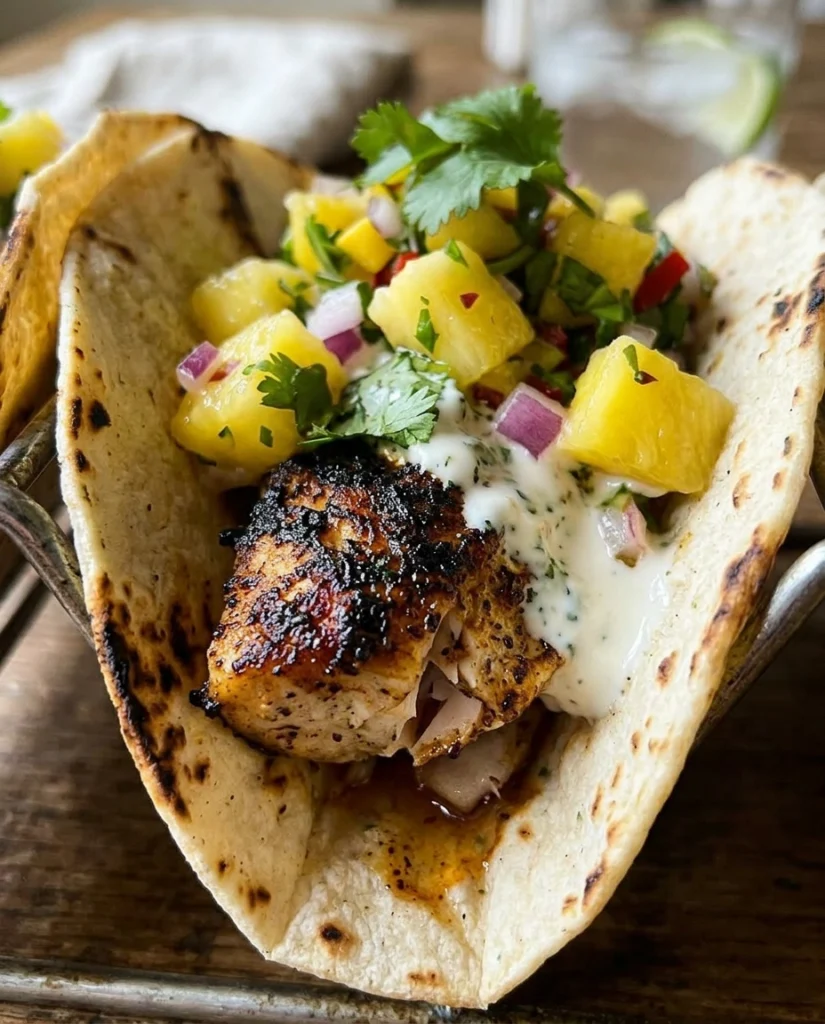
There is a version of taco night that goes well beyond the standard ground beef and shredded cheese formula — one built on a hot grill, a deeply spiced blackening rub, and a tropical salsa that makes every bite feel like it belongs somewhere with an ocean view. This blackened mahi-mahi grilling recipe is that version, and it does not ask much of you in return for what it delivers.
Blackening is one of the most satisfying techniques in the grilling recipe world. A blend of bold spices applied directly to the surface of the fish creates a deeply charred, almost lacquered crust that seals in moisture, builds extraordinary flavor, and produces a visual result so striking that it looks genuinely professional on a platter. Paired with the bright sweetness of fresh pineapple salsa, it is a combination that earns its place at any table.
Why You’ll Love This Grilling Recipe
The textural contrast in this grilling recipe is what makes it so compulsively enjoyable to eat. The blackened crust on the mahi-mahi is bold, smoky, and slightly crispy at the edges. The pineapple salsa is cool, juicy, and bright with acid. The warm tortilla wraps it all together into something that feels simultaneously rustic and vibrant.
Mahi-mahi is also an ideal fish for grilling in taco applications because of its firm, flaky texture. It holds together well on the grates, breaks into satisfying chunks when flaked into a tortilla, and has enough natural flavor to stand up to an assertive blackening spice blend without being overwhelmed. It is a fish that was essentially designed for this kind of grilling recipe.
The timeline is equally appealing. The blackening rub takes two minutes to mix. The pineapple salsa takes ten minutes to chop. The fish grills in under ten minutes. From start to table, this is a thirty-minute dinner that tastes like it required significantly more effort than it did — which is the highest compliment any weeknight grilling recipe can receive.
Common Mistakes (And How to Avoid Them)
Using too little spice rub. Blackening is a technique that requires a generous, even coating of spice on every surface of the fish. A light dusting will not produce the deeply charred, flavorful crust that defines this grilling recipe. Press the rub firmly into the flesh on all sides and make sure there are no bare patches before the fish goes on the grill.
Grilling mahi-mahi that is still cold from the refrigerator. Cold fish placed directly on a hot grill will cook unevenly — the exterior chars before the interior has time to come up to temperature, producing an overcooked outside and an underdone center. Remove the fillets from the refrigerator at least twenty minutes before grilling and let them approach room temperature before they hit the heat.
Using canned pineapple for the salsa. Canned pineapple is packed in syrup and has a soft, waterlogged texture that produces a salsa with no structural integrity and a flat, overly sweet flavor. Fresh pineapple is non-negotiable in this grilling recipe. Its natural acidity, firm bite, and bright tropical flavor are what make the salsa work as a counterpoint to the bold blackening spice.
Flipping the fish more than once. Mahi-mahi on the grill needs one clean flip, executed at the right moment. Multiple flips break up the blackened crust, cause the fish to fall apart, and prevent the full development of the char that is the whole point of this grilling recipe. Lay the fish down, leave it alone, flip it once, and finish it.
Warming the tortillas directly on the grill grates without watching them. Corn tortillas warm in seconds over direct heat and go from perfectly pliable to charred and brittle almost instantly. Keep a close eye on them and use the cooler edge of the grill or a cast iron skillet to warm them more gently and with more control.
Chef’s Notes
The blackening technique was popularized by New Orleans chef Paul Prudhomme in the early 1980s, originally applied to redfish and cooked in a screaming-hot cast iron skillet. The technique translates beautifully to the grill because the open flame adds a layer of real wood or gas smoke that a kitchen skillet cannot replicate, giving the finished fish a complexity that is entirely unique to this grilling recipe format.
The key to a great blackening rub is balance across five flavor dimensions: heat from cayenne and black pepper, earthiness from cumin and oregano, sweetness from paprika, depth from garlic and onion powder, and salt to tie everything together. Any rub that leans too hard in one direction — too much cayenne, too much salt — will produce an unbalanced result that fights with the pineapple salsa rather than complementing it.
For the tortillas, corn is the traditional and strongly recommended choice for this grilling recipe. Corn tortillas have a natural earthiness and slight chew that stands up to the bold blackening flavors and the juicy salsa in a way that flour tortillas — which tend to go soft and gummy under moisture — simply do not.
Key Ingredients
Mahi-Mahi Fillets — The foundation of this grilling recipe. Mahi-mahi is a firm, mildly sweet white fish with a dense, meaty texture that holds together on the grill and flakes into satisfying chunks when broken apart for tacos. It has enough structural integrity to carry a bold blackening rub without falling apart and enough natural flavor to be interesting without the rub.
Smoked Paprika — The backbone of the blackening rub. Smoked paprika contributes a deep, brick-red color and a warm, subtly smoky flavor that builds the base note of the entire spice blend. It is what gives blackened fish its characteristic dark, almost lacquered appearance on the grill.
Cayenne Pepper — The heat element of the rub. Cayenne brings a clean, direct heat that hits quickly and fades fast, which is exactly the right kind of heat for a taco grilling recipe where the pineapple salsa is doing the work of cooling and balancing the palate.
Garlic Powder and Onion Powder — These two dehydrated aromatics provide the savory depth that keeps the blackening rub from tasting purely like a spice blend rather than a seasoning with real flavor complexity. They also contribute to the caramelization that happens when the rub hits the hot grill surface.
Ground Cumin — Adds an earthy, slightly nutty warmth to the rub that bridges the gap between the smoky paprika and the sharp cayenne. Cumin also has a natural affinity with the tropical flavors in the pineapple salsa, making the two components of this grilling recipe feel cohesive rather than competing.
Fresh Pineapple — The heart of the salsa and the ingredient that makes this grilling recipe feel tropical and bright rather than simply spicy. Ripe fresh pineapple has a firm bite, vivid sweetness, and natural acidity that cuts directly through the bold blackening spice and refreshes the palate between bites.
Red Cabbage — Used as a taco topping rather than in the salsa, thinly sliced red cabbage adds crunch, color, and a mild bitterness that provides textural contrast against the soft flaked fish and juicy salsa. It is also a natural vehicle for a quick lime slaw if you want to add one more layer to the taco.
Corn Tortillas — The vessel that holds this entire grilling recipe together. Warmed directly on the grill until they develop light char marks, corn tortillas add their own smoky, earthy flavor dimension that ties the whole taco together from the bottom up.
Fresh Lime — Used in both the salsa and as a finishing squeeze over the assembled tacos. Lime is the connective tissue of this entire grilling recipe — it appears at every stage and in every component, ensuring the flavor remains cohesive and bright from the first bite to the last.
How to Make Blackened Mahi-Mahi Tacos With Pineapple Salsa
- Make the blackening rub. In a small bowl, combine two teaspoons of smoked paprika, one teaspoon of garlic powder, one teaspoon of onion powder, three-quarters of a teaspoon of cayenne pepper, half a teaspoon of ground cumin, half a teaspoon of dried oregano, half a teaspoon of black pepper, and one teaspoon of salt. Mix thoroughly until the blend is uniform in color and texture.
- Prep the mahi-mahi. Remove the fillets from the refrigerator at least twenty minutes before grilling. Pat them completely dry on all surfaces with paper towels. Brush each fillet lightly with a neutral oil such as avocado oil, then press the blackening rub firmly and evenly into every surface. There should be no bare spots.
- Make the pineapple salsa. In a medium bowl, combine one and a half cups of finely diced fresh pineapple, a quarter cup of finely diced red onion, one seeded and minced jalapeño, the juice of one lime, a small handful of chopped fresh cilantro, and a pinch of salt. Toss gently and taste for seasoning. Set aside at room temperature.
- Preheat the grill. Heat your grill to medium-high, around 400 to 425 degrees Fahrenheit. Clean the grates thoroughly and oil them well. A properly oiled grate is critical for blackened fish, which will stick aggressively to any surface that has not been prepared.
- Grill the mahi-mahi. Place the fillets on the oiled grates and grill for four to five minutes on the first side without touching. The rub will darken significantly — this is exactly what you want. Flip once and grill for another three to four minutes on the second side until the fish is opaque through the thickest point and flakes easily with a fork. The internal temperature should reach 137 degrees Fahrenheit.
- Rest the fish. Transfer the fillets to a clean plate and rest for two minutes before flaking into large chunks with a fork. Do not shred the fish too finely — substantial pieces of blackened mahi-mahi in a taco are far more satisfying than a uniform mince.
- Warm the tortillas. Place corn tortillas directly on the grill grates over medium heat for thirty to forty-five seconds per side until they develop light char marks and become pliable. Work quickly and keep them covered with a clean kitchen towel to retain warmth and flexibility.
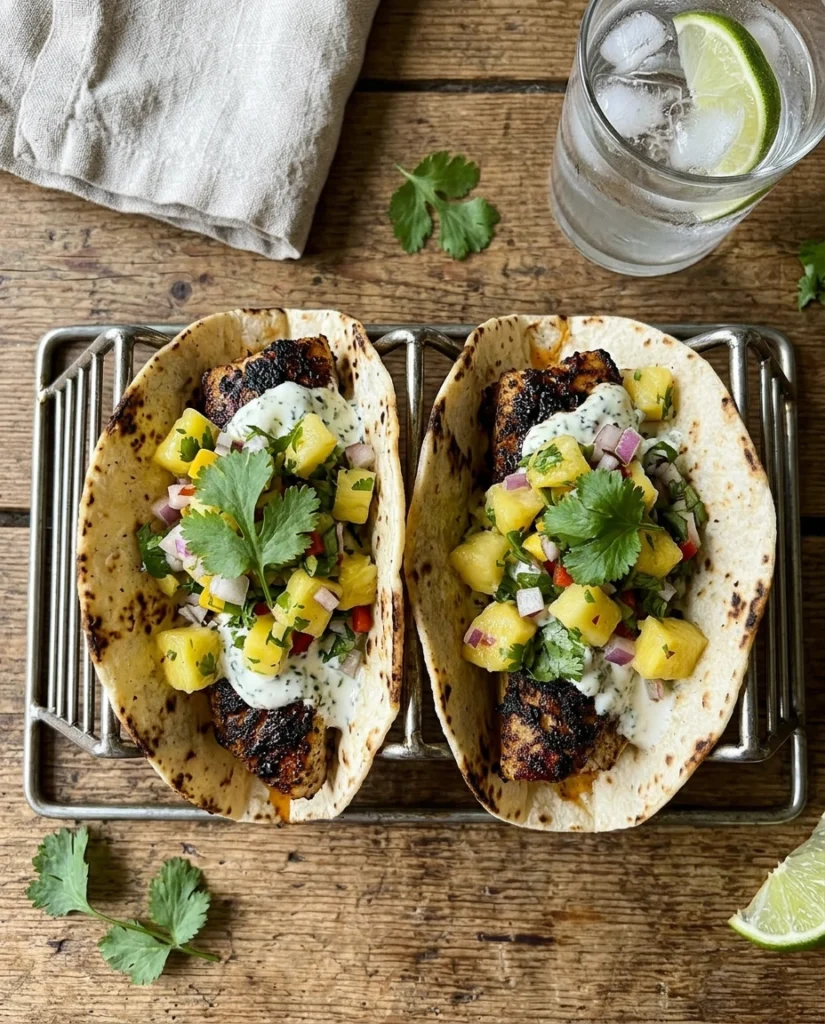
- Assemble the tacos. Layer shredded red cabbage onto each tortilla, followed by generous chunks of blackened mahi-mahi, a spoonful of pineapple salsa, and a squeeze of fresh lime. Serve immediately while the fish is still warm and the tortillas are pliable.
Variations and Tips
For a creamy element, add a chipotle crema by whisking together half a cup of sour cream or Mexican crema with one tablespoon of adobo sauce from a can of chipotles, a squeeze of lime, and a pinch of salt. Drizzle it over the assembled tacos just before serving. The smoky, creamy element ties the bold blackening spice and the bright pineapple salsa together in a deeply satisfying way.
For a mango variation, replace the pineapple in the salsa with an equal quantity of ripe diced mango. The flavor profile shifts from sharp and acidic to softer and more floral, which works particularly well if you are using a heavier hand with the cayenne in the blackening rub.
To make it fully dairy-free, skip the crema entirely or use a coconut yogurt-based alternative thinned with lime juice. Every other component of this grilling recipe is naturally dairy-free without any adjustments.
For a surf and turf taco variation, thread large shrimp onto skewers, coat them in the same blackening rub, and grill them alongside the mahi-mahi for two to three minutes per side. Offer both proteins on the same taco bar and let guests build their own combinations.
Pro tip for keeping the fish warm during assembly: After resting, transfer the flaked mahi-mahi to a cast iron skillet placed on the edge of the grill over indirect heat. It will stay warm and moist for up to fifteen minutes without overcooking, giving you a comfortable window to assemble tacos for a larger group without the fish cooling down on the platter.
How to Meal Prep
The blackening spice rub is the single most prep-friendly component of this grilling recipe. Mix a large batch and store it in a sealed spice jar at room temperature for up to three months. Having it on hand means blackened mahi-mahi tacos can be on the table on any weeknight with almost no advance preparation beyond thawing the fish.
The pineapple salsa is best made fresh but can be prepared up to four hours in advance if the components are kept slightly separate. Combine the pineapple, onion, and jalapeño ahead of time but hold the lime juice and cilantro until thirty minutes before serving to preserve the brightness and prevent the salsa from becoming watery.
Cooked mahi-mahi is excellent the following day served cold over a simple green salad with the leftover pineapple salsa used as a dressing. The blackening spices that seemed bold and assertive the night before mellow overnight into a deeply savory seasoning that works beautifully in a lighter, room-temperature preparation.
Cultural Context
Blackening as a cooking technique has its roots in the Creole and Cajun culinary traditions of Louisiana, where the use of bold, layered spice blends applied to proteins and cooked over extreme heat reflects the deep African, French, and Native American influences that shaped the cuisine of the Gulf Coast over centuries. Chef Paul Prudhomme brought the technique to national attention in the 1980s, and its combination of accessibility and dramatic visual impact made it one of the most widely adopted restaurant techniques of that decade.
Fish tacos as a format have their own parallel origin story rooted in the coastal communities of Baja California, Mexico, where fresh catches were battered, fried, and folded into corn tortillas with simple garnishes by beachside vendors. The Baja fish taco traveled north into Southern California through the latter half of the twentieth century and became a defining element of the West Coast casual food scene.
This grilling recipe brings those two traditions together — the bold, spice-driven char of Louisiana blackening and the relaxed, build-your-own format of the Baja taco — and adds the tropical dimension of pineapple salsa, which reflects the broader influence of Caribbean and Pacific coastal cooking on contemporary American food culture. It is a dish that belongs to no single tradition exclusively, which is precisely what makes it feel so naturally at home on a modern summer table.
Blackened Mahi-Mahi Tacos With Pineapple Salsa
Equipment
- grill
- mixing bowls
- tongs or spatula
- knife and cutting board
- basting brush
Ingredients
- 2 tsp smoked paprika
- 1 tsp garlic powder
- 1 tsp onion powder
- 3/4 tsp cayenne pepper
- 1/2 tsp ground cumin
- 1/2 tsp dried oregano
- 1/2 tsp black pepper
- 1 tsp salt
- 2 mahi-mahi fillets
- 1 tbsp neutral oil
- 1 1/2 cups fresh pineapple, diced
- 1/4 cup red onion, finely diced
- 1 jalapeño, seeded and minced
- 1 lime, juiced
- 2 tbsp fresh cilantro, chopped
- 1 pinch salt (for salsa)
- 2 cups red cabbage, shredded
- 8 corn tortillas
- 1 lime wedges (for serving)
Instructions
- In a small bowl, combine smoked paprika, garlic powder, onion powder, cayenne, cumin, oregano, black pepper, and salt.
- Pat mahi-mahi dry, brush lightly with oil, and press the spice rub evenly onto all sides.
- In a bowl, combine pineapple, red onion, jalapeño, lime juice, cilantro, and salt. Toss gently and set aside.
- Preheat grill to medium-high heat (400–425°F) and oil the grates well.
- Grill mahi-mahi for 4–5 minutes on the first side, then flip once and cook another 3–4 minutes until opaque and flaky.
- Remove fish, rest for 2 minutes, then flake into large chunks.
- Warm tortillas on the grill for 30–45 seconds per side until pliable with light char.
- Assemble tacos with cabbage, mahi-mahi, pineapple salsa, and a squeeze of lime. Serve immediately.