
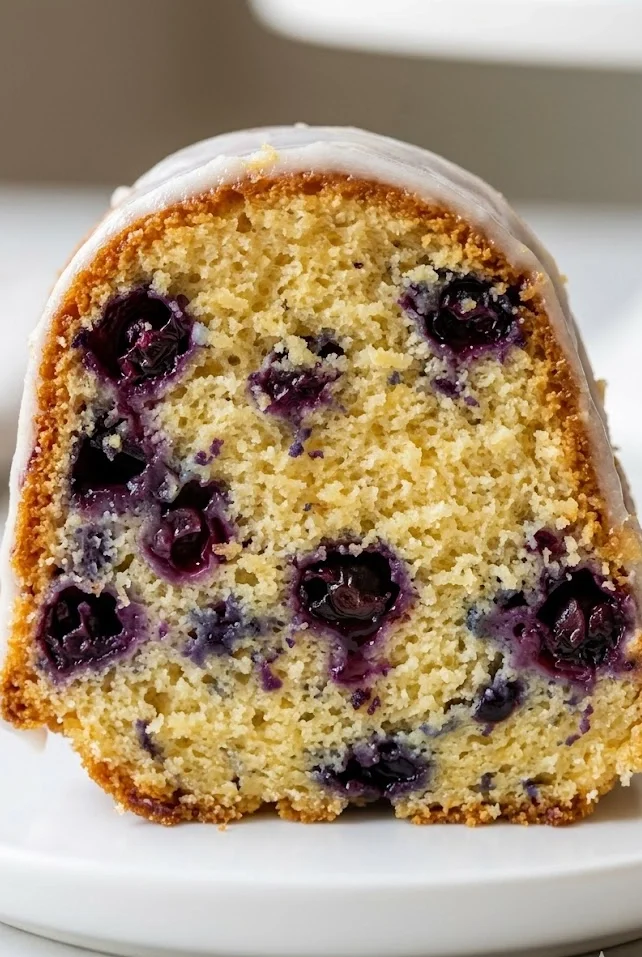
There are cakes that require skill, patience, and a steady hand with a pastry bag. And then there is the bundt cake — a format so inherently beautiful that the pan does most of the decorative work for you. Pour in the batter, bake, flip, glaze, and what emerges looks like something that came from a serious bakery without requiring anything close to serious effort.
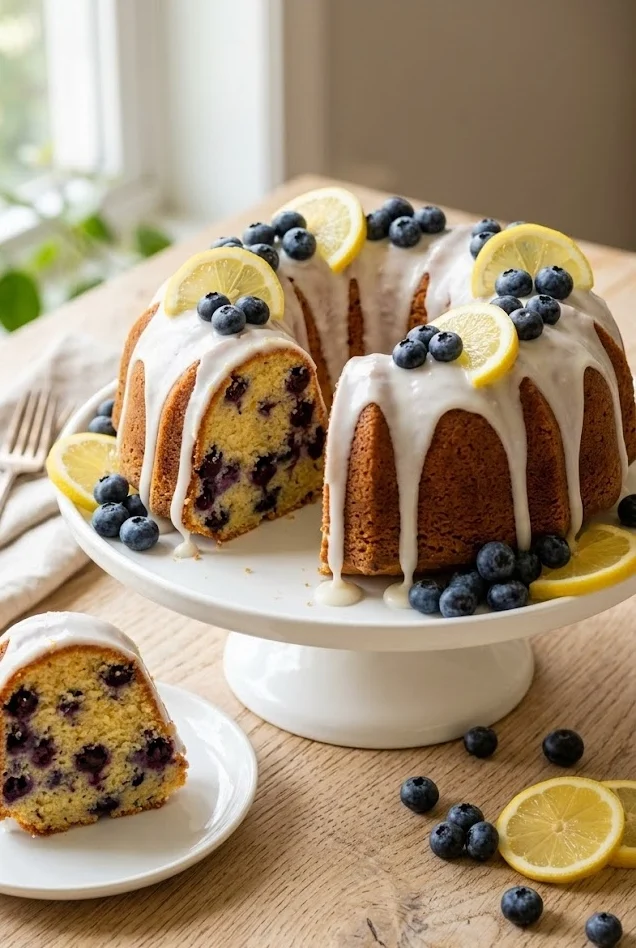
This Lemon Blueberry Bundt Cake is exactly that kind of recipe. It is one of the most satisfying blueberry desserts you can make precisely because the return on investment is so dramatically high. A moist, tender crumb packed with fresh blueberries, the brightness of real lemon zest threaded through every bite, and a glossy lemon glaze that drips down the ridges of the bundt in the most visually satisfying way imaginable.
It is the blueberry dessert people photograph before they eat it. And then eat two slices of before the photos have even been shared.
Why You’ll Love This Lemon Blueberry Bundt Cake
This cake works for every occasion on the calendar and several occasions that do not technically require one. It is impressive enough for a celebration, relaxed enough for a Sunday afternoon, and sturdy enough to transport easily to wherever blueberry desserts for a crowd are needed most.
The lemon and blueberry combination is one of the great flavor pairings in baking. Lemon’s acidity heightens the natural sweetness of the blueberries, the blueberries soften the sharpness of the lemon, and together they create something that tastes more complex and more intentional than either ingredient could manage alone.
It also adapts gracefully. A straightforward flour swap makes it a standout among gluten free blueberry desserts. A reduction in sugar and the use of Greek yogurt instead of sour cream nudges it into healthy blueberry desserts territory. Scaled into a smaller loaf pan it becomes an intimate blueberry dessert for two. Baked in full bundt form and glazed generously it becomes the centerpiece of any table it lands on.
Common Mistakes When Making Bundt Cake (And How to Avoid Them)
Not preparing the bundt pan properly. This is the mistake that ends bundt cake ambitions. A cake that sticks to the pan and tears apart when flipped is heartbreaking, and it happens entirely because the pan was not greased and floured thoroughly enough. Every ridge, every curve, and every surface of the interior needs to be coated. Use softened butter applied with a pastry brush followed by a light dusting of flour — or for gluten free blueberry desserts, a dusting of the same gluten free flour used in the batter. Nonstick spray alone is rarely sufficient for intricate bundt pans.
Sinking blueberries. Fresh blueberries have a tendency to sink to the bottom of the batter during baking, which means they end up on the top of the cake once it is flipped — not the worst outcome, but not ideal distribution either. Tossing the blueberries in one tablespoon of flour before folding them in coats them lightly and gives the batter something to grip, suspending the berries more evenly throughout the crumb.
Overmixing the batter. Once the dry ingredients meet the wet, mix only until just combined. Overmixing develops the gluten in the flour and produces a tough, dense cake rather than the tender, open crumb that makes a great bundt. A few streaks of flour in the batter at the mixing stage are completely fine — they will incorporate during the fold.
Flipping too soon. The cake needs to cool in the pan on a wire rack for exactly 10 to 15 minutes before flipping. Too soon and the cake is too fragile and will tear. Too long and the steam trapped between the cake and the pan creates a sticky surface that makes clean release nearly impossible. Set a timer and be precise about this step.
Glazing a warm cake. The lemon glaze should go on a cake that has cooled completely. A warm cake will absorb the glaze rather than letting it drip and set on the surface, which means you lose both the visual effect and the concentrated lemon flavor that the glaze is meant to deliver.
Key Ingredients
Fresh Blueberries Fresh blueberries are ideal here — they hold their shape better during baking, burst at just the right moment inside the crumb, and do not bleed as heavily as frozen berries, which can turn the surrounding batter a grey-purple. If using frozen, do not thaw them and toss them in an extra half tablespoon of flour before folding in. Wild blueberries, smaller and more intensely flavored, make this one of the most deeply flavored blueberry desserts imaginable if you can find them.
Lemon Zest and Juice Real lemons only. The zest carries the essential oils that give this cake its bright, fragrant lemon character — bottled lemon juice delivers acidity but none of the aromatic complexity that makes lemon desserts genuinely compelling. Use the zest of at least two lemons in the batter and reserve the juice for the glaze. Rub the zest into the sugar with your fingertips before mixing — this releases the oils and distributes the lemon flavor more deeply throughout the cake.
Sour Cream or Greek Yogurt This is the ingredient responsible for the exceptionally moist, tender crumb that sets a great bundt cake apart from a merely good one. The fat content and mild acidity of sour cream keep the crumb soft for days after baking. Full-fat Greek yogurt is a slightly lighter substitute that works nearly identically and makes the cake a more credible entry in healthy blueberry desserts without sacrificing texture.
All-Purpose Flour or Gluten Free Flour Standard all-purpose flour gives you a classic, reliable crumb. A 1:1 gluten free flour blend substitutes directly with no other adjustments and produces a cake that is genuinely indistinguishable in texture from the original — making this one of the most accessible gluten free blueberry desserts for bakers at any experience level.
Butter Room temperature unsalted butter creamed with sugar creates the structure and richness that holds this cake together. The creaming process — beating butter and sugar until pale and fluffy — is what incorporates air into the batter and gives the cake its lift. Do not rush it and do not use melted butter, which produces a denser, oilier result.
Eggs Three large eggs at room temperature provide structure, richness, and binding. Room temperature eggs incorporate more smoothly into the creamed butter and sugar and produce a more even, stable emulsion throughout the batter.
How to Make Lemon Blueberry Bundt Cake
Prep time: 20 minutes | Bake time: 55 minutes | Cool time: 1 hour | Serves: 12 to 14
For the Cake:
- 3 cups all-purpose flour (or 1:1 gluten free flour blend)
- 1 tablespoon baking powder
- 1/2 teaspoon baking soda
- 1/2 teaspoon salt
- 1 cup unsalted butter, room temperature
- 1 and 3/4 cups granulated sugar
- Zest of 2 large lemons
- 3 large eggs, room temperature
- 1 teaspoon vanilla extract
- 1 cup full-fat sour cream or Greek yogurt
- 1/4 cup fresh lemon juice
- 2 cups fresh blueberries, tossed in 1 tablespoon flour
For the Lemon Glaze:
- 1 and 1/2 cups powdered sugar, sifted
- 3 to 4 tablespoons fresh lemon juice
- 1 teaspoon lemon zest
Instructions:
- Preheat your oven to 350°F (175°C). Thoroughly grease every interior surface of a 10 to 12 cup bundt pan with softened butter applied with a pastry brush, then dust with flour, tapping out any excess. Set aside.
- In a medium bowl, whisk together the flour, baking powder, baking soda, and salt. Set aside.
- In a large bowl, combine the granulated sugar and lemon zest. Use your fingertips to rub the zest into the sugar for about one minute until the sugar is fragrant and slightly clumped. Add the room temperature butter and beat with a hand mixer or stand mixer on medium-high speed for 4 to 5 minutes until the mixture is pale, light, and fluffy.
- Add the eggs one at a time, beating well after each addition. Add the vanilla extract and mix to combine. Scrape down the sides of the bowl.
- Reduce the mixer to low speed. Add the flour mixture in three additions, alternating with the sour cream and lemon juice in two additions, beginning and ending with the flour. Mix only until just combined after each addition — do not overmix.
- Toss the blueberries with one tablespoon of flour until lightly coated. Fold them gently into the batter using a rubber spatula with a few slow, deliberate strokes.
- Pour the batter into the prepared bundt pan and smooth the top evenly. Tap the pan firmly on the counter two or three times to release any air bubbles.
- Bake for 52 to 60 minutes, until a wooden skewer inserted into the thickest part of the cake comes out clean or with a few moist crumbs. The top should be golden and spring back lightly when pressed.
- Transfer the pan to a wire rack and cool for exactly 12 minutes. Place a serving plate over the pan and flip confidently in one smooth motion. Lift the pan away and allow the cake to cool completely on the rack, at least 45 minutes.
- Whisk together the powdered sugar, lemon juice, and lemon zest until smooth and pourable. Drizzle generously over the fully cooled cake, letting it run naturally down the ridges. Allow the glaze to set for 15 minutes before slicing.
Variations and Tips
Make It Gluten Free Substitute the all-purpose flour with a quality 1:1 gluten free baking flour blend. Use the same gluten free flour to dust the pan and to toss the blueberries. The result is one of the most crowd-pleasing gluten free blueberry desserts in this entire collection — genuinely difficult to distinguish from the original.
Make It a Cream Cheese Version Swirl a simple cream cheese filling through the center of the batter before baking. Beat 8 oz softened cream cheese with 3 tablespoons sugar and 1 egg until smooth. Pour half the cake batter into the pan, spoon the cream cheese mixture in a ring over it, then top with the remaining batter. This blueberry desserts cream cheese variation adds a cheesecake-like layer that makes each slice extraordinarily rich.
Make It Healthier Replace half the butter with unsweetened applesauce, reduce the sugar to 1 and 1/4 cups, and use full-fat Greek yogurt in place of sour cream. The cake will be slightly less rich but still moist and deeply flavored — a genuinely satisfying healthy blueberry dessert that does not taste like a compromise.
Pro Tips:
- The lemon-sugar rubbing step is not optional for flavor depth. It takes 60 seconds and makes a noticeable difference in how prominently the lemon comes through in the finished cake.
- For extra lemon intensity, brush the still-warm cake with a simple lemon syrup — equal parts lemon juice and sugar, heated until the sugar dissolves — before adding the glaze. This keeps the cake moist for longer and adds a second layer of lemon flavor.
- Store the glazed cake loosely covered at room temperature for up to three days. The crumb actually improves on day two as the moisture redistributes.
How to Meal Prep This Lemon Blueberry Bundt Cake
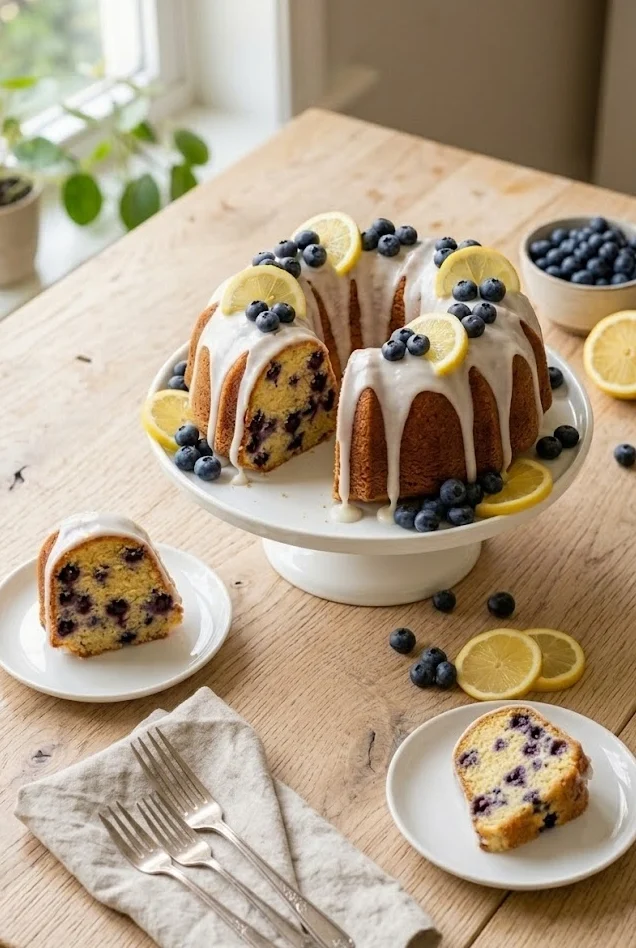
This bundt cake is one of the most practical blueberry desserts for a crowd because it bakes, stores, and travels beautifully. Bake the cake up to two days in advance and store it unglazed and loosely covered at room temperature. Add the glaze on the day of serving for the freshest visual impact and the cleanest drip effect.
For longer advance preparation, the unglazed cake freezes exceptionally well. Wrap it tightly in two layers of plastic wrap followed by a layer of foil and freeze for up to three months. Thaw overnight at room temperature still wrapped, then glaze before serving. The texture after freezing and thawing is virtually identical to fresh.
Individual slices can also be frozen for convenient single-serving portions. Wrap each slice in plastic wrap and store in a zip-lock freezer bag. They thaw at room temperature in about 30 minutes, making them one of the most practical blueberry desserts for two when you want something special without baking a full cake from scratch.
The lemon glaze can be made up to three days in advance and stored covered in the refrigerator. Whisk briefly before using to restore its smooth, pourable consistency.
Frequently Asked Questions
Why did my blueberries all sink to the bottom of the cake? Sinking blueberries are almost always the result of skipping the flour-tossing step or using very large, heavy fresh blueberries. Tossing them in flour gives the batter something to grip. Using smaller wild blueberries, which are lighter and distribute more easily through batter, eliminates the problem almost entirely.
Can I make this in a loaf pan instead of a bundt pan? Yes. Divide the batter between two standard 9×5 inch loaf pans and reduce the baking time to 50 to 55 minutes. Check for doneness with a skewer. This is also a great format for making blueberry desserts for two — bake one loaf and freeze the other for later.
How do I know when the bundt cake is fully baked? A skewer or thin knife inserted into the thickest part of the cake should come out clean or with a few moist crumbs clinging to it. If it comes out with wet batter, the cake needs more time. The top should be golden and firm, and the edges should have pulled slightly away from the sides of the pan.
Can I use a cream cheese glaze instead of a lemon glaze? Absolutely, and it is a wonderful variation. Beat 4 oz softened cream cheese with 1 cup sifted powdered sugar and 2 to 3 tablespoons of milk until smooth and pourable. Drizzle over the cooled cake in place of the lemon glaze. The result is richer, tangier, and firmly in blueberry desserts cream cheese territory — a combination that pairs especially well with the lemon in the cake.
Cultural Context: The Bundt Pan, the Cake, and an Unlikely Cultural Moment
The bundt pan has one of the more unlikely origin stories in American kitchen history. Developed in the early 1950s by Nordic Ware, a small Minneapolis cookware company, the pan was designed to replicate the traditional European Gugelhupf — a ring-shaped yeasted cake popular in Germany, Austria, and Eastern Europe. For its first decade it sold modestly, considered a specialty item with limited mainstream appeal.
Everything changed in 1966, when a Bundt cake took second place at the Pillsbury Bake-Off contest and the format entered the American cultural mainstream almost overnight. Nordic Ware went from selling a few thousand pans a year to hundreds of thousands, and the bundt cake became a fixture of church potlucks, community gatherings, and home kitchens across the country.
What the bundt format offered — and still offers — was democracy of elegance. You did not need to know how to frost a layer cake or pipe decorations. The pan created the beauty, and a simple glaze finished it. It was sophisticated-looking baking made accessible to everyone.
Pairing it with blueberries and lemon grounds the bundt in American seasonal baking at its most honest — summer fruit, bright citrus, a generous pour of glaze, and a pan that makes the whole thing look like you knew exactly what you were doing. Which, after reading this recipe, you absolutely do.

Lemon Blueberry Bundt Cake
Equipment
- bundt pan
- mixing bowls
- hand mixer or stand mixer
- whisk
- spatula
Ingredients
- 3 cups all-purpose flour
- 1 tbsp baking powder
- 1/2 tsp baking soda
- 1/2 tsp salt
- 1 cup unsalted butter, room temperature
- 1 3/4 cups granulated sugar
- 2 lemons, zested
- 3 large eggs, room temperature
- 1 tsp vanilla extract
- 1 cup sour cream or Greek yogurt
- 1/4 cup fresh lemon juice
- 2 cups fresh blueberries
- 1 tbsp flour (for tossing blueberries)
- 1 1/2 cups powdered sugar
- 3-4 tbsp fresh lemon juice (for glaze)
- 1 tsp lemon zest (for glaze)
Instructions
- Preheat oven to 350°F (175°C) and thoroughly grease and flour a bundt pan.
- Whisk flour, baking powder, baking soda, and salt in a bowl.
- Rub lemon zest into sugar, then beat with butter until light and fluffy.
- Add eggs one at a time, then mix in vanilla extract.
- Add dry ingredients alternating with sour cream and lemon juice, mixing until just combined.
- Toss blueberries with flour and gently fold into batter.
- Pour batter into pan, smooth top, and tap to remove air bubbles.
- Bake for 52–60 minutes until a skewer comes out clean.
- Cool in pan for 12 minutes, then flip onto a rack and cool completely.
- Whisk glaze ingredients and drizzle over cooled cake. Let set before serving.