
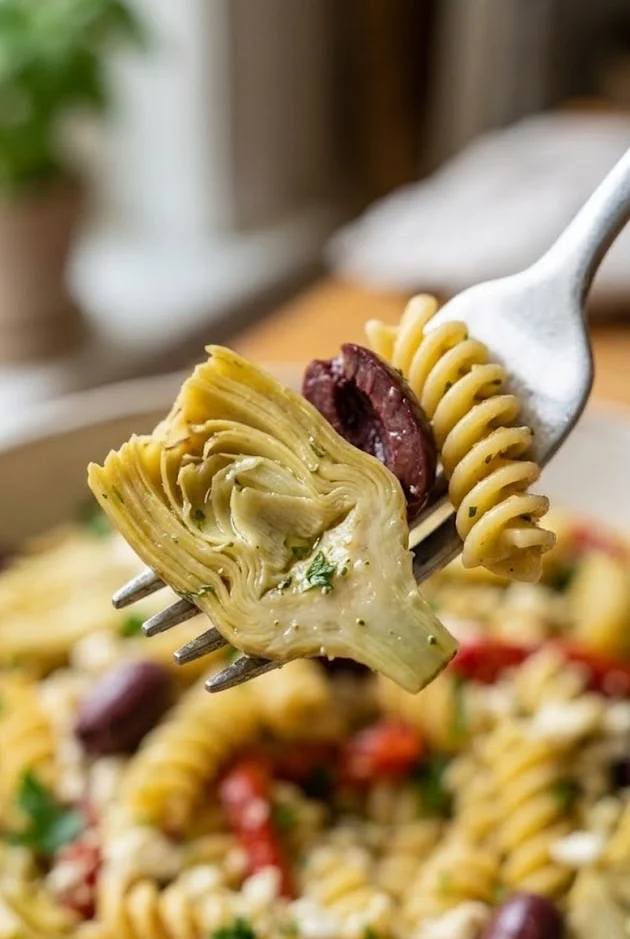
There are pasta salad recipes, and then there are pasta salad recipes that make people set down their forks and ask what’s in it. This Artichoke Pasta Salad is firmly in the second category. It’s savory, a little tangy, deeply satisfying, and built on ingredients that do serious flavor work without requiring serious effort.
Marinated artichoke hearts are one of the most underused ingredients in everyday cooking. Pulled straight from the jar, they bring brine, herby depth, and a meaty texture that transforms a simple cold pasta salad into something that tastes genuinely considered. Combined with a bold Italian dressing and a handful of Mediterranean-inspired additions, this becomes the pasta salad idea you’ll keep coming back to all summer long.
Why You’ll Love This Artichoke Pasta Salad
This is one of those pasta salad recipes easy enough for a weeknight but distinctive enough to stand out at any potluck table. While everyone else shows up with the same basic cold pasta salad, yours will be the one that runs out first.
The flavor profile here is decidedly Italian — briny artichokes, sun-dried tomatoes, olives, and a punchy pasta salad dressing built on red wine vinegar and olive oil. It sits comfortably in the tradition of a great Italian pasta salad while bringing something more interesting than the standard bell pepper and macaroni combination most people are used to.
It’s also a genuinely healthy pasta salad. Artichoke hearts are high in fiber and antioxidants, the dressing is olive oil-based rather than mayonnaise-heavy, and the overall dish is light enough to eat as a full lunch without feeling weighed down. That combination of flavor, nutrition, and convenience is exactly what makes this one of the best pasta salad ideas for regular meal rotation.
Common Mistakes — And How to Avoid Them
Using canned artichoke hearts instead of marinated ones. This is the single biggest mistake you can make in this recipe. Plain canned artichoke hearts are water-packed, mild, and contribute almost nothing to the flavor of the salad. Marinated artichoke hearts come packed in seasoned oil with herbs and garlic — that marinade is flavor you don’t have to build yourself. Always reach for the marinated jar.
Discarding the artichoke marinade. The oil and herb liquid in the artichoke jar is liquid gold. Pour a few tablespoons of it directly into your pasta salad dressing and you immediately add layers of garlic, herb, and savory depth that would otherwise take multiple extra ingredients to replicate.
Overcooking the pasta. As with any cold pasta salad, al dente is the only acceptable texture. Pasta that is even slightly overdone will turn soft and unpleasant after absorbing dressing in the refrigerator. Pull it from the water a full minute before the package time suggests and taste it yourself.
Not letting the salad rest. This particular pasta salad recipe genuinely needs at least one to two hours in the refrigerator before serving. The pasta absorbs the Italian dressing, the artichoke flavor distributes through the bowl, and everything settles into a cohesive, deeply seasoned dish. Serve it fresh and it tastes good — serve it after chilling and it tastes exceptional.
Over-salting before tasting. Artichokes, olives, sun-dried tomatoes, and Italian dressing all carry significant salt. Season cautiously at the start, taste after tossing everything together, and adjust from there. It’s very easy to over-salt this particular pasta salad without realizing it until it’s too late.
Key Ingredients
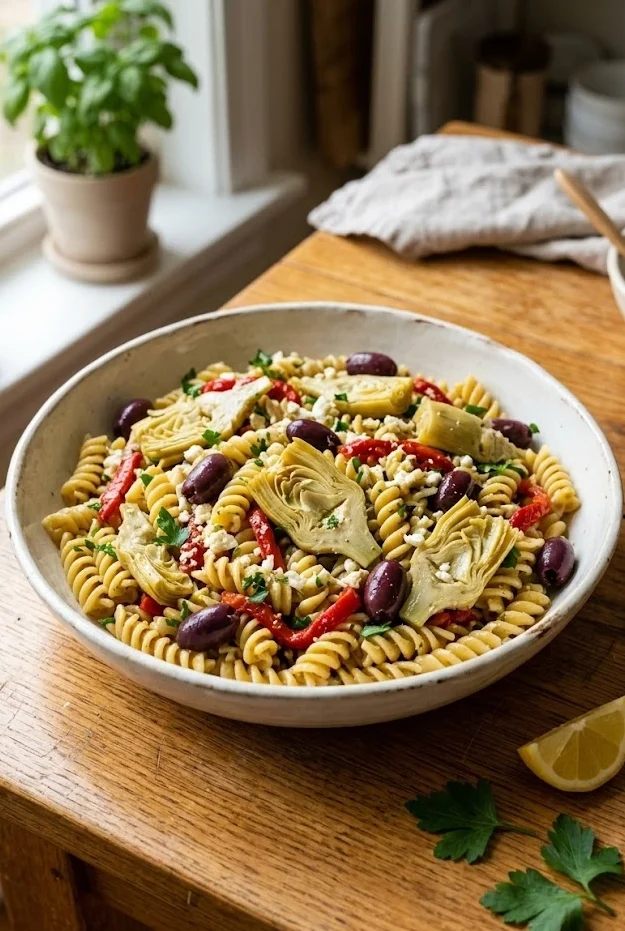
Rotini or Fusilli Pasta — The corkscrew shape is ideal for this style of pasta salad because every twist catches pieces of artichoke, bits of sun-dried tomato, and pools of Italian dressing. Farfalle is a beautiful alternative if you want a more elegant pasta salad aesthetic. Either way, a short pasta with texture is what you’re after.
Marinated Artichoke Hearts — The star of the dish and the ingredient that makes this pasta salad idea unlike anything else in your repertoire. Choose a good quality brand packed in olive oil rather than sunflower oil if possible, as the flavor is noticeably superior. Quarter the artichoke hearts before adding so they distribute evenly through the salad.
Italian Dressing — The backbone of the flavor here. A classic Italian pasta salad dressing built on red wine vinegar, olive oil, garlic, and dried herbs is the right call. You can use a good store-bought Italian dressing or make one from scratch in minutes — both approaches work, and the artichoke marinade boosts either option significantly.
Sun-Dried Tomatoes — Oil-packed sun-dried tomatoes, roughly chopped, add a chewy, intensely savory sweetness that fresh tomatoes simply cannot deliver in a cold pasta salad context. Use them as a seasoning element rather than a vegetable — a small amount does enormous work.
Kalamata Olives — Halved Kalamata olives bring a deep, fruity brininess that is completely at home in an Italian pasta salad. They also add visual drama — those dark purple-black pieces look stunning against the pale pasta and green artichoke.
Roasted Red Peppers — Jarred roasted red peppers, sliced into strips, add a smoky sweetness and gorgeous color. They soften the intensity of the olives and artichokes and make every forkful more balanced and complex.
Red Onion — Finely diced red onion adds sharp contrast and bite. If raw onion is too assertive for your taste, soak the diced pieces in cold water for 10 minutes before adding — it mellows significantly without losing its crunch.
Fresh Parsley and Basil — Torn or roughly chopped fresh herbs added at the end bring brightness and lift that dried herbs cannot replicate. Parsley adds freshness; basil adds a sweet, floral note that ties the whole dish together beautifully.
Parmesan or Pecorino Romano — Freshly grated hard cheese adds salty richness and a savory depth that rounds out the acidity of the dressing. Pecorino Romano works especially well here because its sharpness mirrors the intensity of the artichokes and olives.
How to Make Artichoke Pasta Salad
- Cook the pasta. Bring a large pot of heavily salted water to a boil. Add 12 ounces of rotini or fusilli and cook until just al dente — about one minute less than the package directions suggest. The pasta will continue to soften slightly as it absorbs dressing in the fridge.
- Reserve pasta water and drain. Before draining, scoop out a quarter cup of starchy pasta water. Drain the pasta, rinse briefly under cold water to stop cooking, and shake off excess moisture. Spread on a baking sheet to cool if needed.
- Make the dressing. In a small jar or bowl, combine one third of a cup of good extra virgin olive oil, three tablespoons of red wine vinegar, two tablespoons of the artichoke jar marinade, one finely grated garlic clove, one teaspoon of dried oregano, half a teaspoon of salt, and a generous crack of black pepper. Shake or whisk until fully combined. Taste and adjust — it should be bold, tangy, and garlicky.
- Prepare the vegetables. Quarter one jar of marinated artichoke hearts. Halve one cup of Kalamata olives. Slice one cup of jarred roasted red peppers into thin strips. Roughly chop three tablespoons of oil-packed sun-dried tomatoes. Finely dice one quarter of a red onion.
- Combine the salad. Add the cooled pasta to a large mixing bowl. Pour about two thirds of the dressing over the pasta and toss to coat. Add the artichoke hearts, olives, roasted red peppers, sun-dried tomatoes, and red onion. Toss everything together gently but thoroughly.
- Add the cheese. Grate a generous handful of Parmesan or Pecorino Romano directly into the bowl and toss through.
- Chill. Cover the bowl tightly and refrigerate for at least one hour, and up to overnight. The longer it sits, the better it tastes.
- Finish and serve. Before serving, stir in the remaining dressing and taste for seasoning. Add a squeeze of fresh lemon juice to brighten everything. Scatter freshly torn parsley and basil over the top, finish with an extra grating of cheese, and serve cold.
Variations and Tips
Make it a pasta salad with chicken. Sliced grilled chicken breast or shredded rotisserie chicken makes this a complete, protein-rich meal. The Italian dressing and artichoke flavors pair naturally with chicken — marinate the chicken in a little Italian dressing before grilling for an extra layer of cohesion.
Make it vegan. Omit the Parmesan and replace it with nutritional yeast or a good vegan hard cheese alternative. Every other component of this recipe is already plant-based, making the vegan adaptation genuinely simple.
Make it gluten free. Swap the pasta for chickpea or corn-quinoa blend pasta. Both hold their texture well in cold pasta salad recipes and carry the bold Italian dressing beautifully without becoming gummy.
Add white beans. A can of drained and rinsed cannellini beans stirred through the salad adds creamy texture, plant-based protein, and a very Italian sensibility. They absorb the dressing wonderfully and make the dish more substantial without changing the flavor profile.
Add fresh mozzarella. Torn fresh mozzarella or small bocconcini balls scattered through the salad just before serving add a creamy, milky contrast that plays beautifully against the briny, acidic elements. Add them at the last moment so they don’t break down in the dressing.
Pro tip — use the full jar. Don’t stop at the artichoke hearts. Pour the remaining marinade from the jar into your dressing and you’ll add more flavor in one step than most pasta salad dressings achieve with five extra ingredients.
Looking for more pasta salad inspiration? This Ultimate Pasta Salad Recipes Guide brings together 20 of the best easy, healthy cold pasta salad recipes — from classic Italian pasta salad with Italian dressing and creamy pasta salad to chicken pasta salad, Mediterranean, Greek, pesto, tahini Caesar, BLT, Hawaiian mac salad, and more. Every recipe is make-ahead friendly, packed with flavor, and built for real weekday meals and weekend entertaining. Browse all 20 pasta salad ideas and find your next favorite recipe.
How to Meal Prep This Artichoke Pasta Salad
This recipe is exceptionally well suited to meal prep because its flavors improve significantly over time. Make a full batch on Sunday and the salad tastes noticeably better on Monday and Tuesday than it did the day it was made.
Store the dressed salad in a large airtight container in the refrigerator for up to four days. Because this pasta salad recipe relies on olive oil-based Italian dressing rather than mayonnaise, it holds up well over several days without the food safety concerns that come with creamy dressings.
Hold the fresh herbs and any fresh mozzarella or delicate toppings separately and add them at serving time. This keeps the herbs vibrant and green rather than wilted, and prevents the cheese from breaking down into the dressing.
For individual meal prep portions, divide the salad into glass containers or wide-mouth mason jars. Each portion keeps well in the fridge and requires zero preparation at lunchtime — just pull it out, give it a stir, and eat. Add a small squeeze of lemon juice and a drizzle of olive oil to each portion before sealing if you’re planning ahead beyond two days.
FAQs
Can I make artichoke pasta salad the day before? Not only can you — you absolutely should. This is one of those pasta salad recipes that is genuinely better the next day. The Italian dressing penetrates the pasta overnight, the artichoke flavor distributes through every element of the bowl, and the overall dish becomes more cohesive and deeply seasoned. Make it the night before, hold the fresh herbs, and add them just before serving.
What is the best pasta salad dressing for artichoke pasta salad? A homemade red wine vinegar and olive oil Italian dressing amplified with a few tablespoons of the artichoke jar marinade is the ideal choice here. It ties directly to the star ingredient and creates a flavor throughline that makes the whole salad taste intentional. Store-bought Italian dressing works as a convenient alternative — just add the artichoke marinade regardless.
Can I use frozen or canned artichoke hearts? Marinated jarred artichoke hearts are strongly preferred for this recipe. Plain canned or frozen artichoke hearts lack the seasoned oil and herb marinade that makes this pasta salad so flavorful. If marinated artichokes are unavailable, you can make your own quick marinade by tossing plain artichoke hearts in olive oil, red wine vinegar, garlic, and dried oregano for at least 30 minutes before using.
Is artichoke pasta salad healthy? Yes — this is a genuinely healthy pasta salad by most measures. Artichoke hearts are among the most fiber-rich vegetables available, the dressing is olive oil-based rather than mayonnaise-heavy, and the overall ingredient list is vegetable-forward and nutrient-dense. It’s a satisfying, flavorful dish that doesn’t rely on heavy fats or refined ingredients to deliver its flavor.
Cultural Context
Artichokes have been cultivated in the Mediterranean for thousands of years, with particularly deep roots in Italian culinary tradition. Italy remains one of the world’s largest producers of artichokes, and the vegetable appears across regional cuisines from Rome — where carciofi alla romana and carciofi alla giudia are iconic preparations — to Sicily and Sardinia, where artichokes are braised, stuffed, and preserved in oil with herbs and garlic.
The marinated artichoke heart, the specific form used in this recipe, is a product of that preservation tradition. Packing artichokes in seasoned oil was a practical way to extend the season and carry the vegetable’s flavor into months when fresh ones weren’t available. That preserved, concentrated flavor is exactly what makes marinated artichoke hearts so powerful as a pasta salad ingredient.
The cold pasta salad format is a distinctly American interpretation, but the ingredients assembled here — artichokes, olives, roasted peppers, sun-dried tomatoes, red wine vinegar, and Pecorino — read unmistakably as Italian. This is a pasta salad with Italian dressing sensibility that pays genuine respect to the Mediterranean pantry it draws from, translated into a format that suits modern cooking habits and busy weekday schedules.
It’s the kind of dish that bridges everyday convenience and real culinary tradition — and that, more than any single ingredient, is what makes it worth making again and again.
Artichoke Pasta Salad
Equipment
- large pot
- colander
- mixing bowl
- whisk or jar
- knife and cutting board
Ingredients
- 12 oz rotini or fusilli pasta
- 1 jar marinated artichoke hearts, quartered
- 1 cup Kalamata olives, halved
- 1 cup roasted red peppers, sliced
- 3 tbsp oil-packed sun-dried tomatoes, chopped
- 1/4 red onion, finely diced
- 1/3 cup extra virgin olive oil
- 3 tbsp red wine vinegar
- 2 tbsp artichoke marinade
- 1 clove garlic, grated
- 1 tsp dried oregano
- 1/2 tsp salt
- 1 black pepper, to taste
- 1/2 cup Parmesan or Pecorino Romano, grated
- 2 tbsp fresh parsley, chopped
- 2 tbsp fresh basil, torn
- 1 lemon wedge (optional)
Instructions
- Bring a large pot of salted water to a boil and cook pasta until al dente, about 1 minute less than package directions.
- Reserve 1/4 cup pasta water, then drain and rinse briefly under cold water. Let cool.
- In a bowl, whisk olive oil, red wine vinegar, artichoke marinade, garlic, oregano, salt, and pepper.
- Prepare vegetables: quarter artichokes, halve olives, slice peppers, chop sun-dried tomatoes, and dice onion.
- Add cooled pasta to a bowl and toss with two-thirds of the dressing.
- Add artichokes, olives, peppers, sun-dried tomatoes, and onion. Toss gently to combine.
- Add grated cheese and mix well.
- Cover and refrigerate for at least 1 hour. Before serving, add remaining dressing, herbs, and lemon juice if desired.