
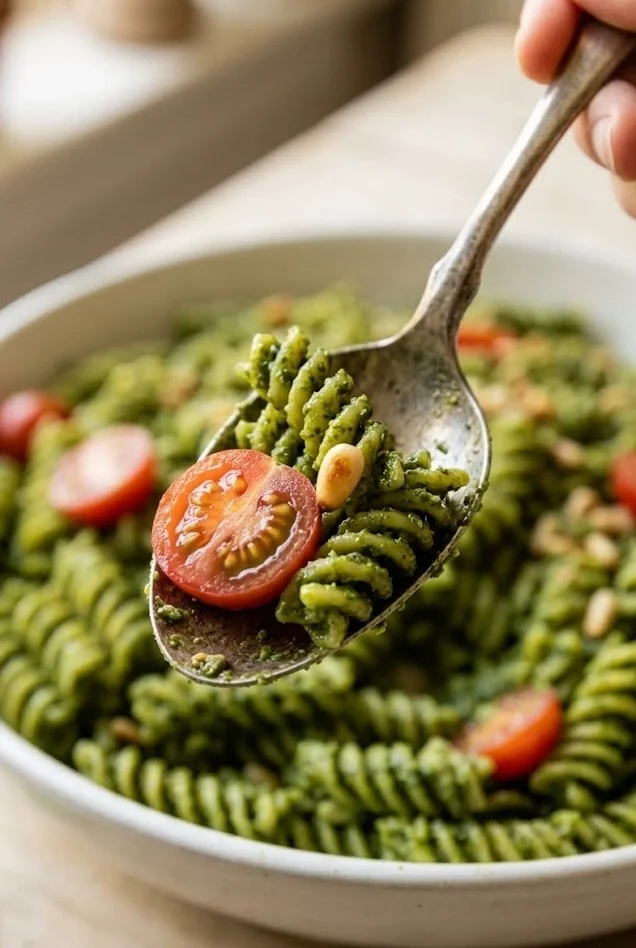
If you’ve been hunting for a pasta salad recipe that is genuinely gluten free without tasting like a compromise, this is the one. This Gluten Free Pesto Pasta Salad is rich, herby, and satisfying in exactly the way a great cold pasta salad should be — no one at the table will know or care that it skips the wheat.
Pesto is one of those sauces that makes everything taste like it took more effort than it did. Tossed through perfectly cooked gluten free pasta with fresh vegetables and a bright finish, it creates a pasta salad idea that looks impressive, travels well, and gets better as it sits.
Why You’ll Love This Gluten Free Pesto Pasta Salad
This is one of the most flavor-forward pasta salad recipes easy enough to make on a Tuesday night but elegant enough to bring to a summer gathering. The pesto does most of the heavy lifting — it’s herby, garlicky, and rich in a way that no bottled Italian dressing pasta salad can quite replicate.
It’s also one of the most inclusive pasta salad ideas you can make. Naturally gluten free, easily adaptable for dairy-free and vegan diets, and packed with vegetables that make it a genuinely healthy pasta salad rather than just a labeled one. Everyone at the table can eat it, and everyone will want seconds.
The cold pasta salad format means it’s completely make-ahead friendly. In fact, the longer it sits, the more the pesto settles into every ridge and fold of the pasta, creating a deeply flavored bite from the first forkful to the last.
Common Mistakes — And How to Avoid Them
Choosing the wrong gluten free pasta. Not all gluten free pastas behave the same way in cold pasta salad recipes. Rice-based pastas tend to become gummy when chilled. Corn and quinoa blends hold their texture significantly better. Chickpea pasta is an excellent choice — it stays firm, adds protein, and has a neutral enough flavor that the pesto completely takes over.
Rinsing the pasta too aggressively. You do want to rinse gluten free pasta under cold water to stop cooking and prevent clumping, but a brief rinse is enough. Over-rinsing strips away the surface starch that helps the pesto cling to each piece. Drain well and shake off excess water before tossing.
Using cold pesto straight from the fridge. Store-bought pesto that goes straight from a cold jar into a bowl of pasta will clump and coat unevenly. Let it come to room temperature for 10 to 15 minutes before tossing, or thin it with a tablespoon of warm pasta water or olive oil to help it spread smoothly.
Under-seasoning. Pesto is salty on its own, but once it coats a full batch of pasta and vegetables, that saltiness gets distributed and can disappear. Always taste the finished salad and adjust with salt, black pepper, and a squeeze of lemon juice before serving and again after chilling.
Not accounting for pasta absorption overnight. Gluten free pasta absorbs pesto dressing faster than regular wheat pasta. If you’re making this a day ahead, hold back a third of the pesto and stir it in just before serving to refresh the salad and restore that vibrant green color.
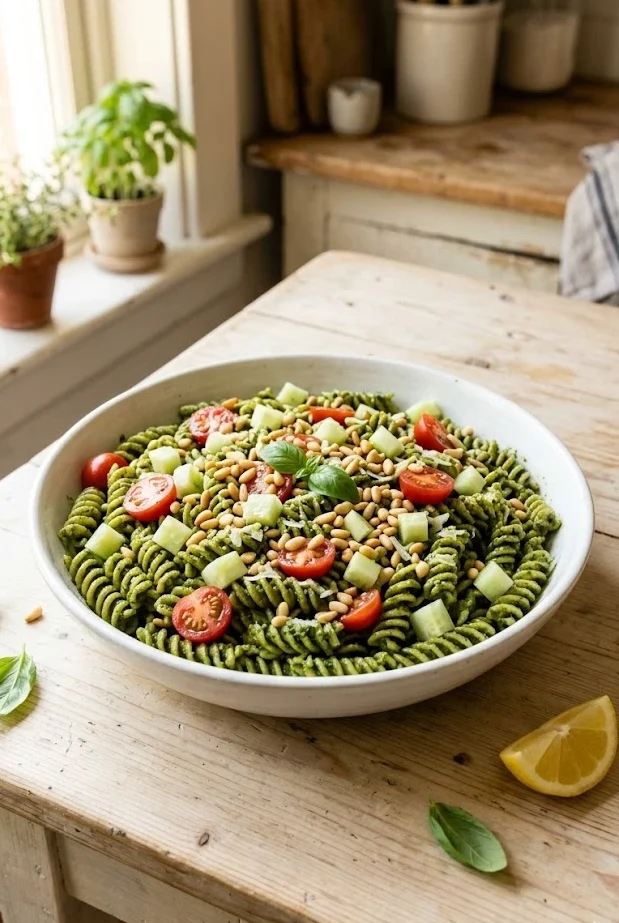
Key Ingredients
Gluten Free Pasta — Chickpea, Corn-Quinoa Blend, or Brown Rice — The foundation of the dish, and the choice matters here more than in a standard pasta salad. Chickpea pasta is the top recommendation because it holds its shape when cold, has a slightly nutty flavor that complements pesto beautifully, and adds a meaningful boost of protein and fiber. Corn and quinoa blends are a close second. Avoid rice-only pastas for this recipe.
Basil Pesto — The soul of this dish. A good pesto — whether store-bought or homemade — should smell aggressively of fresh basil, garlic, and good olive oil. If using store-bought, look for one made with actual basil and pine nuts rather than fillers and artificial flavor. Homemade pesto made in a food processor takes under five minutes and is noticeably fresher in flavor.
Cherry Tomatoes — Halved cherry tomatoes add juicy bursts of acidity that cut through the richness of the pesto. They also add visual appeal, contributing to that vibrant pasta salad aesthetic that makes people stop scrolling on Pinterest.
Cucumber — Diced cucumber brings cool crunch and freshness that balances the dense, oily pesto coating. It also keeps the salad feeling light rather than heavy — an important quality in a healthy pasta salad.
Artichoke Hearts — Quartered marinated artichoke hearts add a briny, savory depth that is completely at home in an Italian pasta salad context. They require no cooking, drain straight from the jar, and immediately make the dish taste more complex and considered.
Sun-Dried Tomatoes — A small handful of oil-packed sun-dried tomatoes, roughly chopped, adds a chewy, intensely savory element that fresh tomatoes cannot replicate. Think of them as a flavoring ingredient rather than a vegetable — used sparingly, they add enormous depth.
Parmesan or Vegan Parmesan — Freshly grated Parmesan stirred through the salad adds salty, umami richness that amplifies the pesto. For a dairy-free or vegan version, a good vegan Parmesan or nutritional yeast with a pinch of salt does the job effectively.
Lemon Juice — A squeeze of fresh lemon over the finished salad is not optional. It lifts every other flavor in the bowl and keeps the basil pesto looking green and vibrant rather than dull and oxidized.
Toasted Pine Nuts — Scattered over the top just before serving, toasted pine nuts echo the nuts in the pesto itself and add a golden crunch that makes the finished dish look and taste restaurant-worthy.
How to Make Gluten Free Pesto Pasta Salad
- Cook the pasta. Bring a large pot of generously salted water to a boil. Add 12 ounces of your chosen gluten free pasta and cook according to package directions, stopping one minute before the suggested time to keep it firmly al dente. Gluten free pasta overcooks quickly, so watch it closely.
- Reserve pasta water. Before draining, scoop out a quarter cup of the starchy pasta water and set it aside. This is your secret weapon for loosening the pesto later.
- Drain and rinse. Drain the pasta in a colander and rinse briefly under cold running water — no more than 20 to 30 seconds. Shake the colander well to remove excess water. Spread the pasta on a baking sheet and let it cool for five minutes.
- Prepare the vegetables. Halve one cup of cherry tomatoes. Dice half a medium cucumber into small cubes. Quarter four to six marinated artichoke hearts. Roughly chop a small handful of oil-packed sun-dried tomatoes.
- Loosen the pesto. In a small bowl, combine half a cup of basil pesto with one tablespoon of the reserved pasta water and one tablespoon of olive oil. Stir until smooth and pourable. If using cold store-bought pesto, this step is especially important.
- Toss the salad. Add the cooled pasta to a large mixing bowl. Pour about two thirds of the loosened pesto over the pasta and toss until every piece is well coated. Add the cherry tomatoes, cucumber, artichoke hearts, and sun-dried tomatoes. Toss again gently.
- Add the cheese. Grate a generous amount of Parmesan directly into the bowl and stir through. Squeeze the juice of half a lemon over everything and toss one final time. Taste for seasoning and adjust with salt, pepper, or more lemon as needed.
- Chill. Cover and refrigerate for at least one hour. Before serving, stir in the reserved pesto to refresh the color and flavor. Top with toasted pine nuts and an extra grating of Parmesan. Serve cold.
Variations and Tips
Make it a pasta salad with chicken. Sliced grilled chicken breast or shredded rotisserie chicken integrates seamlessly here. The pesto coats the chicken just as beautifully as the pasta, making every bite cohesive and satisfying.
Make it vegan. Use a dairy-free pesto — many store-bought versions omit cheese — and replace the Parmesan with nutritional yeast or a good vegan hard cheese. The rest of the recipe is naturally plant-based.
Add a pasta salad with Italian dressing twist. Whisk a tablespoon of red wine vinegar and a pinch of dried oregano into the pesto dressing before tossing. It adds a tangy, Italian-inspired dimension that bridges the gap between a classic Italian pasta salad and this pesto version.
Boost the protein. Canned white beans or chickpeas tossed through the salad add plant-based protein and make the dish more substantial without changing the flavor profile.
Make it nut-free. If pine nut allergies are a concern, use a nut-free pesto made with sunflower seeds or simply omit the pine nut topping. The salad is equally delicious without them.
Pro tip — make your own pesto in five minutes. Add two packed cups of fresh basil, one garlic clove, two tablespoons of pine nuts, half a cup of good olive oil, a handful of Parmesan, and a pinch of salt to a food processor. Blitz until smooth. The difference in flavor compared to jarred pesto is remarkable and absolutely worth the extra few minutes.
Looking for more pasta salad inspiration? This Ultimate Pasta Salad Recipes Guide brings together 20 of the best easy, healthy cold pasta salad recipes — from classic Italian pasta salad with Italian dressing and creamy pasta salad to chicken pasta salad, Mediterranean, Greek, pesto, tahini Caesar, BLT, Hawaiian mac salad, and more. Every recipe is make-ahead friendly, packed with flavor, and built for real weekday meals and weekend entertaining. Browse all 20 pasta salad ideas and find your next favorite recipe.
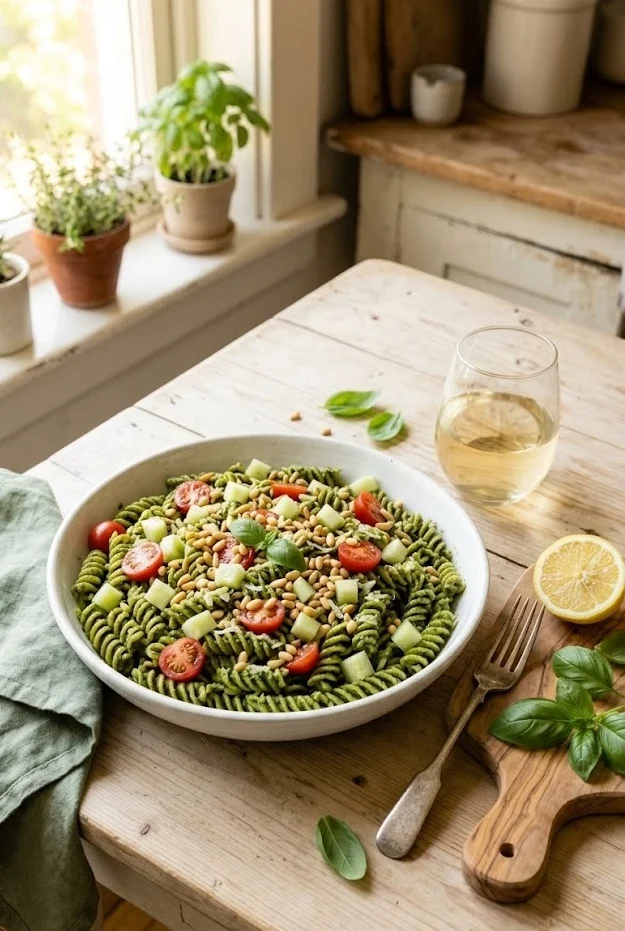
How to Meal Prep This Pasta Salad
This Gluten Free Pesto Pasta Salad is an excellent meal prep candidate, but it requires a slightly more deliberate approach than wheat-based pasta salad recipes because gluten free pasta absorbs dressing more aggressively when chilled.
The best strategy is to cook and cool the pasta fully, combine it with the vegetables, and store everything in an airtight container. Keep the remaining pesto dressing in a small separate jar in the fridge. Each day, pull out a portion, drizzle over fresh pesto, and toss. This keeps each serving tasting freshly made rather than tired and dry.
If you prefer to dress the whole batch at once, do so generously and plan to eat it within three days. Stir it well before each serving and always add a squeeze of fresh lemon juice and a drizzle of olive oil to revive the vibrancy. The pine nuts should always be added fresh at serving time — they turn soft and lose their texture if stored in the dressed salad.
FAQs
What is the best gluten free pasta for cold pasta salad? Chickpea pasta and corn-quinoa blend pasta are the top choices for cold pasta salad recipes. Both hold their shape when chilled and have enough structural integrity to absorb dressing without becoming mushy. Brown rice pasta is an acceptable third option. Avoid pasta made from rice flour alone as it tends to become gummy and stiff when cold.
Can I use store-bought pesto for this pasta salad recipe? Absolutely. A good quality store-bought basil pesto works very well here, especially when loosened with a little olive oil and pasta water before tossing. Look for brands that list basil and olive oil as the first ingredients. Sacla, Barilla, and Rana are reliable options widely available in most supermarkets.
How long does this gluten free pasta salad last in the fridge? Up to four days in an airtight container, though it’s best within the first two days when the pasta texture is at its peak and the pesto is still vibrantly green. Always stir well and refresh with a little olive oil and lemon juice before serving leftovers.
Can I serve this pasta salad warm? This recipe is designed as a cold pasta salad, but it works beautifully at room temperature too — which is actually when the pesto flavor is most pronounced. If you prefer a warm version, simply skip the chilling step and serve immediately after tossing. The texture of the pasta will be softer but the flavor will be exceptional.
Cultural Context
Pesto originates from Genova in the Liguria region of northwestern Italy, where it has been made for centuries using the same core ingredients — fresh basil, pine nuts, garlic, olive oil, and Pecorino or Parmesan cheese. The name comes from the Italian verb pestare, meaning to pound or crush, referring to the traditional method of grinding the ingredients with a marble mortar and pestle.
In its homeland, pesto is typically served with trofie or linguine pasta in a warm dish — never cold, and never with tomatoes. The cold pasta salad interpretation is firmly an American and international adaptation, one that has taken the flavor profile of a beloved Italian classic and translated it into a format that suits modern meal prep culture and summer eating habits.
The gluten free adaptation reflects a broader shift in contemporary food culture toward greater dietary inclusivity, particularly in the context of Italian-American cooking where wheat has historically been inseparable from the cuisine. Using chickpea or corn-quinoa pasta to carry a classic Ligurian sauce is a quiet act of culinary creativity — one that honors the original while opening it up to more tables and more people.
It’s a pasta salad recipe that sits at the intersection of ancient Italian tradition and very modern practical cooking — and that, more than anything, is why it belongs in your regular rotation.
Gluten Free Pesto Pasta Salad
Equipment
- large pot
- colander
- mixing bowl
- knife
- cutting board
- spoon
Ingredients
- 12 oz gluten free pasta (chickpea or corn-quinoa)
- 1 cup cherry tomatoes, halved
- 1/2 cucumber, diced
- 4-6 marinated artichoke hearts, quartered
- 1/4 cup sun-dried tomatoes, chopped
- 1/2 cup basil pesto
- 1 tbsp olive oil
- 1 tbsp reserved pasta water
- 1/4 cup Parmesan or vegan Parmesan
- 1/2 lemon, juiced
- 1/4 cup toasted pine nuts
- salt and black pepper to taste
Instructions
- Bring a large pot of salted water to a boil. Cook gluten free pasta until just al dente, about 1 minute less than package instructions.
- Reserve 1/4 cup pasta water, then drain pasta and rinse briefly under cold water. Let cool.
- Prepare vegetables by halving tomatoes, dicing cucumber, quartering artichokes, and chopping sun-dried tomatoes.
- In a small bowl, mix pesto with olive oil and reserved pasta water until smooth.
- In a large bowl, toss cooled pasta with two-thirds of the pesto dressing until evenly coated.
- Add vegetables and toss gently to combine.
- Add Parmesan and lemon juice, then toss again. Adjust seasoning with salt and pepper.
- Refrigerate for at least 1 hour. Before serving, mix in remaining pesto and top with toasted pine nuts.