
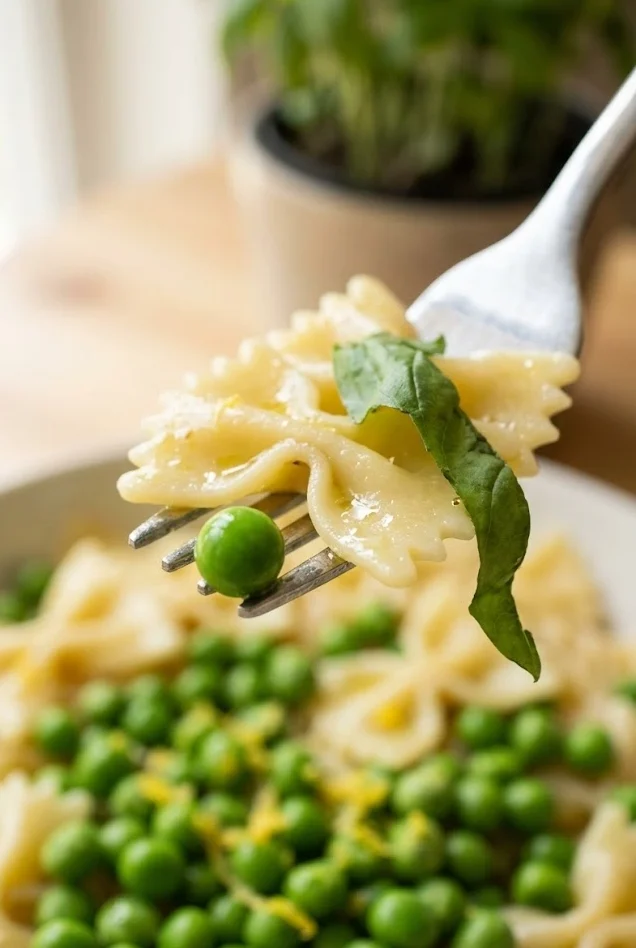
Some pasta salad recipes are heavy, overdressed, and leave you feeling sluggish. This one does the exact opposite. This Lemon Basil Pasta Salad with Peas is bright, clean, and full of flavor — the kind of healthy pasta salad that actually makes you excited to eat something good for you.
It’s the pasta salad idea you reach for when you want something that feels like summer in a bowl. Light enough to serve alongside grilled fish, hearty enough to stand on its own as a cold lunch straight from the fridge.
Why You’ll Love This Lemon Basil Pasta Salad
This is one of those pasta salad recipes easy enough to throw together on a weeknight, yet pretty enough to bring to a garden party without a second thought. The lemon dressing is sharp, herby, and refreshing — nothing like the bottled Italian dressing pasta salad you might be used to, though we’ll show you how to bridge that gap too.
The sweet peas add a pop of color and a gentle sweetness that balances the acidity of the lemon perfectly. Every forkful gives you something — tender pasta, a burst of pea, a hit of fresh basil, and that zippy, garlicky dressing tying it all together.
It also fits almost every dietary need without any awkward substitutions. It’s naturally vegetarian, easily made vegan, and simple to adapt into a gluten-free pasta salad with one easy swap. That makes it one of the most versatile pasta salad ideas in your repertoire.
Common Mistakes — And How to Avoid Them
Skipping the pasta water salt. This is where flavor begins. Unsalted pasta tastes flat no matter how good your dressing is. Use enough salt that the water tastes pleasantly seasoned — roughly one tablespoon per large pot.
Adding basil too early. Fresh basil is delicate and bruises quickly. If you toss it into a warm or hot pasta salad, it turns dark and loses that fragrant, peppery punch that makes this recipe shine. Always add basil just before serving, or in the final five minutes before the salad hits the table.
Over-zesting or over-juicing the lemon. More lemon is not always better here. Too much juice makes the pasta salad dressing watery and aggressively sour. Start with the amount listed in the recipe, taste, and adjust gradually. The zest carries more aromatic flavor than the juice, so lean into it.
Using frozen peas straight from the bag. Frozen peas are perfectly fine — and actually preferred over canned — but they need a quick thaw. Run them under cold water for a minute or toss them into the pasta for the last 30 seconds of cooking to just barely warm through. This keeps them bright green and tender without making them mushy.
Dressing the salad when still warm. Warm pasta drinks up dressing fast, which sounds good in theory but results in a dry, clumped salad after chilling. Cool the pasta to room temperature first, then dress it. Reserve a small amount of dressing to stir in just before serving.
Key Ingredients
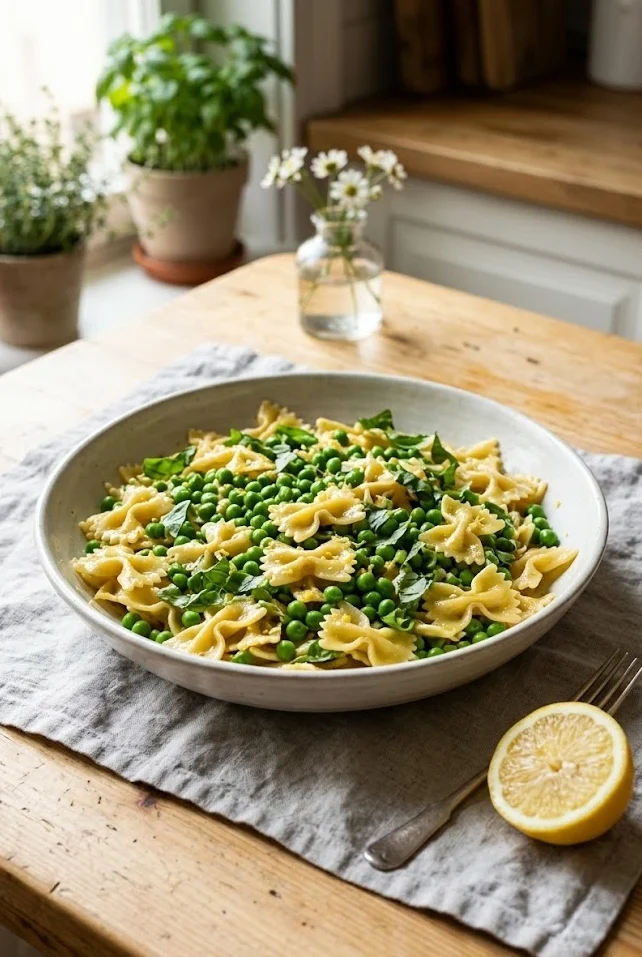
Short Pasta — Fusilli or Farfalle — Both shapes are ideal for this pasta salad aesthetic because they hold the lemon dressing in their ridges and folds. Farfalle has a beautiful, elegant look that makes the final dish photograph like something from a restaurant menu. Fusilli is slightly more practical for meal prep as it stays separate in the fridge.
Fresh or Frozen Peas — Peas are the quiet hero of this dish. They add natural sweetness, a satisfying bite, and a gorgeous pop of green that makes this one of the most visually appealing pasta salad ideas you can make. Fresh peas from the pod are exceptional in season, but high-quality frozen peas are a reliable year-round option.
Fresh Basil — This is non-negotiable. Dried basil simply does not work here. Fresh basil leaves, torn rather than chopped, release their oils into the dressing and perfume every bite. It’s what transforms this from a basic cold pasta salad into something that feels genuinely special.
Lemon — Zest and Juice — You need both. The juice provides acidity and brightness; the zest carries the floral, aromatic quality that makes the dressing smell incredible. Always zest before juicing, and always use fresh lemons — bottled lemon juice is flat and one-dimensional.
Olive Oil — The base of the pasta salad dressing here. Use a good quality extra virgin olive oil because its flavor is front and center in a simple dressing like this. A grassy, slightly peppery olive oil works beautifully against the lemon.
Garlic — One or two cloves, finely grated or minced. Garlic deepens the dressing and prevents it from tasting too one-note. For a milder flavor, use roasted garlic instead of raw.
Parmesan or Pecorino Romano — Freshly grated hard cheese adds a salty, umami richness that rounds out the brightness of the lemon. Pecorino Romano is slightly sharper and saltier, which works especially well here. For a vegan version, nutritional yeast makes a surprisingly good substitute.
Pine Nuts or Toasted Walnuts — Optional but highly recommended. A small handful of toasted nuts adds crunch and a subtle richness that elevates the entire dish. They also add visual contrast that makes the pasta salad aesthetic look layered and intentional.
How to Make Lemon Basil Pasta Salad with Peas
- Bring a large pot of water to a boil. Salt it generously — it should taste like mild seawater. Add 12 ounces of fusilli or farfalle pasta and cook according to package directions until just al dente.
- Add the peas. In the final 30 seconds of pasta cooking, toss in one cup of frozen peas. This gently warms them through without overcooking. Drain the pasta and peas together.
- Rinse and cool. Spread the drained pasta and peas on a large baking sheet or rinse briefly under cold water to stop the cooking process. You want them cool but not waterlogged, so don’t over-rinse.
- Make the lemon pasta salad dressing. In a small bowl or jar, whisk together one third of a cup of good olive oil, the juice of one large lemon (about 3 tablespoons), the zest of that same lemon, one finely grated garlic clove, half a teaspoon of salt, and a generous crack of black pepper. Taste and adjust — it should be bright, garlicky, and slightly sharp.
- Combine the salad. Add the cooled pasta and peas to a large mixing bowl. Pour about two thirds of the dressing over the top and toss well to coat every piece. If you have pine nuts, add them now.
- Add the cheese. Grate a generous handful of Parmesan or Pecorino Romano directly over the bowl and toss again.
- Chill. Cover and refrigerate for at least 45 minutes. This allows the pasta to absorb the dressing flavors. If chilling longer, hold the remaining dressing and basil separately.
- Finish and serve. Just before serving, tear a generous handful of fresh basil leaves directly into the bowl. Drizzle over the remaining dressing, toss lightly, and taste for seasoning. Add a pinch more salt or an extra squeeze of lemon if needed. Serve cold.
Variations and Tips
Make it a pasta salad with chicken. Add shredded rotisserie chicken or sliced grilled chicken breast for a complete protein-packed meal. The lemon dressing pairs brilliantly with chicken — it’s a natural combination.
Make it a pasta salad with Italian dressing. If you love the flavor profile of a classic Italian pasta salad, add a tablespoon of white wine vinegar to the dressing and a pinch of dried oregano. It shifts the flavor in a direction that bridges both styles beautifully.
Make it vegan. Omit the Parmesan and replace it with two tablespoons of nutritional yeast and an extra pinch of salt. The dressing itself is already naturally plant-based.
Make it gluten-free. Swap the pasta for your favorite gluten-free short pasta. Chickpea pasta and brown rice pasta both hold their texture well in cold pasta salad recipes.
Add more vegetables. Thinly sliced cucumber, halved cherry tomatoes, or blanched asparagus all work beautifully here. This pasta salad idea is very forgiving and welcomes whatever is fresh and in season.
Pro tip — toast your nuts in a dry pan. Even just two or three minutes in a dry skillet transforms pine nuts from mild and soft to golden, aromatic, and deeply nutty. It takes almost no time and makes a noticeable difference.
Looking for more pasta salad inspiration? This Ultimate Pasta Salad Recipes Guide brings together 20 of the best easy, healthy cold pasta salad recipes — from classic Italian pasta salad with Italian dressing and creamy pasta salad to chicken pasta salad, Mediterranean, Greek, pesto, tahini Caesar, BLT, Hawaiian mac salad, and more. Every recipe is make-ahead friendly, packed with flavor, and built for real weekday meals and weekend entertaining. Browse all 20 pasta salad ideas and find your next favorite recipe.
How to Meal Prep This Pasta Salad
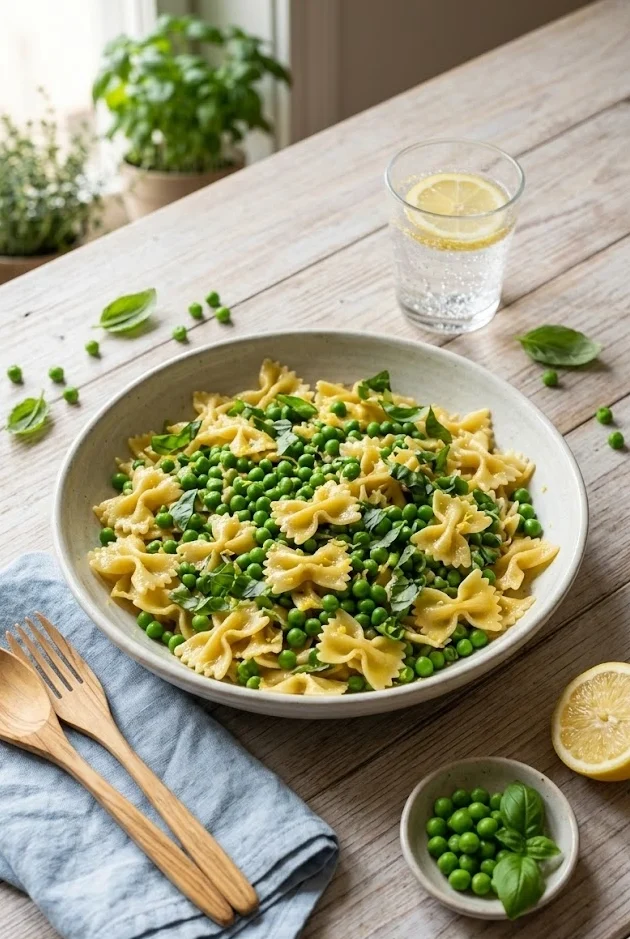
This lemon pasta salad is one of the most meal-prep-friendly cold pasta salad recipes you can make, with one small adjustment to your process. Prepare the pasta, peas, nuts, and cheese as directed, but store the dressing and fresh basil separately in small containers.
Each day, portion out a serving into a bowl, drizzle over a little dressing, tear in fresh basil, and toss. This keeps the pasta from becoming dry or overly saturated and ensures the basil stays vibrantly green rather than wilted and dark.
Stored this way, the pasta base keeps well for up to four days in the refrigerator. It’s an excellent healthy pasta salad option for weekday lunches because it requires zero reheating and travels well in a jar or sealed container.
If you do dress the entire batch at once, plan to eat it within two to three days. Give it a good stir before serving and always add a splash of fresh lemon juice and a few torn basil leaves to revive the brightness.
FAQs
Can I make this pasta salad the night before? Yes, with a small caveat. Prepare the full salad and dress it, but hold the fresh basil and the final drizzle of dressing until just before serving. Fresh basil wilts and darkens overnight, so adding it at the last moment keeps the salad looking and tasting its best.
What pasta shapes work best for this recipe? Fusilli, farfalle, rotini, and orecchiette are all excellent choices for this style of healthy pasta salad. They all have surfaces or cavities that catch the lemon dressing and hold small pieces of pea. Avoid long pasta shapes like spaghetti or linguine — they don’t work in cold pasta salads.
Is this a healthy pasta salad? Compared to most pasta salad recipes made with heavy mayonnaise-based dressings, yes — significantly so. The dressing here is olive oil and fresh lemon juice, which is rich in healthy fats and antioxidants. The peas add plant-based protein and fiber, making this a genuinely nutritious option.
Can I add a protein to make it more filling? Absolutely. Shredded chicken, canned chickpeas, white beans, or flaked canned tuna all integrate naturally into this dish. Chickpeas in particular are a wonderful addition if you want to keep it vegetarian while boosting the protein content considerably.
Cultural Context
Lemon and basil together are among the most iconic flavor pairings in Mediterranean cooking, rooted in the culinary traditions of southern Italy and the Greek islands where both ingredients grow abundantly and are used with little ceremony. Dishes built around them tend to be simple, ingredient-driven, and deeply seasonal — qualities that define the best of Italian pasta salad cooking.
The addition of peas to pasta is a classic Italian pairing seen in dishes like risi e bisi from the Veneto region and pasta e piselli from Neapolitan tradition. Cold pasta salads as we know them are largely an American adaptation, but this recipe borrows its soul from those Mediterranean roots — keeping the ingredients few, the dressing clean, and the flavors honest.
In the context of modern healthy pasta salad culture, this recipe represents the direction things are heading: away from heavy, creamy dressings and toward bright, olive oil-based alternatives that let quality ingredients speak for themselves. It’s a pasta salad idea that feels contemporary precisely because it reaches back to something older and simpler.
Lemon Basil Pasta Salad with Peas
Equipment
- large pot
- colander
- mixing bowl
- whisk
- knife
- cutting board
Ingredients
- 12 oz fusilli or farfalle pasta
- 1 cup frozen peas
- 1/3 cup extra virgin olive oil
- 3 tbsp fresh lemon juice
- 1 lemon zest
- 1 clove garlic, finely grated
- 1/2 tsp salt
- black pepper to taste
- 1/2 cup Parmesan or Pecorino Romano, grated
- 1/4 cup pine nuts or toasted walnuts (optional)
- 1 handful fresh basil leaves, torn
Instructions
- Bring a large pot of salted water to a boil. Cook pasta until al dente according to package instructions.
- Add peas during the last 30 seconds of cooking, then drain pasta and peas together.
- Cool pasta and peas by spreading on a tray or rinsing briefly under cold water.
- Whisk together olive oil, lemon juice, lemon zest, garlic, salt, and pepper to make the dressing.
- Combine cooled pasta and peas in a large bowl. Add most of the dressing and toss well.
- Add grated cheese and optional nuts, then toss again to combine.
- Refrigerate for at least 45 minutes to allow flavors to develop.
- Before serving, add fresh basil and remaining dressing. Toss gently and adjust seasoning.