
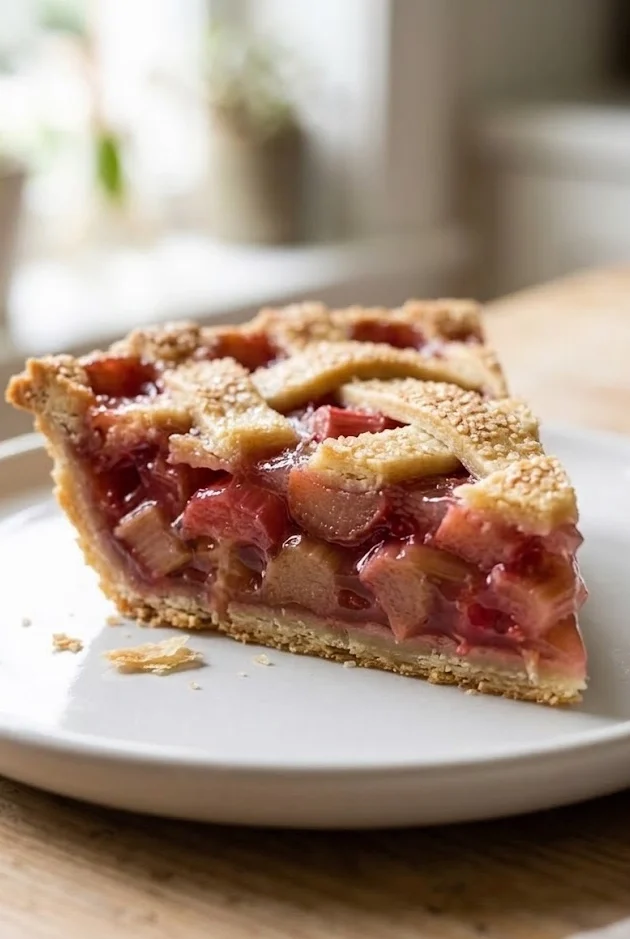
There is a persistent myth in baking circles that gluten-free pastry is a compromise — a lesser version of the real thing that you tolerate rather than enjoy. This Gluten-Free Rhubarb Pie exists to dismantle that myth completely. The crust is genuinely flaky, the filling is bright and deeply tart, and the finished pie is the kind of thing that disappears from a table before anyone thinks to ask whether it contains gluten.
Among all rhubarb recipes, a great pie holds a special place — it is the format most closely associated with rhubarb’s long baking history, and it is also the one that gluten-free bakers most often feel excluded from. This recipe changes that. Whether you are baking for a gluten intolerance, a celiac household, or simply exploring healthy rhubarb recipes that reach a wider table, this is the recipe that belongs in your permanent collection.
Why You’ll Love This Gluten-Free Rhubarb Pie
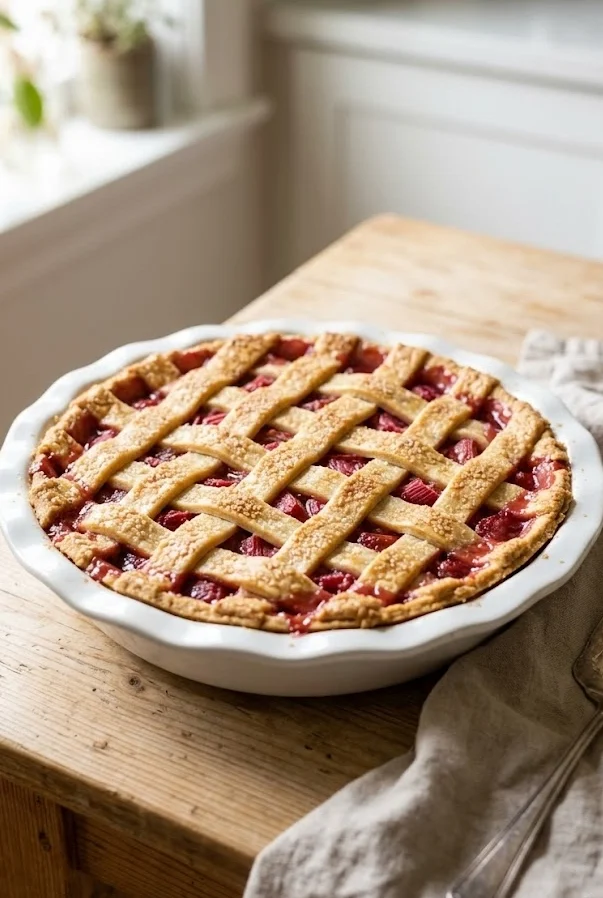
This pie delivers everything a great rhubarb recipes pie should deliver — a tart, glossy, properly set filling with chunks of tender rhubarb, encased in a crust that is golden on the outside and tender on the inside — without a single gram of gluten.
It also serves as one of the most inclusive easy rhubarb recipes you can bring to any gathering. It is naturally suitable for celiac guests, can be adapted for dairy-free diets, and with straightforward sugar substitutions fits comfortably into diabetics rhubarb recipes territory. One pie that genuinely works for almost everyone at the table.
The filling itself is where this recipe truly shines. Rhubarb’s natural flavor is so bold and distinctive that it carries a pie filling without needing the support of heavy spicing or elaborate additions. Bright, clean, and unmistakably tart — this is rhubarb at its most honest.
Common Mistakes When Making Gluten-Free Rhubarb Pie (And How to Avoid Them)
Using a single gluten-free flour without xanthan gum. Gluten-free pastry requires a binding agent to replace the structural role that gluten plays in traditional pie crust. Without xanthan gum or psyllium husk, a GF crust will crumble and crack during rolling and transfer rather than holding together as a cohesive, workable dough. Most good-quality 1:1 gluten-free baking blends already contain xanthan gum — always check the label before adding more.
Not chilling the dough long enough. Gluten-free pastry dough is significantly more fragile than wheat-based dough when warm. It must be thoroughly chilled — at least one hour in the refrigerator, and ideally two — before rolling. Chilled fat in the dough is what creates flakiness, and cold dough is far more cooperative to work with than room temperature GF pastry.
Rolling directly on a floured surface. Unlike regular pastry, gluten-free dough does not respond well to rolling on a floured board. It is too fragile and tends to stick and tear. Instead, roll the dough between two sheets of parchment paper or plastic wrap. This single technique change makes GF pastry dramatically easier to handle and transfer.
Underfilling the pie. Rhubarb shrinks considerably during baking as its moisture evaporates. A pie that looks generously filled before it goes in the oven will look sparse once it comes out if you have not compensated for this shrinkage. Mound the filling slightly above the rim of the pie dish before adding the top crust — it will settle to the perfect level during baking.
Cutting the pie while it is still warm. This applies to all rhubarb recipes pie work but is even more critical for gluten-free versions, where the crust is slightly more delicate. A warm GF crust crumbles more readily than a warm wheat crust. Allow the pie to cool completely — at least two to three hours — before slicing for clean, intact portions.
Key Ingredients for Gluten-Free Rhubarb Pie
A quality 1:1 gluten-free flour blend is the foundation of this crust and the ingredient that determines whether the pastry succeeds or fails. Look for a blend that contains a mix of rice flour, tapioca starch, and potato starch, with xanthan gum already included. These blends are specifically formulated to mimic the behavior of all-purpose flour in baking and produce the most reliable results across easy rhubarb recipes adapted for gluten-free diets.
Cold butter remains the fat of choice for a flaky GF crust, and the same rules apply as in traditional pastry — it must stay cold throughout the entire mixing and rolling process. The steam produced by cold butter hitting the heat of the oven is what creates the distinct layers in a flaky crust, regardless of whether the flour contains gluten. For a dairy-free version, a good-quality solid coconut oil or vegan butter stick works as a direct substitute.
Tapioca starch appears in the filling as the thickening agent, and it is a deliberate choice over cornstarch for this particular recipe. Tapioca produces a clearer, glossier, more jewel-like filling than cornstarch, and it holds up better when the pie is served at room temperature over several hours. It also has no aftertaste, which allows the clean, bright flavor of the rhubarb to come through without any starchy undertone.
Fresh rhubarb needs no special treatment for a gluten-free recipe — it is naturally free of gluten and delivers the same bold, tart flavor it always does. Choose firm stalks in the deepest pink or red color you can find for the most vibrant filling. The color of the rhubarb directly affects the visual appeal of the finished pie, which is why color selection matters in rhubarb recipes pie baking.
Apple cider vinegar is a small but important addition to the pie crust dough. A teaspoon added to the ice water mixture helps inhibit any gluten development in blends that contain trace amounts of wheat, and it also tenderizes the dough, making it more pliable and less prone to cracking during rolling. It is a technique used across professional gluten-free and healthy rhubarb recipes baking to improve pastry texture without affecting flavor.
Orange zest and a pinch of ginger in the filling are the flavor additions that elevate this from a straightforward rhubarb filling into something genuinely memorable. Orange zest brightens the tartness of the rhubarb with citrus warmth, while a small amount of ground ginger adds a gentle heat that makes the filling feel more complex and layered.
How to Make Gluten-Free Rhubarb Pie
Ingredients
For the gluten-free double crust:
- 2 1/2 cups 1:1 gluten-free flour blend (with xanthan gum)
- 1 tbsp granulated sugar
- 1 tsp salt
- 1 cup cold unsalted butter, cubed
- 1 tsp apple cider vinegar
- 6–8 tbsp ice water
For the rhubarb filling:
- 5 cups fresh rhubarb, sliced into 1/2-inch pieces
- 1 cup granulated sugar
- 3 tbsp tapioca starch
- 1 tsp orange zest
- 1/4 tsp ground ginger
- 1/4 tsp salt
- 1 tsp vanilla extract
- 1 tbsp cold butter, cubed (for dotting)
For finishing:
- 1 egg beaten with 1 tbsp milk or dairy-free milk (egg wash)
- 1 tbsp turbinado sugar for sprinkling
Instructions
- Make the gluten-free pie dough. Whisk together the gluten-free flour blend, sugar, and salt in a large bowl. Add cold butter cubes and work them into the flour using your fingertips or a pastry cutter until the mixture resembles coarse crumbs with visible pea-sized butter pieces remaining. Add apple cider vinegar to the ice water, then add to the flour mixture one tablespoon at a time, stirring gently until the dough just comes together. It will feel slightly stickier than traditional pie dough — this is normal for GF pastry.
- Divide the dough into two equal portions. Flatten each into a disk, wrap tightly in plastic wrap, and refrigerate for a minimum of one hour, and up to overnight. Do not skip or shorten this chilling period.
- Make the filling. Combine sliced rhubarb, sugar, tapioca starch, orange zest, ginger, salt, and vanilla extract in a large bowl. Toss gently until every piece of rhubarb is evenly coated. Allow to sit for 15 minutes while you roll the dough.
- Preheat your oven to 425°F (220°C). Place a foil-lined baking sheet on the lower rack to catch any drips during baking.
- Roll the bottom crust. Place one chilled dough disk between two sheets of parchment paper. Roll from the center outward into a circle approximately 12 inches in diameter. Peel away the top sheet of parchment, flip the dough carefully into a 9-inch pie dish, and peel away the second sheet. Press gently into the corners of the dish. Trim the overhang to approximately one inch and refrigerate while you roll the top crust.
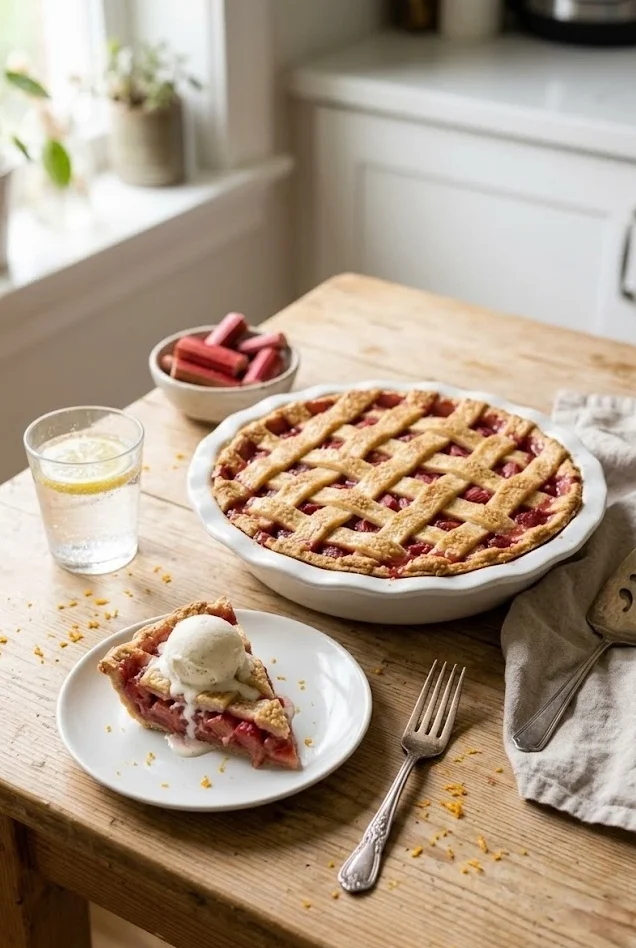
- Roll the top crust using the same parchment method. For a lattice, cut the rolled dough into strips using a sharp knife or pastry wheel. For a full top crust, leave it whole and cut four or five vents after placement. GF dough is more fragile than wheat dough — work quickly and handle gently.
- Fill the pie. Remove the bottom crust from the refrigerator. Pour the rhubarb filling in, mounding it slightly above the rim of the dish to account for shrinkage. Dot the filling with small cubes of cold butter.
- Add the top crust. For a full crust, slide it off the parchment and onto the filling, trim, and crimp the edges together firmly to seal. For a lattice, lay strips across the filling and weave carefully, pressing the ends into the bottom crust edge to seal.
- Apply the egg wash over the entire top crust and sprinkle generously with turbinado sugar.
- Bake at 425°F for 20 minutes, then reduce the temperature to 375°F (190°C) and bake for a further 35–40 minutes until the crust is deep golden brown and the filling is bubbling actively through the vents. Shield the edges with foil if they brown too quickly.
- Cool completely on a wire rack for a minimum of two to three hours before slicing.
Variations and Tips for Your Rhubarb Recipes
Strawberry Rhubarb Recipes Version: Replace two cups of the rhubarb with halved fresh strawberries. This is a natural and beloved adaptation within strawberry rhubarb recipes tradition and produces a filling with more natural sweetness — reduce the sugar to 3/4 cup to compensate.
Healthy Rhubarb Recipes Swap: Use coconut sugar in place of granulated sugar throughout the filling for a lower glycemic option with a gentle caramel undertone. The crust can be made with cold coconut oil in place of butter for a fully dairy-free version that fits within healthy rhubarb recipes parameters.
Diabetics Rhubarb Recipes Adaptation: Substitute the sugar in the filling with a cup-for-cup erythritol blend. Tapioca starch remains the best thickener for this adaptation, as it works effectively with sugar-free sweeteners where cornstarch can sometimes perform less reliably. This makes the pie one of the more accessible diabetics rhubarb recipes for celebration baking.
Rhubarb Recipes Crisp Alternative: If you want to skip the pastry work entirely, pour the same filling into a baking dish and top with a gluten-free oat and butter crumble for an easy rhubarb recipes crisp variation that is naturally gluten-free with certified GF oats and requires no rolling or chilling.
Pro Tip: If your gluten-free crust cracks during transfer, do not panic — GF pastry is very forgiving of patching. Press cracked edges back together firmly with damp fingers. The patches seal completely during baking and are invisible in the finished pie.
Looking for more ways to bake with rhubarb? This Ultimate Rhubarb Recipes Guide brings together 20 of the best easy, healthy, and impressive rhubarb recipes in one place — from classic strawberry rhubarb pie and golden rhubarb crisp to sourdough rhubarb bread, rhubarb muffins, rhubarb bars, and stunning celebration cakes. Whether you have fresh rhubarb or a bag in the freezer, you will find exactly the recipe you are looking for. Browse all 20 rhubarb recipes and discover your next favorite bake.
How to Meal Prep Gluten-Free Rhubarb Pie
The gluten-free pie dough is the ideal component to prepare well in advance. Both dough disks can be refrigerated for up to three days or frozen for up to two months. Thaw overnight in the refrigerator before rolling — never at room temperature, as GF dough becomes too soft and unworkable when warm.
The rhubarb filling can be prepared and stored in an airtight container in the refrigerator for up to 24 hours before assembling. Stir it briefly before using as the tapioca starch will have settled to the bottom during storage.
Once baked, the pie keeps at room temperature loosely covered for up to two days. Refrigerate for up to five days — the gluten-free crust holds its texture reasonably well when chilled, though it is always best served at room temperature rather than cold. Allow a refrigerated pie to sit at room temperature for 30 minutes before serving.
For freezing, wrap the fully baked and cooled pie in two layers of plastic wrap and one layer of foil. Freeze for up to two months and thaw overnight in the refrigerator before bringing to room temperature to serve.
FAQs About Gluten-Free Rhubarb Recipes
Why is my gluten-free pie crust crumbly and hard to roll? GF pastry crumbles when it is either too dry or not cold enough. Add ice water one tablespoon at a time until the dough just holds together when pressed — it should feel slightly tacky but not wet. If it crumbles when rolled, let it warm very slightly for two minutes, then try again between fresh parchment sheets. A small amount of additional ice water worked into the surface can also help bind cracked areas.
Can I use this same crust for other rhubarb recipes pie variations? Absolutely. This crust works for any rhubarb recipes pie filling, including strawberry rhubarb recipes combinations, savory rhubarb recipes galettes, and even sweet rhubarb recipes desserts in tart form. It is a genuinely versatile GF pastry that behaves reliably across different formats and filling types.
Is this pie suitable for celiac disease, not just gluten sensitivity? It can be, provided you use a certified gluten-free flour blend and verify that all other ingredients — including the tapioca starch and vanilla extract — are produced in gluten-free facilities. Cross-contamination is the primary concern for celiac baking. Always check every label and use dedicated gluten-free equipment and surfaces when baking for someone with celiac disease.
How does this compare to rhubarb recipes crisp or rhubarb bars recipes for gluten-free baking? Rhubarb recipes crisp is generally easier to make gluten-free because the oat-based topping requires no rolling or delicate handling. Rhubarb bars recipes fall somewhere in between. This gluten-free pie requires the most technique of the three formats but produces the most classic and visually impressive result — the kind of rhubarb recipes pie that belongs at a celebration table rather than just a casual weeknight dessert.
Cultural Context: Gluten-Free Baking and the Rhubarb Pie Tradition
Rhubarb pie has been one of the most enduring fixtures of American and British home baking since the nineteenth century, when rhubarb’s easy cultivation and early spring availability made it the natural choice for the first pie of the season after winter. The fact that it was called the pie plant speaks to how central it was to the pie-baking tradition specifically.
For generations, the assumption embedded in that tradition was that pie meant wheat flour pastry — tender, flaky, and built on gluten’s ability to hold a crust together while remaining delicate enough to shatter pleasantly under a fork. The rise of gluten-free baking over the past two decades has been about dismantling that assumption and proving that the experience of a great pie — its textures, its aromas, its place at a table — belongs to everyone.
The development of quality 1:1 gluten-free flour blends has been the turning point in this shift. Where early gluten-free baking often produced dense, gummy, or crumbly results that reinforced the idea of GF food as inferior, modern blends have made it genuinely possible to produce pastry that is flaky, golden, and structurally sound enough to hold a tart rhubarb filling through baking, cooling, and slicing.
This Gluten-Free Rhubarb Pie sits at the meeting point of a very old baking tradition and a very contemporary set of values around inclusion, health awareness, and the belief that a great rhubarb recipes pie should be available to every baker, regardless of dietary restriction.
Gluten-Free Rhubarb Pie
Equipment
- 9-inch pie dish
- mixing bowls
- pastry cutter or hands
- Rolling Pin
- parchment paper
Ingredients
- 2 1/2 cups 1:1 gluten-free flour blend (with xanthan gum)
- 1 tbsp granulated sugar
- 1 tsp salt
- 1 cup cold unsalted butter, cubed
- 1 tsp apple cider vinegar
- 6–8 tbsp ice water
- 5 cups fresh rhubarb, sliced
- 1 cup granulated sugar
- 3 tbsp tapioca starch
- 1 tsp orange zest
- 1/4 tsp ground ginger
- 1/4 tsp salt
- 1 tsp vanilla extract
- 1 tbsp cold butter (for filling)
- 1 egg (for egg wash)
- 1 tbsp milk or dairy-free milk
- 1 tbsp turbinado sugar
Instructions
- Whisk gluten-free flour, sugar, and salt. Cut in cold butter until crumbly. Add vinegar and ice water gradually until dough forms.
- Divide dough into two disks, wrap, and refrigerate for at least 1 hour.
- Mix rhubarb, sugar, tapioca starch, zest, ginger, salt, and vanilla. Let sit 15 minutes.
- Preheat oven to 425°F (220°C) and line a baking sheet with foil.
- Roll one dough disk between parchment into a 12-inch circle and fit into a 9-inch pie dish.
- Roll second dough disk and prepare lattice or full top crust.
- Fill pie with rhubarb mixture, mound slightly, and dot with butter.
- Add top crust, seal edges, brush with egg wash, and sprinkle with sugar.
- Bake at 425°F for 20 minutes, then reduce to 375°F and bake 35–40 minutes until golden and bubbling.
- Cool completely for 2–3 hours before slicing.