
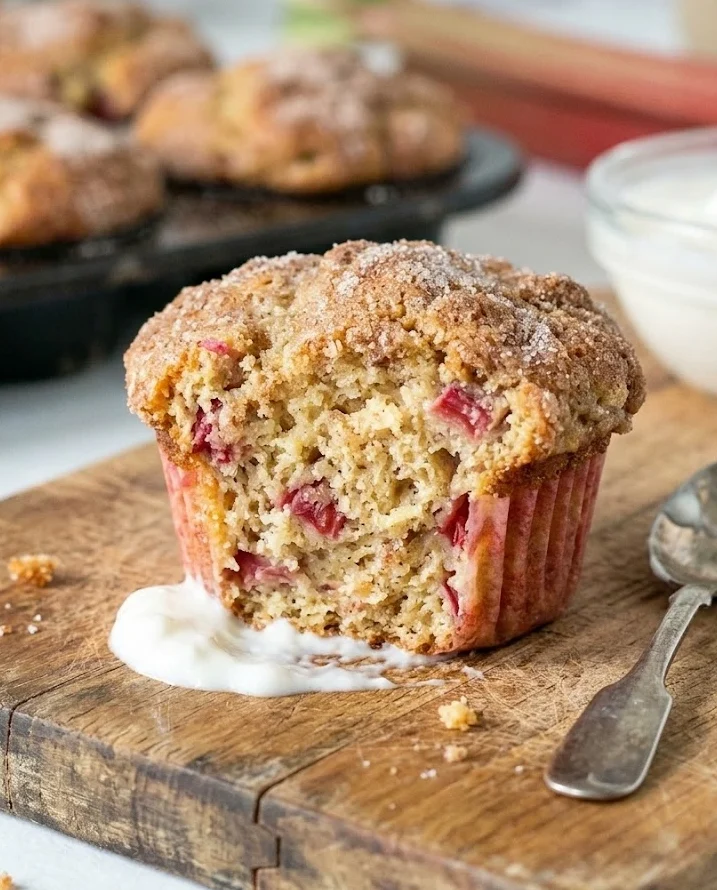
When it comes to easy rhubarb recipes that actually deliver, few things beat a warm muffin pulled straight from the oven. These rhubarb muffins with Greek yogurt are soft, slightly tangy, generously packed with rhubarb, and finished with a cinnamon sugar crust that crunches when you bite through it.
They take thirty-five minutes from start to finish. The batter comes together in two bowls. And they are lighter than a typical bakery muffin without tasting like it — because Greek yogurt does a remarkable job of replacing some of the fat without sacrificing moisture or tenderness.
If you have been on the hunt for healthy rhubarb recipes that the whole family will actually eat, this is the one to bookmark.
Why You’ll Love These Rhubarb Muffins
These muffins sit right at the intersection of easy rhubarb recipes and genuinely good baking. They are not a compromise — they are a straightforward win.
Greek yogurt replaces much of the fat that sour cream or extra butter would normally contribute. The result is a muffin with a lighter crumb, a subtle tang that complements the rhubarb beautifully, and a slightly higher protein content per serving. For anyone exploring healthy rhubarb recipes, that matters.
Beyond the nutritional angle, these muffins are simply practical. They work with fresh rhubarb in spring and frozen rhubarb throughout the rest of the year. They freeze well, reheat quickly, and make an excellent grab-and-go breakfast all week long.
The cinnamon sugar topping is a small detail that makes a large difference. It crystallizes in the oven into a thin, golden crust that gives every bite a little texture contrast against the soft interior.
Common Mistakes (And How to Avoid Them)
Even a simple muffin recipe has a few places where things can go wrong. These are the most common issues and how to sidestep them.
Overmixing the batter. This is the single most frequent muffin mistake. Once the dry ingredients hit the wet, fold gently with a spatula and stop as soon as you no longer see dry flour. A few lumps in the batter are completely fine — they bake out. Overmixing develops gluten, and the result is a dense, rubbery muffin instead of a tender one.
Using fat-free Greek yogurt. Zero-percent Greek yogurt does work in a pinch, but it produces a noticeably drier and less tender muffin. The small amount of fat in 2% Greek yogurt is what keeps the crumb soft. It is a meaningful difference for a small trade-off in calories.
Chopping the rhubarb too large. Pieces that are too big create uneven pockets of tartness and can make it harder for the muffin to bake evenly through the center. Aim for a quarter-inch dice — small, consistent pieces that distribute evenly through every bite.
Adding frozen rhubarb without keeping it frozen. If you are using frozen rhubarb, do not thaw it before folding it into the batter. Thawed rhubarb releases a lot of water quickly and can turn the muffin interior gummy. Add it straight from the freezer and get the tray into the oven promptly.
Skipping the toothpick test. The twenty-minute mark is a guideline, not a guarantee. Every oven runs slightly differently. Test a center muffin with a toothpick before pulling the tray — it should come out clean and dry.
Chef’s Notes
The batter for these muffins is notably thick. That is intentional and correct — do not add extra liquid to thin it out. The moisture from the rhubarb releases during baking and contributes to the final crumb. Trust the process.
A teaspoon of vanilla extract is in the ingredient list, and it earns its place. It rounds out the flavor profile and makes the cinnamon more aromatic. Do not skip it.
If you want to deepen the flavor further, a small pinch of cardamom or nutmeg alongside the cinnamon adds a subtle warmth that plays very well with rhubarb. A little orange or lemon zest stirred into the batter is another excellent addition — citrus and rhubarb are natural partners.
The muffins are best eaten the day they are baked, ideally still slightly warm. The cinnamon sugar topping is at its crunchiest in those first few hours. That said, they hold up well through the next day and freeze beautifully for up to three months.
Key Ingredients
Rhubarb is the reason this recipe exists. Its sharp, tart flavor cuts through the mild sweetness of the muffin batter in the best possible way. Fresh rhubarb produces the cleanest result, but frozen works reliably as long as it goes in straight from the freezer without thawing.
Greek yogurt is the ingredient that sets these muffins apart from a standard rhubarb recipe. It replaces a significant portion of the fat, adds a gentle tang that enhances the rhubarb flavor, and reacts with the baking soda to create lift in the crumb. Use 2% plain Greek yogurt for the best texture and results.
Whole wheat flour makes up half of the flour blend, adding a mild nuttiness and a bit of extra fiber. It also makes these one of the more genuinely healthy rhubarb recipes in this category. If you prefer a more neutral flavor, you can substitute it with an equal amount of all-purpose flour.
Cinnamon plays a larger role here than in most muffin recipes. It appears in both the batter and the topping, and it brings a warmth that softens the tartness of the rhubarb without masking it.
Unsalted butter, melted and cooled, provides richness and ensures a moist, cohesive crumb. Some bakers have successfully replaced half of it with unsweetened applesauce to reduce fat further.
Eggs provide structure and bind the batter together. Two full eggs give the muffins their lift and help maintain their domed tops.
How to Make Rhubarb Muffins with Greek Yogurt
For the muffins:
- 1 cup all-purpose flour
- 1 cup whole wheat flour
- 3/4 cup granulated sugar
- 2½ tsp baking powder
- 1 tsp ground cinnamon
- 1/2 tsp baking soda
- 1/2 tsp kosher salt
- 1 cup 2% plain Greek yogurt
- 8 tbsp unsalted butter, melted and cooled
- 2 large eggs
- 1 tsp pure vanilla extract
- 1½ cups rhubarb, cut into 1/4-inch dice (fresh or frozen, unthawed)
For the cinnamon sugar topping:
- 3 tbsp granulated sugar
- 1/2 tsp ground cinnamon
Instructions:
- Preheat your oven to 400°F (200°C). Line a 12-cup muffin tin with paper liners or spray generously with cooking spray.
- In a medium bowl, whisk together both flours, sugar, baking powder, cinnamon, baking soda, and salt until evenly combined.
- In a large bowl, whisk together the Greek yogurt, melted butter, eggs, and vanilla until smooth and well combined.
- Add the dry ingredients to the wet ingredients. Fold gently with a spatula until just combined — the batter will be thick. Do not overmix.
- Fold in the diced rhubarb until evenly distributed through the batter.
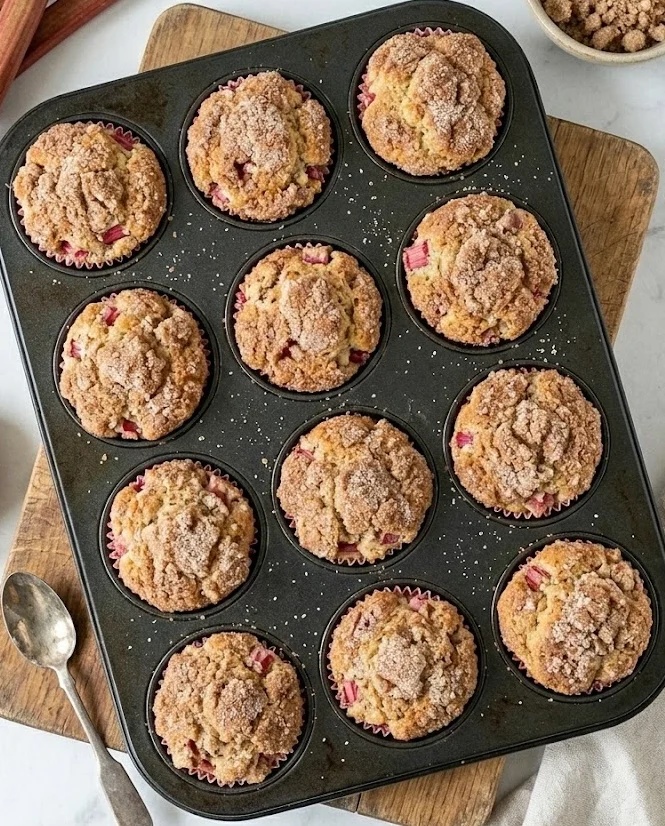
- Divide the batter evenly among the twelve muffin cups. The batter should mound slightly above the rim of each cup.
- In a small bowl, mix together the sugar and cinnamon for the topping. Sprinkle about half a teaspoon generously over each muffin, then press very lightly with your fingertips so it adheres.
- Bake for 20 to 22 minutes, until the tops are deep golden brown and a toothpick inserted into the center of a muffin comes out clean.
- Allow the muffins to cool in the pan for five to ten minutes, then transfer to a wire rack. Serve warm.
Looking for more ways to bake with rhubarb? This Ultimate Rhubarb Recipes Guide brings together 20 of the best easy, healthy, and impressive rhubarb recipes in one place — from classic strawberry rhubarb pie and golden rhubarb crisp to sourdough rhubarb bread, rhubarb muffins, rhubarb bars, and stunning celebration cakes. Whether you have fresh rhubarb or a bag in the freezer, you will find exactly the recipe you are looking for. Browse all 20 rhubarb recipes and discover your next favorite bake.
Variations and Tips
This muffin base is one of the most flexible easy rhubarb recipes you will find, and it adapts well to a range of substitutions and preferences.
Gluten-free: A 1:1 gluten-free baking flour works well here as a direct swap for both flours. The texture will be very similar to the original. Bake for an additional three to five minutes and check with a toothpick.
Strawberry rhubarb muffins: Replace half the rhubarb with an equal amount of diced fresh strawberries. This is one of the most popular strawberry rhubarb recipe variations because the berry’s sweetness softens the tartness into something almost jam-like inside the muffin. Skip the cinnamon if you want the fruit to be the clear star.
Dairy-free: Swap the Greek yogurt for a plain, unsweetened coconut yogurt with at least 2% fat. Replace the butter with melted coconut oil. The flavor will shift slightly but the texture holds up well.
For diabetics: Replace the granulated sugar in the batter with an equal measure of a granulated erythritol or monk fruit blend. Reduce the topping sugar by half or skip it entirely. The rhubarb will be more pronounced, but the muffins are still satisfying and work well as a lower-sugar rhubarb recipe.
Add citrus zest: One teaspoon of lemon or orange zest folded into the batter makes these muffins noticeably brighter and more complex without adding any additional work.
Mini muffins: This recipe bakes beautifully in a mini muffin tin. Reduce the baking time to eight to ten minutes and check early. Mini muffins are ideal for kids’ lunchboxes, bake sales, or school potlucks.
How to Meal Prep These Rhubarb Muffins
These muffins are a genuinely practical meal prep item, and their freezer performance is excellent.
The dry ingredients can be whisked together and stored in an airtight container at room temperature for up to a week. The rhubarb can be chopped, measured, and refrigerated in a sealed bag for up to three days — or frozen in pre-measured portions so you always have it ready. When baking day comes, the wet ingredients take about two minutes to combine, and the muffins are in the oven within fifteen minutes.
Once baked and fully cooled, muffins store at room temperature in a covered container for two to three days. For longer storage, wrap each muffin individually in plastic wrap and place them in a freezer-safe bag or container. They keep well for up to three months.
To reheat from frozen, wrap a muffin in a paper towel and microwave in thirty-second intervals until warmed through. They come back to near-fresh quality quickly, making them one of the most practical healthy rhubarb recipes for busy mornings.
Cultural Context
The muffin as we know it today — the American quick-bread muffin, not the English yeast-leavened variety — became a staple of home baking in North America throughout the nineteenth and early twentieth centuries. It was practical by design: quick to mix, baked in individual portions, and endlessly adaptable to whatever fruit happened to be in season.
Rhubarb has been a fixture in North American kitchen gardens since colonial times, valued for its early harvest and its ability to brighten preserves, pies, and baked goods at the tail end of winter when little else was available. Among early rhubarb recipes, simple baked goods like muffins, cakes, and crisps dominated because they required no special technique and made the most of a humble, abundant ingredient.
The addition of Greek yogurt to this recipe reflects a more recent shift in home baking — a growing interest in healthy rhubarb recipes that reduce fat and add protein without sacrificing the pleasure of a freshly baked good. It is a modern adjustment to a timeless tradition, and it works remarkably well. The tartness of rhubarb and the tang of Greek yogurt are natural allies, and together they produce a muffin that feels both nostalgic and exactly right for how people want to eat today.

Rhubarb Muffins with Greek Yogurt
Equipment
- mixing bowls
- whisk
- spatula
- muffin tin
- paper liners
Ingredients
- 1 cup all-purpose flour
- 1 cup whole wheat flour
- 150 g granulated sugar
- 2.5 tsp baking powder
- 1 tsp ground cinnamon
- 0.5 tsp baking soda
- 0.5 tsp salt
- 240 g Greek yogurt (2%)
- 115 g unsalted butter, melted
- 2 eggs
- 1 tsp vanilla extract
- 180 g rhubarb, diced (fresh or frozen)
- 3 tbsp granulated sugar (topping)
- 0.5 tsp ground cinnamon (topping)
Instructions
- Preheat oven to 400°F (200°C) and line a 12-cup muffin tin with liners or grease well.
- Whisk together flours, sugar, baking powder, cinnamon, baking soda, and salt in a bowl.
- In another bowl, whisk Greek yogurt, melted butter, eggs, and vanilla until smooth.
- Add dry ingredients to wet and fold gently until just combined. Do not overmix.
- Fold in diced rhubarb evenly throughout the thick batter.
- Divide batter evenly among muffin cups, filling slightly above the rim.
- Mix topping sugar and cinnamon, sprinkle over muffins, and lightly press to adhere.
- Bake for 20–22 minutes until golden and a toothpick inserted comes out clean.
- Cool in pan briefly, then transfer to a rack and serve warm or at room temperature.