
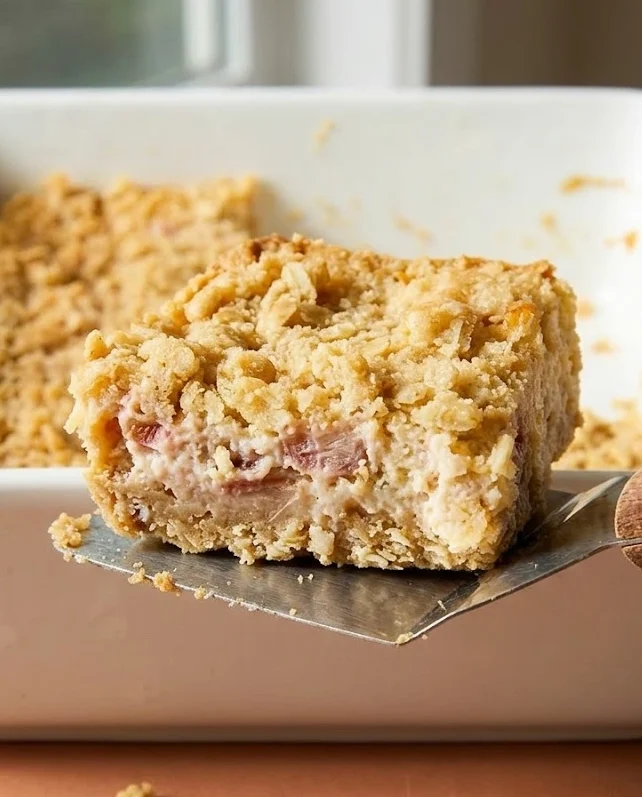
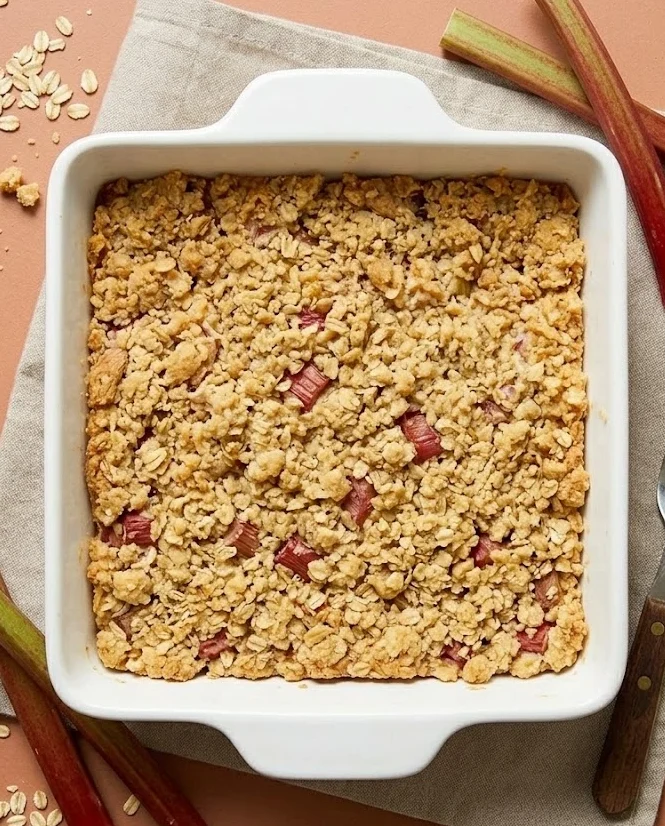
Most rhubarb recipes ask you to choose between a crumble and a cheesecake. This one refuses. Rhubarb cheesecake squares layer both into a single nine-inch pan — a buttery oat crust on the bottom, a silky cream cheese filling in the middle, tart rhubarb folded throughout, and the reserved crumble scattered across the top before baking into a golden, textured finish.
The result is a bar that eats like a cheesecake but assembles like a crisp. It is rich without being heavy, tangy without being sharp, and sweet without losing the signature bite of rhubarb that makes these rhubarb recipes worth seeking out in the first place.
It also feeds sixteen people from a single pan, which makes it one of the most practical rhubarb desserts in your repertoire.
Why You’ll Love These Rhubarb Cheesecake Squares
This recipe occupies a very specific and very valuable spot in the landscape of rhubarb recipes. It is easier than a traditional cheesecake — no water bath, no springform pan, no anxiety about cracking. But it delivers the same creamy, tangy satisfaction in a format that travels well, stores beautifully, and cuts into neat, shareable portions.
The oat crust serves double duty as both the base and the crumble topping. You mix it once, press most of it into the pan, and reserve a cup for the top. That small efficiency makes the whole recipe feel effortless even though the payoff looks impressive.
It also works with fresh or frozen rhubarb, which means it is not limited to the brief spring window when stalks appear at the market. Keep a bag of rhubarb in the freezer and you can make this any time the craving hits — which, once you have tried it, will be often.
Common Mistakes (And How to Avoid Them)
A bar recipe this layered has a few specific pitfalls worth knowing before you start.
Using cold cream cheese. Cold cream cheese will not beat smoothly, no matter how long you run the mixer. It leaves lumps in the filling that bake into uneven, grainy patches. Pull it out of the refrigerator at least an hour before you begin, or use the low-power microwave method in thirty-second intervals until it is genuinely soft to the touch.
Beating the egg in too aggressively. Once the egg and vanilla go into the cream cheese mixture, switch to low speed and stop the moment everything is combined. Overmixing incorporates too much air, which causes the filling to puff during baking and then deflate and crack as it cools.
Using frozen rhubarb without thawing. Unlike some rhubarb recipes where frozen goes in straight from the bag, this one requires thawed rhubarb. The filling is cream cheese-based, and the extra moisture released by frozen rhubarb will prevent the center from setting properly. Thaw completely and pat dry before folding in.
Cutting into the bars while warm. The filling needs to be fully chilled before slicing or it will smear rather than cut cleanly. After the one-hour cooling period on the rack, refrigerate for at least two hours — overnight is even better. Cold bars cut sharply and hold their shape on the plate.
Not lining the pan. A parchment sling with edges overhanging the sides of the pan makes it easy to lift the entire batch out for slicing. Without it, the first few squares near the edges are almost impossible to remove intact.
Chef’s Notes
The spice combination in this recipe — cinnamon and nutmeg — is understated but important. The cinnamon adds warmth that bridges the oat crust and the cream cheese filling. The nutmeg adds a faint floral depth that you notice more in the aftertaste than the first bite. Neither is aggressive, but both would be missed.
A half teaspoon of lemon zest stirred into the cream cheese mixture alongside the vanilla is an excellent optional addition. Citrus and rhubarb have a natural affinity, and it lifts the filling without competing with the other flavors.
To know when the bars are done, use the wobble test rather than relying solely on the forty-minute mark. The topping should be fully golden and the edges of the filling should be set, but the very center should still have a slight, gentle wobble when you nudge the pan. It will firm up completely as it cools and chills.
Use a serrated knife dipped in warm water for slicing. Wipe the blade clean between cuts. This technique produces sharp, bakery-clean edges rather than the smeared, dragged cuts that a dry knife creates.
Key Ingredients
Old-fashioned rolled oats are the backbone of the crust and crumble topping. They add a nutty, slightly chewy texture that contrasts beautifully with the smooth cream cheese filling. Quick oats can substitute in a pinch, but they will produce a slightly finer, less rustic crumble.
Brown sugar sweetens the oat base with a depth that plain white sugar cannot match. The molasses notes in brown sugar caramelize slightly during baking, giving the crust and topping a warmer, more complex flavor. Either light or dark brown sugar works — dark will have a more pronounced molasses quality.
Cold unsalted butter is cut into the flour and oat mixture to form a crumbly, sandy texture. It must stay cold so it creates distinct pockets rather than melting into a uniform paste. Cold butter in the topping is what produces that ideal crumble — golden on the outside, slightly soft underneath.
Cream cheese is the heart of the filling. It provides the rich, tangy base that makes this feel like a cheesecake rather than just a sweet bar. Full-fat cream cheese produces the creamiest, most stable result. Lower-fat versions tend to release more water during baking, which can affect the set of the filling.
Rhubarb is folded directly into the cream cheese mixture rather than layered separately. This means the tartness is distributed evenly through every bite of the filling rather than concentrated in one layer. Fresh rhubarb gives the sharpest flavor; thawed frozen rhubarb is slightly softer but performs reliably.
Cinnamon and nutmeg work together as a warm spice backdrop that deepens the filling without overpowering the rhubarb. They are used in small amounts, but both contribute meaningfully to the final flavor.
How to Make Rhubarb Cheesecake Squares
For the crust and crumble topping:
- 1¼ cups all-purpose flour
- ½ cup old-fashioned rolled oats
- ½ cup packed brown sugar
- ½ cup cold unsalted butter, cut into small cubes
For the filling:
- 1 package (8 oz) cream cheese, softened to room temperature
- ¾ cup granulated sugar
- ½ tsp salt
- ¼ tsp ground cinnamon
- ⅛ tsp ground nutmeg
- 1 large egg, room temperature, lightly beaten
- ½ tsp pure vanilla extract
- 1½ cups diced fresh or frozen rhubarb, thawed if frozen and patted dry
Instructions:
- Preheat the oven to 350°F (175°C). Grease a 9-inch square baking pan. For easy removal, line it with two overlapping sheets of parchment paper, letting the ends hang over the sides to form a sling.
- In a medium bowl, whisk together the flour, oats, and brown sugar. Add the cold butter cubes and cut them in using a pastry cutter or your fingertips until the mixture resembles coarse, sandy crumbs. Work quickly to keep the butter cold.
- Measure out and set aside one full cup of the oat mixture — this becomes your crumble topping.
- Press the remaining oat mixture firmly and evenly into the bottom of the prepared pan to form the crust.
- In a large bowl, beat the softened cream cheese, granulated sugar, salt, cinnamon, and nutmeg together until completely smooth and lump-free. This step is easiest with a hand mixer or stand mixer.
- Add the lightly beaten egg and vanilla extract. Beat on low speed just until combined — do not overmix.
- Fold the diced rhubarb gently into the cream cheese filling until evenly distributed.
- Spread the filling over the crust in an even layer, using a spatula to smooth the surface.
- Scatter the reserved cup of oat crumble evenly over the top of the filling. Do not press it down — leave it loose for a textured, crumbly finish.
- Bake for 40 minutes, or until the topping is deep golden brown and the filling has set around the edges with just a slight wobble in the very center.
- Transfer the pan to a wire rack and cool for one full hour at room temperature.
- Cover and refrigerate for at least two hours, or until fully cold and firm.
- Use the parchment sling to lift the bars out of the pan. Cut into sixteen squares using a serrated knife dipped in warm water, wiping between cuts. Serve cold.
Looking for more ways to bake with rhubarb? This Ultimate Rhubarb Recipes Guide brings together 20 of the best easy, healthy, and impressive rhubarb recipes in one place — from classic strawberry rhubarb pie and golden rhubarb crisp to sourdough rhubarb bread, rhubarb muffins, rhubarb bars, and stunning celebration cakes. Whether you have fresh rhubarb or a bag in the freezer, you will find exactly the recipe you are looking for. Browse all 20 rhubarb recipes and discover your next favorite bake.
Variations and Tips
This is one of the most adaptable rhubarb bar recipes in the category, and it responds well to a range of creative adjustments.
Strawberry rhubarb cheesecake squares: Replace half a cup of the rhubarb with an equal amount of diced fresh strawberries. This is the most classic pairing in all of strawberry rhubarb recipes, and it works beautifully in the filling — the strawberry adds sweetness that softens the sharpness of the rhubarb into something more rounded and jammy.
Add citrus: Stir a teaspoon of lemon zest or orange zest into the cream cheese filling alongside the vanilla. Citrus brightens the entire bar and makes the rhubarb flavor feel more vivid and defined.
Finish with a drizzle: Once the bars are fully chilled and cut, drizzle a simple glaze made from powdered sugar and milk over the top. A touch of vanilla or almond extract in the glaze adds another layer of flavor and makes the bars look bakery-polished.
Gluten-free: Swap the all-purpose flour for a certified 1:1 gluten-free baking blend in equal measure, and ensure your oats are certified gluten-free. The crust and crumble will be slightly more delicate but hold together well once chilled.
For diabetics: Replace the granulated sugar in the filling and the brown sugar in the crust with an equal measure of a granulated erythritol or monk fruit sweetener. The filling will be slightly less creamy in texture, but the rhubarb flavor comes through clearly and the bar is still satisfying as a lower-sugar rhubarb recipe.
Dark brown sugar upgrade: If your pantry only has dark brown sugar, use it with confidence. The deeper molasses flavor adds a subtle richness to the crust that pairs exceptionally well with the tangy cream cheese filling.
How to Meal Prep These Rhubarb Cheesecake Squares
These bars are arguably better made ahead than fresh from the oven, which makes them ideal for meal prep and advance planning.
The oat crust mixture can be prepared up to two days in advance and stored in an airtight container in the refrigerator. The cream cheese filling can be mixed the day before and refrigerated covered — just give it a quick stir before folding in the rhubarb. When ready to bake, press the crust, spread the filling, add the topping, and go straight into the oven.
The baked bars keep in the refrigerator in an airtight container for up to five days. They actually improve on the second day as the flavors settle and the crust softens slightly against the filling. Keep them covered and cold until serving.
For longer storage, the bars freeze exceptionally well. Wrap each square individually in plastic wrap, then place in a freezer-safe bag or container with parchment between layers. They keep for up to three months. Thaw overnight in the refrigerator — do not thaw at room temperature, as the cream cheese filling can become watery.
Cultural Context
The bar cookie as a format has deep roots in American home baking, tracing back to the mid-twentieth century when home economists and women’s magazine recipe developers sought desserts that could be made in a single pan, served to a crowd, and stored without special equipment. Brownies were the template, but the format quickly expanded to include fruit-based bars, oat-topped fruit squares, and cheesecake bars of every variety.
Rhubarb bars in particular became a regional staple across the Upper Midwest and Great Plains — exactly the regions where rhubarb grows abundantly, often in home kitchen gardens that produce more than any household can use in spring pies and crisps alone. Recipes like this one, attributed to Sharon Schmidt of Mandan, North Dakota, reflect that tradition directly: practical, generous, built for sharing, and designed to use what the garden gives you.
What makes this version stand out among rhubarb bar recipes is the cheesecake layer, which elevates it from a simple fruit crumble into something with genuine richness and complexity. The cream cheese filling serves the same function that custard does in a rhubarb custard pie — it rounds out the tartness, adds body, and transforms rhubarb from a supporting flavor into the clear star of the dessert. It is one of the rhubarb recipes that earns its place year-round, not just in spring, and that alone makes it worth keeping in permanent rotation.
Rhubarb Cheesecake Squares
Equipment
- 9-inch square baking pan
- mixing bowls
- hand mixer or stand mixer
- spatula
- parchment paper
Ingredients
- 1.25 cup all-purpose flour
- 0.5 cup old-fashioned rolled oats
- 0.5 cup brown sugar, packed
- 0.5 cup unsalted butter, cold and cubed
- 8 oz cream cheese, softened
- 0.75 cup granulated sugar
- 0.5 tsp salt
- 0.25 tsp ground cinnamon
- 0.125 tsp ground nutmeg
- 1 large egg, lightly beaten
- 0.5 tsp vanilla extract
- 1.5 cup rhubarb, diced (thawed and drained if frozen)
Instructions
- Preheat oven to 350°F (175°C). Grease and line a 9-inch square pan with parchment paper.
- In a bowl, mix flour, oats, and brown sugar. Cut in cold butter until crumbly.
- Reserve 1 cup of the mixture. Press the remaining mixture into the pan to form the crust.
- Beat cream cheese, sugar, salt, cinnamon, and nutmeg until smooth.
- Add egg and vanilla. Mix on low speed just until combined.
- Fold in diced rhubarb gently until evenly distributed.
- Spread filling over crust evenly.
- Sprinkle reserved crumble over the top without pressing.
- Bake for 40 minutes until golden and center is slightly set.
- Cool for 1 hour, then refrigerate for at least 2 hours until firm.
- Lift from pan using parchment and cut into 16 squares before serving.