
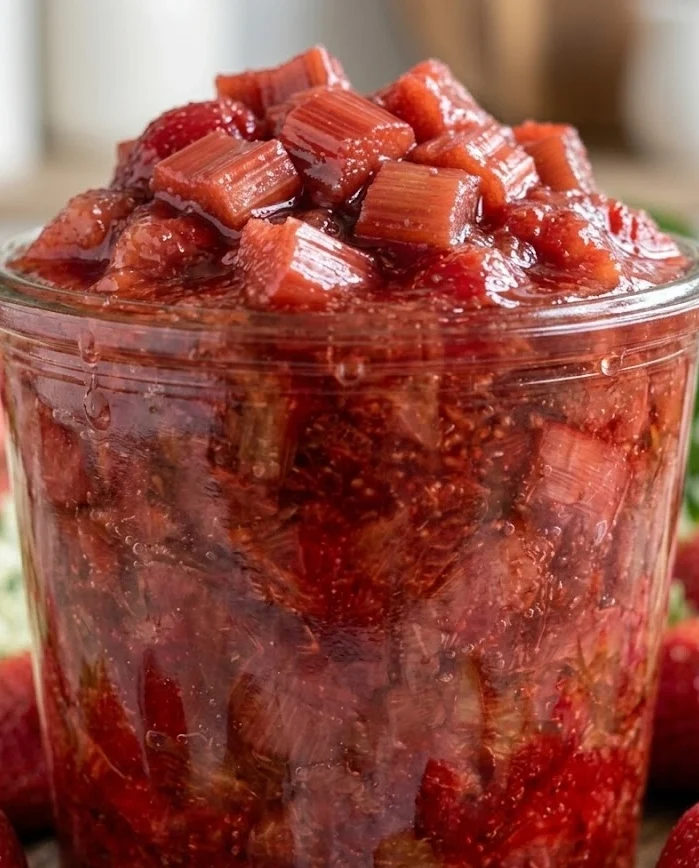
Some of the best rhubarb recipes are the ones that ask the least of you. This 3-ingredient strawberry rhubarb jam without pectin is exactly that — fresh rhubarb, ripe strawberries, and sugar, cooked down together in a single saucepan until they become a glossy, vibrant, deeply flavored jam that tastes like the best version of spring in a jar.
No pectin to track down. No canning equipment required. No long list of ingredients you may or may not have on hand. Just three things and about an hour of gentle, unhurried cooking on your stovetop.
If you have been looking for easy rhubarb recipes that deliver serious results without serious effort, this is it.
Why You’ll Love This Strawberry Rhubarb Jam
Among all the strawberry rhubarb recipes in the world, a simple homemade jam stands apart for one reason: it preserves the season. Everything that makes rhubarb and strawberries so good together — the tartness, the floral sweetness, the deep pink color — gets concentrated into a spread you can reach for every morning long after the season ends.
This small-batch version is designed to be approachable for first-time jam makers and efficient for experienced ones. It skips pectin entirely, relying instead on the natural pectin in the fruit, boosted by the acidity of lemon juice, to set the jam into a spreadable, spoonable consistency that holds together beautifully on a slice of toast or a warm biscuit.
It refrigerates for up to three weeks and freezes for up to a year, which means one afternoon of cooking can supply your kitchen with homemade jam well into the colder months. And because the batch is small, there is no pressure to process jars or set up a water bath canning station unless you want to.
Common Mistakes (And How to Avoid Them)
Making jam without pectin requires patience more than precision, but a few common errors will consistently produce a runny or burnt result.
Cooking at too high a heat. The instinct to rush jam along with high heat is the most reliable way to ruin it. High heat burns the sugar before the jam has time to reduce and thicken, and it can scorch the bottom of the pan quickly. Once the mixture reaches a gentle boil, reduce the heat to medium-low and let it simmer steadily. Slow and consistent wins every time.
Pulling the jam too early. Because both rhubarb and strawberries are naturally low in pectin, this jam needs adequate cook time to reach a proper set. A good target is reaching 220°F on a candy thermometer — that is the recognized gel point for jam at sea level. If you do not have a thermometer, use the cold plate test: place a small plate in the freezer before you start cooking, spoon a small amount of jam onto the chilled plate after twenty to thirty minutes of simmering, and run your finger through it. If the jam holds a clear trail that does not immediately run back together, it is ready.
Skipping the lemon juice. Lemon juice is doing critical work in a no-pectin jam. Its acidity lowers the pH of the mixture, which neutralizes the natural charges on the fruit’s pectin molecules and allows them to bind together. Without it, the jam may never reach a proper set regardless of how long you cook it. Do not reduce or omit the lemon juice.
Using underripe strawberries. Ripe, sweet strawberries are essential here. Underripe berries are both less flavorful and lower in the natural sugars that help the jam develop properly. Taste your strawberries before starting — if they are bland or hard, your jam will need more sugar and more time to develop flavor.
Cutting the pieces too large. Rhubarb and strawberries should be cut into small, consistent pieces — around half an inch. Larger pieces take longer to break down, and if the jam is removed from heat before they fully cook through, the texture will be uneven and chunky in an unpleasant way.
Chef’s Notes
The ratio between rhubarb and strawberries is flexible and worth adjusting to your preference. A higher proportion of rhubarb — say, twice as much rhubarb as strawberries by volume — produces a jam that is noticeably tarter and more complex. A higher proportion of strawberries produces something sweeter, closer to a classic strawberry jam with a rhubarb undertone. Both are excellent. Start with equal parts and adjust from there as you develop your taste.
A teaspoon of pure vanilla extract stirred in during the last few minutes of cooking adds a warmth and roundness to the jam that makes it taste noticeably more layered. It is an optional addition, but one worth making.
For diabetics or anyone managing sugar intake, this jam can be made with a granulated monk fruit sweetener or erythritol in place of the standard sugar. The set will be slightly softer — these sweeteners do not behave identically to sucrose in jam-making — but the flavor is excellent and the jam is still spreadable and delicious.
If your jam sits in the refrigerator and seems thinner than you expected after cooling, do not panic. Some batches set more firmly than others depending on the ripeness of the fruit and the exact cooking time. A thinner jam still tastes wonderful and works beautifully as a topping for yogurt, oatmeal, or vanilla ice cream — lean into it rather than treating it as a failure.
Key Ingredients
Fresh rhubarb is the backbone of this jam and the reason most people seek out strawberry rhubarb recipes in the first place. Its sharp, almost citrus-like tartness cuts through the sweetness of the strawberries, creating a balance that neither fruit achieves on its own. Look for firm stalks that feel crisp when snapped, with bright color and no dark or soft spots. The leaves must always be discarded — they contain oxalic acid and are not safe to eat.
Fresh strawberries bring sweetness, moisture, and the deep red color that makes this jam so visually striking. The ripest, reddest berries available will give you the most flavorful jam. Frozen strawberries work well as a substitute — measure them while frozen, then allow the mixture to come to temperature in the pan without pre-thawing.
Granulated sugar does several jobs at once. It sweetens the jam, yes, but it also draws moisture out of the fruit through osmosis during cooking, helps the natural pectin bind, and acts as a preservative that extends the shelf life of the finished jam. Do not reduce the sugar dramatically without understanding that it will affect both the set and the keeping quality of the final product.
Lemon juice is the invisible ingredient that makes the whole thing work without commercial pectin. Its acidity activates the natural pectin in both fruits and helps the jam reach a proper gel. Fresh lemon juice is ideal for refrigerator and freezer jam. If you plan to process the jam in a water bath for pantry storage, use bottled lemon juice, which has a consistent pH that fresh lemon cannot guarantee.
How to Make 3-Ingredient Strawberry Rhubarb Jam Without Pectin
Ingredients:
- 2 cups fresh rhubarb, trimmed and cut into ½-inch pieces
- 2 cups fresh strawberries, hulled and halved (or quartered if large)
- 1½ cups granulated sugar
- 2 tbsp fresh lemon juice (use bottled if canning)
Instructions:
- Place two small plates in the freezer — these will be used for the cold plate set test later.
- Combine the rhubarb, strawberries, sugar, and lemon juice in a medium heavy-bottomed saucepan. Stir well to coat the fruit in sugar.
- Allow the mixture to sit for 20 to 30 minutes at room temperature, stirring occasionally. The sugar will draw moisture from the fruit and the mixture will become noticeably juicier — this is maceration, and it jumpstarts the cooking process.
- Place the saucepan over medium heat. Bring the mixture to a gentle boil, stirring frequently to prevent anything from sticking to the bottom.
- Once boiling, reduce the heat to medium-low. Continue cooking at a steady, gentle simmer, stirring occasionally, for 25 to 45 minutes. The mixture will reduce, deepen in color, and thicken gradually.
- To test for set, remove one of the frozen plates from the freezer and drop a small spoonful of jam onto it. Return it to the freezer for one minute. Run your finger through the jam — if it holds a clear trail that does not flow back together, it is ready. If it runs, continue cooking and test again in five minutes.
- Alternatively, use a candy thermometer and cook until the mixture reaches 220°F (104°C).
- Remove from heat. Stir in vanilla extract if using.
- Carefully ladle the hot jam into clean, heat-safe glass jars. Allow to cool to room temperature with the lids off, then seal and refrigerate.
- The jam will continue to thicken as it cools and chills. Wait at least two hours before serving for the best consistency.
This recipe makes approximately 2 to 2½ cups of jam — enough for two half-pint jars.
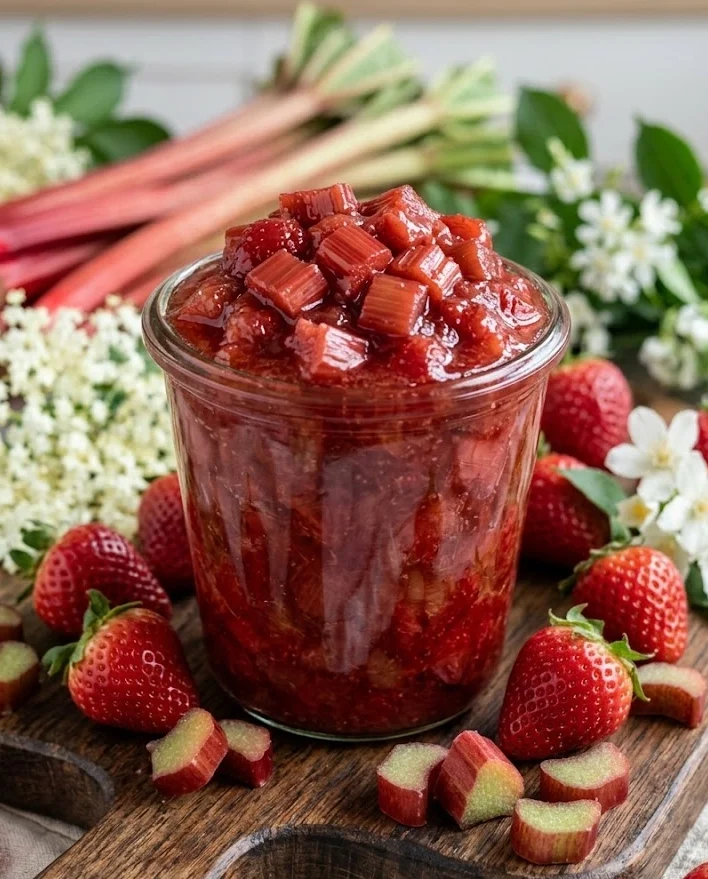
Looking for more ways to bake with rhubarb? This Ultimate Rhubarb Recipes Guide brings together 20 of the best easy, healthy, and impressive rhubarb recipes in one place — from classic strawberry rhubarb pie and golden rhubarb crisp to sourdough rhubarb bread, rhubarb muffins, rhubarb bars, and stunning celebration cakes. Whether you have fresh rhubarb or a bag in the freezer, you will find exactly the recipe you are looking for. Browse all 20 rhubarb recipes and discover your next favorite bake.
Variations and Tips
This foundational strawberry rhubarb recipe adapts easily in a number of useful directions.
Add vanilla: Stir one teaspoon of pure vanilla extract into the hot jam just before jarring. It adds a subtle warmth and depth that rounds out the tartness beautifully.
Add lemon zest: The zest of one lemon added with the lemon juice produces a citrus brightness that makes the fruit flavors more vivid and defined. A particularly effective addition if your strawberries are not quite at peak ripeness.
Rhubarb-forward version: Use twice as much rhubarb as strawberries — two cups rhubarb to one cup strawberries. This shifts the balance toward tart and creates a more complex, less sweet jam that is exceptional on mature cheeses, grilled pork, or buttered sourdough bread.
Berry substitutions: Rhubarb pairs naturally with almost any berry. Replace the strawberries with raspberries for a sharper, more floral jam. Use blueberries for a sweeter, earthier result. Or use a mix of all three berries with rhubarb for a stunning mixed berry rhubarb preserve.
For diabetics: Replace the sugar with an equal measure of a granulated erythritol or monk fruit blend. The jam will set slightly softer and should be stored in the refrigerator and consumed within two weeks rather than frozen long-term. It is one of the more practical diabetic rhubarb recipes in the jam category.
Canning for pantry storage: If you want to store this jam at room temperature, process the sealed jars in a boiling water bath for ten minutes. Use bottled lemon juice for consistent acidity. Properly canned and sealed jars will keep in a cool, dark pantry for up to one year.
How to Meal Prep This Strawberry Rhubarb Jam
This is one of the most efficient meal prep rhubarb recipes available, precisely because a single batch produces multiple jars that serve dozens of breakfasts and snacks without any additional daily effort.
The rhubarb can be trimmed, cut, and stored in a sealed container in the refrigerator for up to three days before making the jam. The strawberries can be hulled and halved the day before and kept refrigerated. On jam-making day, the entire recipe takes under an hour from first stir to final jar.
Finished jam stored in sealed jars in the refrigerator keeps well for up to three weeks. For longer storage, ladle the cooled jam into freezer-safe containers leaving about a half inch of headspace, and freeze for up to one year. Thaw overnight in the refrigerator when ready to use. Do not refreeze once thawed.
For maximum efficiency, double or triple the batch when rhubarb is at peak season. The recipe scales cleanly — the cooking time will increase slightly for larger batches, so continue testing for set with the cold plate method rather than relying on timing alone. A large batch frozen in individual half-cup portions gives you ready-to-use jam throughout the year with no additional work.
Cultural Context
Strawberry and rhubarb have been paired in preserves, pies, and desserts across North America and Northern Europe for well over a century. The combination became standard in farmhouse kitchens for a very practical reason: both crops are ready at roughly the same time each spring, creating a natural abundance of two complementary ingredients that beg to be processed together before they spoil.
Making jam without commercial pectin is the older tradition. For most of the history of home preserving, cooks relied on natural fruit pectin, sugar, and lemon juice or other acidic agents to set their jams. Commercial pectin, derived from apples and citrus peels, only became widely available to home canners in the early twentieth century, and while it shortened cooking times considerably, many experienced jam makers and food preservationists argue that it reduces the depth of flavor that develops during a longer, slower cook.
A 3-ingredient strawberry rhubarb jam without pectin is, in that sense, a return to the most honest version of this recipe — one where the flavor comes entirely from the fruit itself, concentrated and balanced by nothing more than sugar and a squeeze of lemon. It is one of those rhubarb recipes that connects the kitchen of today directly to generations of home cooks who made do with what the garden gave them and found, as it turns out, that the garden gave them everything they needed.
3-Ingredient Strawberry Rhubarb Jam Without Pectin
Equipment
- medium saucepan
- wooden spoon
- knife and cutting board
- measuring cups
- glass jars
Ingredients
- 2 cups fresh rhubarb, cut into 1/2-inch pieces
- 2 cups fresh strawberries, hulled and halved
- 1.5 cups granulated sugar
- 2 tbsp fresh lemon juice
Instructions
- Place two small plates in the freezer to prepare for testing the jam later.
- In a saucepan, combine rhubarb, strawberries, sugar, and lemon juice. Stir to coat evenly.
- Let the mixture sit for 20–30 minutes until juices release from the fruit.
- Bring the mixture to a gentle boil over medium heat, stirring frequently.
- Reduce heat to medium-low and simmer for 25–45 minutes, stirring occasionally, until thickened.
- Test the jam by placing a spoonful on a frozen plate. If it holds shape when pushed, it is ready.
- Remove from heat and let cool slightly.
- Transfer to clean jars and let cool completely before sealing and refrigerating.