
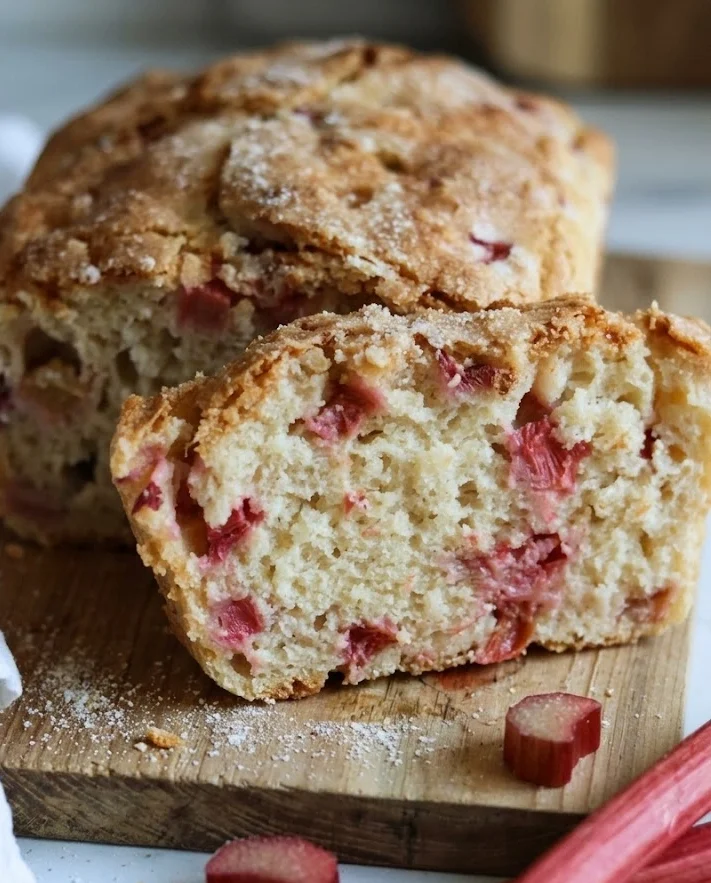
If you keep a sourdough starter, you know the feeling. The jar fills up, the discard pile grows, and you start looking for somewhere useful to put it. This sourdough rhubarb bread is the answer you did not know you were looking for — and it may well become the recipe you reach for every single time rhubarb comes into season.
It is technically a quick bread, meaning it uses baking powder for lift rather than the starter’s natural fermentation. But the cup of sourdough discard in the batter does something no other ingredient can replicate. It adds a gentle, almost imperceptible tang that deepens the flavor of the bread without making it sour, and it brings a subtle complexity that makes this taste like something far more considered than a standard easy rhubarb recipe.
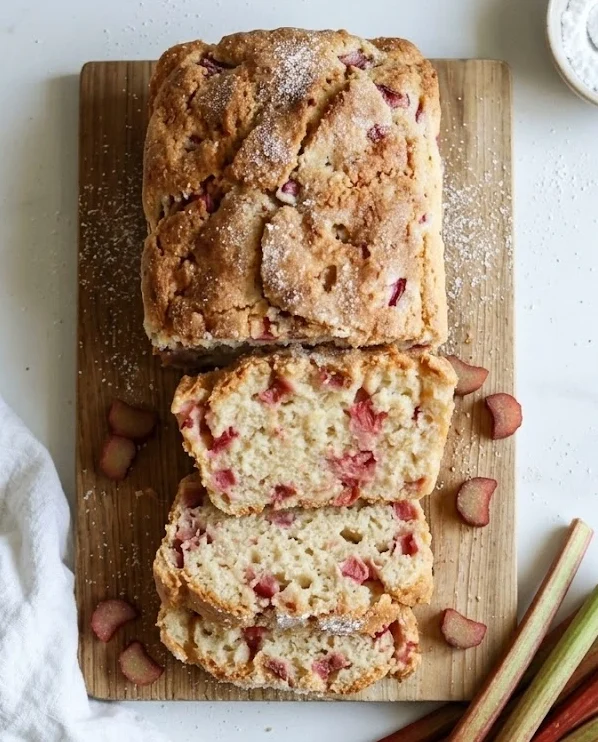
The result is a moist, tender loaf laced with tart rhubarb chunks and finished with a sprinkle of sugar that bakes into a crispy, caramelized crust. It is extraordinary for how simple it is to make.
Why You’ll Love This Sourdough Rhubarb Recipe
Among all the sourdough rhubarb recipes available to the home baker, this one earns its place for three very specific reasons.
First, it is a genuine two-birds-one-stone recipe. It uses up sourdough discard that would otherwise be discarded, and it gives a productive home to whatever rhubarb is sitting in your refrigerator or freezer. Both ingredients that require regular management suddenly become an asset.
Second, the texture is exceptional. The sourdough discard adds moisture and weight to the crumb without making it dense, and the oil in the batter keeps the loaf tender for days longer than a butter-based quick bread would stay fresh. This is one of those easy rhubarb recipes that actually improves overnight as the flavors settle.
Third, the sugar crust on top is genuinely special. Sprinkling granulated sugar over the batter before baking creates a thin, glossy, crackly layer as the loaf rises — the same kind of crust you find on a good bakery muffin top, extended across an entire loaf.
Common Mistakes (And How to Avoid Them)
This recipe is beginner-friendly, but a few predictable issues are worth knowing in advance.
Using expired baking powder. Because this is a discard recipe rather than an active starter recipe, the baking powder is doing all the leavening work. If your baking powder is past its date or has been sitting open in a humid kitchen, it will not produce enough lift and the loaf will bake up flat and dense. Test it first by dropping a teaspoon into hot water — it should bubble vigorously. If it does not, replace it before baking.
Overmixing the batter. This is the single most common mistake in quick bread baking and the one with the most noticeable consequences. Once the wet and dry ingredients come together, fold gently with a rubber spatula and stop the moment no dry flour remains visible. A few lumps are completely fine. Overmixed batter develops too much gluten, producing a tough, gummy crumb rather than the delicate, tender one this recipe is designed for.
Using discard that is too old or too sour. Sourdough discard that has been sitting at room temperature for more than a day, or in the refrigerator for longer than a week, can have a very sharp, acidic flavor that overwhelms the rhubarb and unbalances the bread. Use discard that is fresh enough to smell pleasantly tangy rather than aggressively sour.
Cutting the loaf too soon. The interior of this bread is still setting as it cools. Slice into a warm loaf and the crumb compresses into a gummy, dense texture. Let it cool completely on the wire rack — at least an hour — before slicing. For the cleanest cuts, wrap and refrigerate for a few additional hours.
Skipping the parchment lining. The sugar on the bottom and sides of the pan can stick badly without a parchment lining. Line the pan with a parchment sheet large enough to extend over the two narrow ends as handles, and removal becomes effortless.
Chef’s Notes
The sourdough discard used here does not need to be active or freshly fed. Its role is flavor and moisture, not leavening — the baking powder handles that. A discard that has been refrigerated for up to a week is perfectly suited to this recipe.
Brown sugar can replace half or all of the white sugar in the batter for a deeper, more caramel-like base flavor. It complements both the tang of the sourdough and the tartness of the rhubarb particularly well.
If you want to long-ferment this bread for increased digestibility and a more developed sourdough flavor, mix everything except the rhubarb and refrigerate the batter overnight. Fold in the fresh rhubarb just before baking the next morning. Do not add the rhubarb before the ferment — the moisture it releases during an overnight rest will make the batter gummy.
Two cups of rhubarb works beautifully in this recipe if you love a fruit-forward loaf. Readers who have made this adjustment report an even moister crumb and a more pronounced rhubarb flavor. Go for it if you have the fruit.
Key Ingredients
Sourdough discard is the ingredient that elevates this recipe above a standard rhubarb quick bread. At one full cup, it contributes a mild, pleasant tang, adds moisture to the crumb, and creates a complexity of flavor that baking powder and milk alone simply cannot replicate. It also makes this one of the most practical sourdough rhubarb recipes for regular bakers who maintain a starter.
Fresh rhubarb is chopped into half-inch pieces and folded into the batter just before baking. At this size, the pieces are large enough to create distinct pockets of tartness in every slice without making the structure of the bread unstable. The rhubarb softens and mellows during baking, releasing just enough juice to keep the interior moist.
All-purpose flour provides the structural framework of the loaf. Its moderate protein content gives enough strength to hold the fruit without making the crumb tough, as long as the batter is not overmixed.
Baking powder is the sole leavener here, which is why its freshness matters. Two teaspoons for one and a half cups of flour produces a good, reliable rise without the metallic aftertaste that too much baking powder can sometimes leave.
Neutral oil — canola or vegetable — keeps the crumb moist and tender over multiple days. Unlike butter, which firms up as a loaf cools, oil stays liquid at room temperature, meaning this bread slices just as well on day three as it does on day one.
Granulated sugar appears twice: once in the batter to sweeten and balance the rhubarb’s tartness, and once sprinkled over the unbaked loaf to form that caramelized sugar crust. Both applications matter. Do not skip the sugar on top — it is one of the most distinctive features of this bread.
Vanilla extract rounds out the flavor profile and makes the sweetness of the bread feel more nuanced. Two teaspoons is a generous amount, and the result is a loaf that smells as good as it tastes.
How to Make Sourdough Rhubarb Bread
Ingredients:
- 1½ cups (210g) all-purpose flour
- 1 cup (220g) granulated sugar, plus extra for topping
- 2 tsp (8g) baking powder
- ½ tsp (3g) salt
- ½ cup (125g) whole milk
- 1 large egg
- 2 tsp (8g) pure vanilla extract
- 1 cup (280g) sourdough discard (unfed, refrigerator-cold is fine)
- ½ cup (100g) neutral oil, such as canola or vegetable
- 2 cups fresh rhubarb, chopped into ½-inch pieces
Instructions:
- Preheat your oven to 350°F (175°C). Grease a 9×5-inch loaf pan and line it with parchment paper, extending the paper over the two narrow ends to create lifting handles. Set aside.
- Chop the fresh rhubarb into half-inch pieces and set aside.
- In a large mixing bowl, whisk together the flour, sugar, baking powder, and salt until evenly combined and no lumps remain.
- In a separate bowl, whisk together the milk, egg, vanilla, sourdough discard, and oil until smooth and fully combined.
- Pour the wet ingredients into the dry ingredients and fold gently with a rubber spatula until just combined. Stop the moment no dry flour is visible. Do not overmix.
- Fold the chopped rhubarb into the batter until evenly distributed.
- Pour the batter into the prepared loaf pan and smooth the top with the spatula.
- Sprinkle a generous layer of granulated sugar evenly over the surface of the batter.
- Bake for 60 to 65 minutes, until a toothpick inserted into the center of the loaf comes out clean or with just a few moist crumbs. If the top begins browning too quickly before the center is set, tent loosely with aluminum foil after 40 minutes.
- Remove from the oven and transfer the pan to a wire rack. Cool for ten minutes in the pan, then use the parchment handles to lift the loaf out and cool completely on the rack before slicing.
Looking for more ways to bake with rhubarb? This Ultimate Rhubarb Recipes Guide brings together 20 of the best easy, healthy, and impressive rhubarb recipes in one place — from classic strawberry rhubarb pie and golden rhubarb crisp to sourdough rhubarb bread, rhubarb muffins, rhubarb bars, and stunning celebration cakes. Whether you have fresh rhubarb or a bag in the freezer, you will find exactly the recipe you are looking for. Browse all 20 rhubarb recipes and discover your next favorite bake.
Variations and Tips
This sourdough rhubarb recipe is a strong, flexible base that responds well to a range of additions and adjustments.
Sourdough strawberry rhubarb bread: Replace one cup of rhubarb with an equal amount of hulled, diced fresh strawberries. This is one of the most searched strawberry rhubarb recipes in quick bread format, and it works beautifully here — the strawberries add natural sweetness that softens the rhubarb’s sharpness while keeping the filling vibrant and fruit-forward.
Brown sugar version: Swap half or all of the white sugar in the batter for brown sugar. The molasses notes add a caramel warmth that pairs beautifully with both the sourdough tang and the tart rhubarb.
Cinnamon sugar topping: Mix the granulated sugar for the top crust with a half teaspoon of cinnamon before sprinkling. This small addition creates a spiced, fragrant crust that echoes the rhubarb flavor in a very satisfying way.
Add nuts: Fold half a cup of roughly chopped walnuts or pecans into the batter along with the rhubarb. The nuts add crunch and a nutty richness that turns this into a more substantial breakfast slice.
Gluten-free: A 1:1 certified gluten-free baking flour substitutes directly in equal measure. The texture will be slightly more delicate, but the flavor holds up well. Add three to five minutes to the baking time and confirm doneness with a toothpick.
Long-ferment option: For deeper sourdough flavor and improved digestibility, mix the batter (without the rhubarb) and refrigerate it covered overnight. Fold in the rhubarb the next morning immediately before baking. This extra step produces a more complex, subtly sour flavor that sourdough enthusiasts will immediately appreciate.
How to Meal Prep This Sourdough Rhubarb Bread
This is one of the most practical sourdough rhubarb recipes for advance preparation, and its keeping quality is genuinely excellent.
The rhubarb can be chopped and stored in a sealed container in the refrigerator for up to two days before baking. The dry ingredients can be whisked together and stored covered on the counter overnight. On baking day, everything comes together in under fifteen minutes before going into the oven.
Once baked and fully cooled, the loaf stores at room temperature wrapped tightly in plastic wrap for up to three days. Because oil rather than butter carries the moisture in this recipe, the crumb stays tender significantly longer than a butter-based quick bread would. Many bakers report the loaf is actually better on day two, after the sourdough tang and rhubarb flavors have had time to develop and meld.
For longer storage, this bread freezes exceptionally well. Slice the cooled loaf, wrap individual slices in plastic wrap, and store in a freezer-safe bag for up to three months. Thaw slices at room temperature for about an hour, or overnight in the refrigerator. A brief stint in the toaster restores the sugar crust’s crispness and makes it taste almost fresh from the oven.
Cultural Context
Sourdough baking is one of the oldest food traditions in human history, predating commercial yeast by thousands of years. Wild yeast starters — made from nothing more than flour and water — were the universal leavening agent across almost every culture that baked bread, from ancient Egypt to medieval Europe to the pioneer settlements of North America.
The practice of using sourdough discard in quick breads and other baked goods is a far more recent development, born from the modern sourdough revival of the early twenty-first century and accelerated dramatically during the home-baking surge of 2020. As more home bakers began maintaining active starters, they quickly discovered that the unfed, acidic discard produced before each feeding was too flavorful and too useful to simply throw away. Folding it into pancakes, crackers, muffins, and quick breads became a natural extension of the sourdough practice — a way to reduce waste while adding depth to everyday baking.
Pairing sourdough discard with rhubarb makes particular culinary sense. The mild acidity of the starter echoes and complements the natural tartness of rhubarb without duplicating it, and the fermented complexity of the discard adds a dimension of flavor to the bread that neither plain milk nor buttermilk can fully replicate. It is a pairing that feels both traditional and inventive — one of those rhubarb recipes that tastes like it has always existed, even though the combination is relatively new. For anyone who bakes with a starter, it is the most natural possible use of two ingredients that arrive in abundance at the same time every spring.
Sourdough Rhubarb Bread
Equipment
- 9×5-inch loaf pan
- mixing bowls
- whisk
- rubber spatula
- parchment paper
Ingredients
- 1.5 cup all-purpose flour
- 1 cup granulated sugar
- 2 tsp baking powder
- 0.5 tsp salt
- 0.5 cup milk
- 1 egg
- 1 tsp vanilla extract
- 1 cup sourdough discard
- 0.33 cup vegetable oil
- 2 cups chopped rhubarb
- 2 tbsp granulated sugar (for topping)
Instructions
- Preheat oven to 350°F (175°C). Grease a 9×5-inch loaf pan and line with parchment paper.
- Chop rhubarb into small pieces and set aside.
- In a large bowl, whisk together flour, sugar, baking powder, and salt.
- In another bowl, whisk milk, egg, vanilla, sourdough discard, and oil until smooth.
- Combine wet and dry ingredients, stirring until just combined. Do not overmix.
- Fold in chopped rhubarb with minimal stirring.
- Pour batter into prepared pan and smooth top. Sprinkle sugar evenly over the surface.
- Bake for 60–65 minutes until a toothpick inserted comes out clean or with dry crumbs.
- Cool in pan for 10 minutes, then lift out and cool completely on a rack.
- Refrigerate for 2–3 hours for clean slicing, then slice and serve.